


We've learned that managing a multicultural workplace requires recognizing and embracing cultural differences, adapting to varying work styles, and building trust across cultures. Effective communication is key, so we adjust our style to our diverse teams, use clear language, and leverage technology to facilitate open dialogue. We've found that overcoming language barriers, celebrating diversity daily, and providing cultural awareness training are essential for success. By embracing our differences, we can promote cross-cultural collaboration and create a productive, inclusive environment. As we explore these strategies further, we tap into the full potential of our multicultural teams.
Recognizing Cultural Differences

As we navigate the complexities of a multicultural workplace, we must acknowledge that cultural differences can greatly impact our interactions and relationships with colleagues. We've all been there – unintentionally offending a coworker or misinterpreting a gesture because of our own cultural biases. It's essential we recognize these differences to avoid misunderstandings and foster a harmonious work environment.
We've learned that cultural nuances can influence how we communicate, work, and even perceive time. For instance, in some cultures, direct eye contact is seen as a sign of respect, while in others, it's considered confrontational. Similarly, the concept of time varies across cultures – what's considered punctual in one culture might be seen as late in another. By acknowledging these differences, we can adapt our behaviors to better collaborate and build stronger relationships.
We've also come to realize that cultural differences can affect our work styles and expectations. For example, some cultures value group harmony over individual achievements, while others prioritize individual accomplishments. By recognizing these variations, we can tailor our management styles to meet the unique needs of our team members, promoting a more inclusive and effective work environment.
Ultimately, recognizing cultural differences is essential for building trust, encouraging open communication, and driving success in our multicultural workplace. By doing so, we can create an environment where everyone feels valued, respected, and empowered to thrive.
Effective Communication Strategies
How can we guarantee that our messages are conveyed clearly and effectively in a multicultural workplace, where language barriers and cultural nuances can lead to misunderstandings? As we aim to create an inclusive environment, effective communication strategies are essential to avoid misunderstandings and make sure everyone is on the same page.
To achieve this, we need to be mindful of our communication style and adapt it to our diverse team. We can start by using clear and simple language, avoiding idioms and jargon that may be unfamiliar to non-native speakers. Active listening is also vital, as it helps us to clarify any doubts and ensure we comprehend each other correctly.
| Barrier | Strategy |
|---|---|
| Language Barriers | Provide multilingual resources and translations when necessary |
| Cultural Nuances | Educate ourselves on cultural differences and customs |
| Nonverbal Cues | Be aware of nonverbal cues and their meanings in different cultures |
| Technology | Leverage technology to facilitate communication, such as video conferencing |
| Feedback | Encourage open feedback and create a safe space for discussion |
Adapting to Varying Work Styles

As we work together in a multicultural workplace, we've come to realize that our team's diverse backgrounds and experiences lead to varying work styles. We've noticed that what works for one team member might not work for another, and that's okay. By embracing these differences and adapting our approaches, we can create a more inclusive and productive work environment.
Cultural Differences in Teams
We encounter cultural differences in our teams when we work with individuals who approach tasks, communicate, and prioritize differently, necessitating us to adapt our work styles to guarantee seamless collaboration. These differences can manifest in various ways, such as varying communication styles, conflicting work ethics, and disparate attitudes towards time management. For instance, some team members might be more direct and assertive, while others may be more reserved and tactful. Similarly, some may prioritize tasks based on urgency, while others focus on completing tasks in a specific order.
To navigate these differences, we must be flexible and open-minded. We should strive to understand the underlying values and beliefs that shape our colleagues' behaviors and work styles. By doing so, we can identify common goals and find ways to align our approaches. This might involve adjusting our communication styles, being more sensitive to cultural nuances, or finding creative solutions to bridge the gaps. By embracing and adapting to these cultural differences, we can foster a more cohesive and productive team that celebrates diversity.
Embracing Diverse Workflows
By recognizing that different cultural backgrounds often bring unique work styles to the table, we can better accommodate diverse workflows that boost our team's overall productivity. This means embracing the fact that our colleagues may approach tasks, communicate, and prioritize differently based on their cultural upbringing.
To create a harmonious and efficient work environment, we need to be flexible and open-minded. Here are a few examples of how diverse workflows can manifest:
- Time management: Some cultures prioritize punctuality, while others take a more relaxed approach to deadlines.
- Communication styles: Directness versus indirectness, or high-context versus low-context communication.
- Task management: Team members may have different approaches to task delegation, collaboration, or individual responsibility.
- Decision-making: Consensus-driven or top-down approaches, and the role of hierarchy in decision-making.
- Conflict resolution: Differing views on confrontation, conflict avoidance, or finding common ground.
Building Trust Across Cultures
In today's global workplace, bridging cultural divides to establish trust is essential for driving collaboration and business success. We've found that trust is the foundation upon which successful multicultural teams are built. Without it, communication breaks down, and productivity suffers. So, how do we build trust across cultures?
First, we need to understand that trust is built on mutual respect. We must recognize and appreciate the diversity of our colleagues' backgrounds, values, and perspectives. By doing so, we create an environment where everyone feels valued and heard. We've seen that when we take the time to learn about each other's customs and traditions, we begin to break down stereotypes and build connections.
Another important aspect of building trust is open communication. We need to create a safe space where everyone feels comfortable sharing their thoughts and opinions. This means actively listening to each other, asking questions, and clarifying expectations. By doing so, we avoid misunderstandings and make certain that everyone is on the same page.
Navigating Language Barriers Successfully
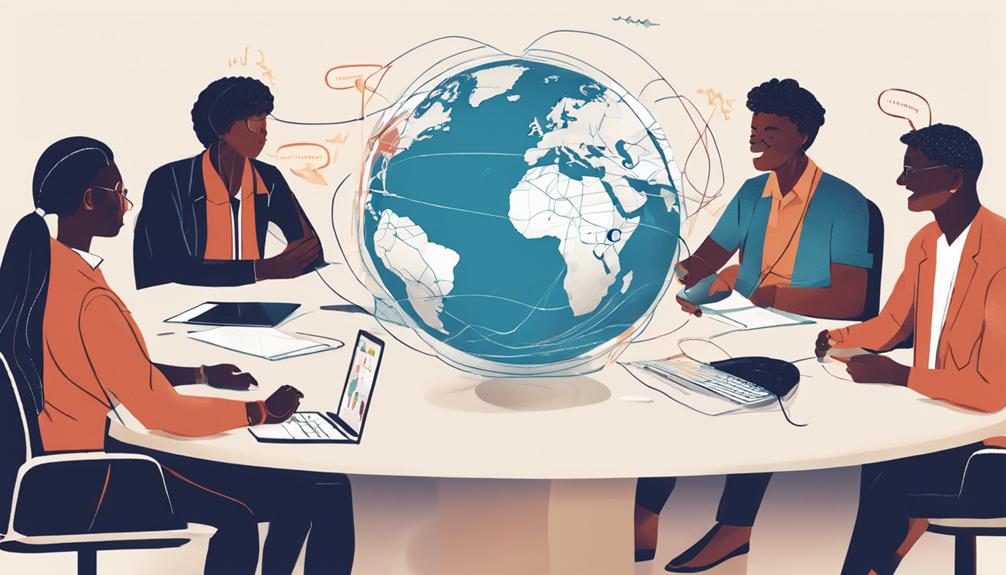
As we endeavor to communicate effectively across cultural boundaries, language barriers can emerge as a significant obstacle, prompting us to adjust our communication strategies to make sure that our message resonates with everyone. In a multicultural workplace, it's essential to recognize that language barriers can hinder collaboration, creativity, and productivity. To navigate these barriers successfully, we need to be proactive and flexible in our approach.
Here are some strategies we've found helpful:
- Use simple and clear language: Avoid using jargon, idioms, or complex sentences that might confuse non-native speakers.
- Provide multilingual resources: Offer translated documents, videos, or interpretation services to guarantee everyone understands important information.
- Encourage non-native speakers to ask questions: Create a safe and supportive environment where employees feel comfortable asking for clarification.
- Use visual aids and demonstrations: Images, videos, and hands-on demonstrations can help convey complex ideas and simplify communication.
- Designate language ambassadors: Identify bilingual or multilingual employees who can facilitate communication and provide language support.
Creating an Inclusive Workplace Culture
As we endeavor to create an inclusive workplace culture, we recognize that it's essential to make diversity and inclusion a daily practice. We're committed to embracing diversity daily, which means being intentional about celebrating our differences and promoting a sense of belonging. Next, we'll explore the importance of cultural awareness training in fostering a culture of empathy and understanding.
Embracing Diversity Daily
We cultivate an inclusive workplace culture by recognizing and valuing the unique perspectives that each team member brings to the table every day. This mindset helps us create an environment where everyone feels seen, heard, and empowered to contribute. By embracing diversity daily, we foster a culture of belonging, innovation, and collaboration.
Here are some ways we bring this to life:
- *We celebrate different cultural traditions and holidays, encouraging team members to share their customs and experiences.*
- *We use inclusive language and avoid jargon or idioms that might be unfamiliar to non-native English speakers.*
- *We encourage open dialogue, active listening, and constructive feedback to make sure everyone's voice is heard.*
- *We provide opportunities for professional development and mentorship, helping team members grow and thrive.*
- *We recognize and celebrate milestones and achievements from diverse backgrounds, promoting a sense of unity and shared success.*
Cultural Awareness Training
By investing in cultural awareness training, we take an essential step towards creating an inclusive workplace culture where everyone feels valued, respected, and empowered to contribute. This type of training helps us recognize and challenge our biases, fostering a deeper understanding of the diverse backgrounds, experiences, and perspectives within our team. We learn to appreciate the unique strengths and challenges that each individual brings, and we develop the skills to effectively communicate and collaborate across cultural boundaries.
Through cultural awareness training, we gain a better understanding of the nuances of nonverbal communication, traditions, and values that may differ from our own. We become more aware of microaggressions and learn how to address them, creating a safe and respectful environment for everyone. By doing so, we break down barriers and build trust, leading to increased employee engagement, creativity, and productivity. By prioritizing cultural awareness training, we demonstrate our commitment to creating a workplace culture that celebrates diversity and promotes equal opportunities for all.
Managing Conflict Resolution

One major hurdle in multicultural workplaces is resolving conflicts that often arise from cultural and linguistic differences. We've all been there – a misunderstanding escalates, and before we comprehend it, the entire team is affected. As managers, it's our responsibility to address these conflicts promptly and effectively.
When conflicts arise, we should:
- Stay calm and composed: Emotions can run high, but it's essential to remain level-headed to resolve the issue efficiently.
- Listen actively: Listen to each party's perspective, and ask clarifying questions to make sure we grasp their concerns.
- Focus on the issue, not the person: Avoid personal attacks or criticisms, and instead, address the specific problem at hand.
- Seek common ground: Look for areas of agreement and try to find a mutually beneficial solution.
- Follow up and follow through: After the conflict has been resolved, check in with the parties involved to ensure the agreement is working and make any necessary adjustments.
Fostering Cross-Cultural Collaboration
Fostering cross-cultural collaboration requires embracing diverse perspectives and leveraging individual strengths to create a cohesive, high-performing team. We believe that when individuals from different cultural backgrounds work together towards a common goal, the outcome is often more innovative and effective. However, we also recognize that cultural differences can sometimes lead to misunderstandings and miscommunications. That's why we prioritize creating an environment where everyone feels heard, valued, and empowered to contribute.
To achieve this, we focus on building trust and fostering open communication. We encourage active listening, ask clarifying questions, and clarify expectations to avoid misunderstandings. We also celebrate our differences and recognize that they are a strength, not a weakness.
Here are some strategies we use to foster cross-cultural collaboration:
| Strategy | Benefits |
|---|---|
| Regular team-building activities | Builds trust and encourages collaboration |
| Cultural awareness training | Increases empathy and understanding |
| Language support and resources | Helps to bridge language gaps |
| Flexible communication styles | Accommodates different communication preferences |
Frequently Asked Questions
How Can I Balance Cultural Sensitivity With Business Objectives?
As we navigate the delicate dance between cultural sensitivity and business objectives, we’re walking a tightrope over a sea of diverse perspectives. Finding balance is key. We must acknowledge that cultural sensitivity isn’t a roadblock to success, but a catalyst for it. By embracing diverse voices, we can discover innovative solutions that drive business forward. We’re not sacrificing one for the other; we’re harmonizing both to create a workplace where everyone thrives. This harmonious approach not only enhances company culture and employee engagement but also fosters a sense of belonging among team members. By valuing and integrating diverse viewpoints, we create an environment where creativity flourishes and collaboration thrives. Ultimately, a workplace that champions both cultural sensitivity and business growth becomes a beacon of innovation, attracting talent and clients alike.
What if an Employee's Cultural Practices Disrupt the Work Environment?
When an employee's cultural practices disrupt the work environment, we're faced with a delicate situation. We've got to find a balance between respecting their beliefs and maintaining a productive workspace. We'll address the issue directly with the employee, understanding their perspective while explaining the impact on the team. We'll work together to find a solution that respects their culture and our business needs.
Can I Ask About an Employee's Cultural Background or Nationality?
"As we navigate the complexities of human identity, we're reminded of the wise words of Maya Angelou: 'Do the best you can until you know better. Then, when you know better, do better.' When it comes to asking about an employee's cultural background or nationality, we've learned to exercise caution. It's essential to avoid prying or making assumptions, as this can lead to discomfort or even discrimination. Instead, we focus on creating an inclusive environment where everyone feels valued and respected, regardless of their cultural heritage."
How Do I Handle Conflicting Cultural Norms and Company Policies?
When conflicting cultural norms and company policies arise, we're faced with a delicate situation. We need to strike a balance between respecting diverse backgrounds and upholding our organization's standards. We'll approach each instance on a case-by-case basis, engaging in open dialogue with the employee to understand their perspective. By doing so, we'll find a mutually respectful solution that honors individual cultures while maintaining our company's integrity.
What if an Employee's Cultural Beliefs Contradict Company Values?
When an employee's cultural beliefs clash with our company values, we're faced with a tough dilemma. We recognize that respecting individual beliefs is essential, but we can't compromise on our core values. We approach the situation with empathy, having an open conversation to understand the employee's perspective. We then clearly explain our values and expectations, finding a mutually respectful solution that balances individual beliefs with our company's mission.
