

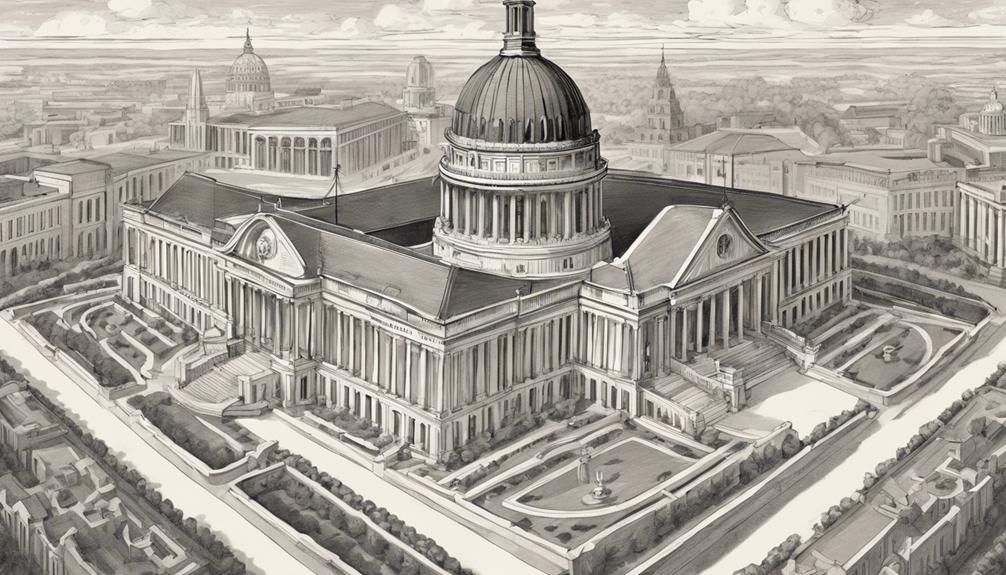
You're not alone in wondering how religion influences legislation. From ancient Mesopotamia to modern democracies, faith has shaped laws and governance. Your elected officials' religious beliefs can indirectly impact the laws they create. The distinction between church and state isn't always clear-cut, and recognizing faith's role in lawmaking is key to engaging with politics. As you explore the intersection of religion and politics, you'll find that finding a balance between religious freedom and individual rights is essential. And that's just the beginning – there's more to uncover about the complex dance between faith and policy.
Historical Roots of Religious Influence
Explore the earliest recorded civilizations, and you'll discover that religious beliefs have consistently influenced the development of laws and governance. From ancient Mesopotamia to modern democracies, the impact of faith on legislation is undeniable. You'll find that the Code of Hammurabi, one of the oldest known legal codes, was deeply rooted in Babylonian mythology. Similarly, the ancient Greeks believed that their laws were inspired by the gods, and their governance was often guided by oracles and omens.
As you investigate further into history, you'll notice that religious institutions played a significant role in shaping the laws of medieval Europe. The Catholic Church, in particular, wielded considerable influence over the development of canon law, which later influenced the creation of secular laws. You'll also find that the Protestant Reformation had a profound impact on the relationship between religion and governance, leading to the emergence of new legal codes and systems.
The historical roots of religious influence on legislation are complex and multifaceted. However, one thing is clear: religious beliefs have consistently shaped the development of laws and governance across cultures and civilizations. As you continue to explore the intersection of religion and politics, you'll begin to appreciate the profound impact that faith has had on the evolution of legislation. By understanding these historical roots, you'll gain a deeper appreciation for the intricate relationships between religion, politics, and law.
The Role of Faith in Lawmaking
As you explore the intricate relationships between religion, politics, and law, you'll discover that faith continues to play a significant role in shaping the lawmaking process, influencing the decisions of policymakers and the laws that govern society. You might wonder, how does this happen? The answer lies in the values and principles that faith instills in individuals. Many policymakers bring their religious beliefs to the table, often unconsciously, when making decisions. This isn't inherently good or bad; it's simply an undeniable reality. For instance, a policymaker's stance on issues like abortion, euthanasia, or same-sex marriage might be influenced by their religious beliefs.
You might think, 'But what about separation of church and state?' While that's an important concept, it's not always a clear-cut distinction. In reality, the lines between faith and politics often blur. Policymakers, like everyone else, are shaped by their experiences, values, and beliefs – including religious ones. As a result, faith can influence the laws that govern your life, even if indirectly. Understanding this dynamic is essential to navigating the complex landscape of religion, politics, and law. By recognizing the role of faith in lawmaking, you can better engage with the political process and make informed decisions about the issues that matter to you.
Religious Freedom Vs Individual Rights
As you delve into the intersection of religious freedom and individual rights, you'll encounter a complex web of faith, morality, and protected beliefs. You'll need to ponder how religious convictions shape public life, balancing moral codes that may conflict with individual liberties. By examining these tensions, you'll uncover the nuances of protected beliefs and their impact on society.
Faith in the Public
When you walk into a public space, you're likely to encounter people of diverse faiths and beliefs, but what happens when someone's religious freedom clashes with your individual rights? This tension is at the heart of the debate around faith in the public sphere. You might see a coworker wearing a hijab, a classmate with a kippah, or a neighbor displaying a crucifix. These expressions of faith are essential to people's identities, but they can also raise questions about discrimination, exclusion, or even harm to others.
As you navigate these complexities, you'll encounter conflicting values. On one hand, religious freedom is a fundamental right that allows individuals to express their beliefs without fear of persecution. On the other hand, individual rights, such as access to healthcare, education, or employment, must be protected from discrimination. The challenge lies in finding a balance that respects both. You, as a member of society, have a stake in this conversation. By engaging in open and respectful dialogue, you can help create a public space where diverse faiths and beliefs coexist peacefully, without compromising individual rights.
Balancing Moral Codes
You're now faced with the challenge of reconciling two fundamental values: the freedom to practice one's religion and the right to individual protections from discrimination. As you navigate this complex intersection, you're forced to take into account the delicate balance between moral codes.
On one hand, religious freedom is a cornerstone of democracy, allowing individuals to express their beliefs without fear of persecution. On the other hand, individual rights must be safeguarded from discrimination, ensuring everyone has equal opportunities and treatment.
The stakes are high, and the consequences of imbalance are far-reaching. Consider the following:
- LGBTQ+ individuals facing discrimination in employment, housing, and healthcare based on religious exemptions.
- Religious minorities facing persecution due to lack of protection under the law.
- Women's reproductive rights being limited by religious ideologies.
As you weigh the importance of religious freedom against individual rights, keep in mind that finding a balance is essential. The outcome will have a lasting impact on the lives of millions, shaping the fabric of our society and the future of our democracy.
Protected Beliefs Only
In the pursuit of protecting religious beliefs, an essential question emerges: should religious freedom extend only to beliefs that are sincerely held, or should it encompass all beliefs, regardless of their validity or justification? As you explore this complex issue, you'll realize that drawing a clear line between protected beliefs and individual rights is vital. On one hand, limiting religious freedom to sincerely held beliefs might guarantee that only authentic convictions are safeguarded. On the other hand, doing so could lead to the marginalization of minority beliefs or unconventional religious practices.
As you navigate this delicate balance, consider the implications of protecting beliefs that might be deemed unconventional or even harmful. Should religious freedom extend to beliefs that infringe upon individual rights or promote discrimination? Where do you draw the line between protecting religious beliefs and upholding individual rights? The answer to this question will have a significant impact on the fabric of our society, as it has far-reaching consequences for religious minorities, LGBTQ+ individuals, and women's rights advocates.
Politicizing Morality and Ethics
As you delve into the complex intersection of religion and politics in legislation, you'll notice that politicians often claim the moral high ground to justify their policies. But have you paused to contemplate how they use ethics in their rhetoric to sway public opinion, and whether personal beliefs should be legislated? You'll soon realize that politicizing morality and ethics has significant implications for the laws that govern our lives.
Moral High Ground Claims
Frequently, politicians invoke moral high ground claims to justify their policy positions, often masquerading their self-serving agendas as moral imperatives. They use this tactic to sway public opinion and create a sense of urgency around their cause. But, as you critically examine these claims, you'll often find that they're rooted in personal beliefs rather than objective moral principles.
You may find yourself wondering, what's the harm in this approach? Here are a few reasons why moral high ground claims can be problematic:
- Divisiveness: By framing issues as moral imperatives, politicians create an "us versus them" mentality, further polarizing an already divided nation.
- Lack of nuance: Moral high ground claims oversimplify complex issues, ignoring the gray areas and nuances that require thoughtful consideration.
- Manipulation: By appealing to emotions rather than reason, politicians can manipulate public opinion, rather than fostering informed discussion and debate.
As you navigate the intersection of religion and politics, it's essential to recognize when moral high ground claims are being used to sway your opinions. By doing so, you'll be better equipped to critically evaluate the issues and make informed decisions.
Ethics in Political Rhetoric
You're likely familiar with politicians who use moral language to justify their policy proposals, often blurring the lines between ethics and politics. This phenomenon is particularly evident in the way politicians employ moral rhetoric to sway public opinion and justify their stance on contentious issues. By invoking moral principles, politicians can create an emotional connection with their audience, making their policies more relatable and appealing. However, this tactic can also be misleading, as it often masks the complexities of the issue at hand.
When politicians politicize morality, they're able to tap into people's deeply held values and beliefs. This can lead to a sense of shared identity and community among like-minded individuals. However, it also risks oversimplifying complex ethical dilemmas and neglecting the nuances of real-world problems. As you engage with political rhetoric, it's essential to remain aware of when moral language is being used to justify policy decisions. By doing so, you can make more informed decisions and hold politicians accountable for their actions.
Legislating Personal Beliefs
Politicing morality and ethics in legislation often leads to laws that reflect the personal beliefs of lawmakers rather than serving the greater good. You may think that's okay, but it can have serious consequences. When lawmakers impose their personal beliefs on the masses, it can lead to laws that restrict your freedoms and choices.
Here are just a few examples of how legislating personal beliefs can go wrong:
- Restricting access to healthcare: When lawmakers impose their beliefs on reproductive rights, it can lead to laws that limit access to essential healthcare services for women.
- Discriminating against marginalized groups: Laws that reflect personal beliefs about gender identity, sexual orientation, or race can lead to discrimination and marginalization of already vulnerable groups.
- Limiting scientific progress: When lawmakers prioritize their personal beliefs over scientific evidence, it can hinder progress in fields like stem cell research and climate change mitigation.
Legislation and Religious Identity
As legislators craft laws, their religious identities often influence the policy decisions they make, revealing a complex interplay between faith and governance. You might wonder, how do these personal beliefs shape the laws that govern your life? The answer lies in the intricate web of values, principles, and convictions that underpin a legislator's worldview. When you elect a representative, you're not just electing a policy expert; you're electing a moral agent who embodies a set of values that will guide their decision-making.
As you navigate the complexities of lawmaking, it's essential to recognize that religious identity is not just a personal aspect of a legislator's life but an integral part of their policymaking process. This intersection of faith and governance can have far-reaching implications for the laws that are passed, and the values they reflect. You might see this play out in debates around issues like reproductive rights, education, or social welfare. By acknowledging the role of religious identity in legislation, you can better understand the motivations behind the policies that shape your community.
As you engage with the legislative process, remember that the religious identities of your representatives are not just personal characteristics but also influencing factors in the laws that govern your life. By recognizing this interplay, you can foster a more nuanced understanding of the complex dance between faith, politics, and governance.
Separation of Church and State Debates
Debates about the separation of church and state have long fueled passions, with some arguing that religious influence has no place in governance, while others see it as essential to the moral fabric of society. You’re likely familiar with the heated discussions surrounding this topic, and you might even have strong opinions on the matter. As you ponder the role of religion in legislation, you’re not alone in wondering: where do we draw the line? This contentious debate extends into various areas of governance, including issues like gun control legislation. An evaluation of the gun control legislation overview reveals how differing moral perspectives can shape policy decisions, often reflecting the lawmakers’ underlying beliefs and values. As society continues to grapple with these complex issues, the challenge remains in balancing individual rights with the collective moral responsibilities that some attribute to religious teachings.
The debate is often emotional, with both sides presenting compelling arguments. On one hand, you might believe that religious values are essential to guiding policy decisions. On the other hand, you might think that religious influence has no place in governance, fearing it could lead to discrimination or inequality.
Here are just a few examples of how this debate plays out in real life:
- Public school prayer: Should prayer be allowed in public schools, or is it a violation of the separation of church and state?
- Religious exemptions: Should businesses or individuals be exempt from certain laws if they claim a religious objection, or does this undermine equality and fairness?
- Faith-based initiatives: Should government funding be used to support faith-based social services, or does this blur the line between church and state?
As you navigate these complex questions, remember that the separation of church and state is a delicate balance. It's up to you to reflect on the implications of religious influence in legislation and decide where you stand on this critical issue.
The Future of Religious Politics
You're likely wondering what the future holds for religious politics, and whether the current trends will continue to shape the political landscape. As you ponder this question, you're not alone. Many are concerned about the growing influence of religion on politics and the potential consequences for our society.
In the years to come, it's essential that we find a balance between protecting religious freedoms and ensuring that our political decisions are based on evidence and reason. This won't be an easy feat, as the lines between church and state continue to blur. However, by engaging in open and respectful dialogue, we can work towards a future where religious beliefs inform our values without dictating our policies.
You might be thinking, 'But what about the growing polarization in our society?' It's true, the political divide is widening, and religious beliefs often find themselves at the forefront of the debate. Yet, instead of letting our differences drive us further apart, we can use them as an opportunity to come together and find common ground. By doing so, we can create a more inclusive and just society that respects the diversity of religious beliefs.
As you look to the future, remember that you have a role to play in shaping the intersection of religion and politics. By staying informed, engaging in respectful dialogue, and advocating for policies that promote the common good, you can help create a brighter future for all.
Frequently Asked Questions
Can Religious Leaders Directly Influence Political Decisions?
You're wondering if religious leaders can directly influence political decisions. The answer is yes, they can. You see, religious leaders often have a strong following, and their words carry weight. They can mobilize their followers to vote a certain way or support specific policies. Additionally, some politicians may seek their counsel or endorsement to gain credibility with religious voters. So, it's clear that religious leaders can have a significant impact on political decisions.
Are Politicians Obligated to Disclose Their Religious Beliefs?
You're wondering if politicians should be upfront about their religious beliefs. Honestly, it's a tricky one. On one hand, their beliefs shape their decisions, and transparency is key. On the other, it's their personal life, and you might not want to know. If they're making laws based on religious beliefs, don't you have a right to know what's driving those decisions? It's about accountability and trust. You deserve to know what influences their choices, don't you?
Do Religious Beliefs Trump Scientific Evidence in Policy-Making?
As you weigh the role of faith in policy-making, you're forced to confront an essential question: do religious beliefs take precedence over scientific evidence? You might find yourself torn between respecting individual convictions and relying on empirical facts. Remember, when it comes to policy-making, you're not just representing your own beliefs, but also the needs and well-being of the people you serve.
Can Religious Organizations Receive Government Funding?
You're probably thinking, "Can religious organizations really get government funding? That's like mixing oil and water!" But, surprisingly, it's not that cut and dry. In the US, religious organizations can receive government funding as long as the funds are used for secular purposes, like providing social services. It's a thin line, but organizations like Catholic Charities have received millions in funding. So, yes, it's possible, but it's a delicate balance.
Should Religious Education Be Mandatory in Public Schools?
You're wondering if religious education should be mandatory in public schools. It's a tough call. On one hand, it could foster empathy and understanding among students from different backgrounds. On the other hand, it might infringe on personal beliefs and values. You might ask yourself, would mandatory religious education create a sense of community or spark controversy?
