

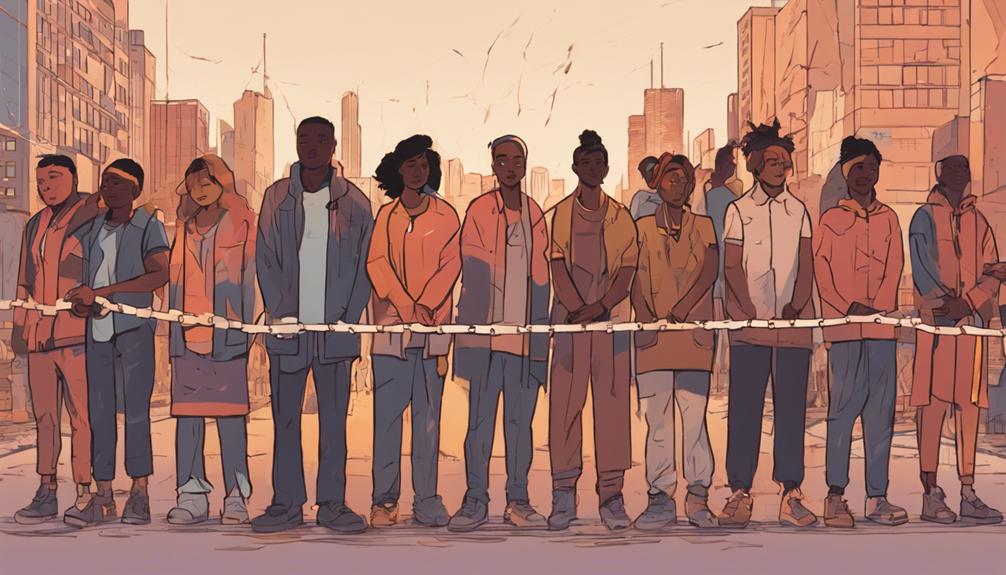
You're likely aware that marginalized communities face staggering disparities, with 137 million people in the US alone living in poverty. Social policies aimed at addressing these inequalities often fall short, perpetuating systemic inequalities. Unconscious biases in policymaking, lack of cultural competence, and inaccessible infrastructure all contribute to exclusion. It's essential to involve diverse perspectives in policymaking to address these blind spots. As you explore the complexities of social policy, you'll uncover a deeper understanding of the historical context of marginalization, the importance of empowering marginalized voices, and the reforms needed to build a more inclusive future.
Understanding Social Policy's Intent
As you explore the field of social policy, it's essential to understand that its intent is not solely to provide a safety net for marginalized communities, but to also address the systemic inequalities that perpetuate their marginalization. You may think that social policy is only about providing financial assistance or resources to those in need, but it's more than that. It's about identifying and dismantling the underlying systems that keep certain groups oppressed.
As you investigate further, you'll realize that social policy aims to promote equality and justice by addressing the root causes of marginalization. It's not just about treating the symptoms, but about curing the disease. For instance, providing access to education and job training programs can help individuals from marginalized communities gain economic mobility and break the cycle of poverty.
Historical Context of Marginalization
As you explore the historical context of marginalization, you'll find that it's rooted in the rise of institutional racism, which laid the groundwork for systemic exclusion. You'll see how this phenomenon emerged, gained momentum, and became ingrained in societal structures. By examining this pivotal moment, you'll gain insight into how marginalization took hold and continues to impact communities today.
Rise of Institutional Racism
Throughout the 19th and early 20th centuries, discriminatory laws and policies, often disguised as social reform, perpetuated institutional racism, systematically disenfranchising marginalized communities and entrenching their powerlessness. You might think that these policies were meant to help, but in reality, they were designed to keep certain groups down. For instance, the 1935 Social Security Act excluded agricultural and domestic workers, who were mainly African American, from receiving benefits. This meant that they were left without a safety net, making them even more vulnerable to exploitation.
As you learn more about this period, you'll realize that these policies were just the tip of the iceberg. Redlining, voter suppression, and segregation were all tools used to maintain the status quo of racial inequality. It's essential to acknowledge that these practices didn't just happen by chance; they were intentionally crafted to maintain power structures that favored one group over others. By recognizing the role of institutional racism in shaping our society, you can begin to understand why marginalized communities still face significant barriers today.
Systemic Exclusion Begins
You're about to uncover the roots of systemic exclusion, which date back to the earliest days of American colonization, when European settlers brought with them diseases, violence, and forced assimilation that decimated indigenous populations. This dark history laid the groundwork for the systemic exclusion we see today. As you explore further, you'll realize that the marginalization of indigenous peoples was just the beginning.
The effects of colonization didn't stop there. Here are a few key ways in which systemic exclusion began to take shape:
- Land theft and forced relocation: The government forcibly removed indigenous peoples from their lands, displacing them and erasing their cultural identities.
- Cultural suppression: Indigenous children were forced to attend boarding schools, where they were punished for speaking their native languages and practicing their cultural traditions.
- Economic exploitation: Indigenous peoples were denied access to economic opportunities, further entrenching their marginalization.
These historical events have had a lasting impact on marginalized communities, perpetuating systems of oppression that continue to affect them today. As you continue to investigate the complex web of systemic exclusion, remember that understanding the past is essential for creating a more inclusive future.
Policy Blind Spots and Biases
Many social policies unwittingly perpetuate inequalities, often due to blind spots and biases embedded in their design or implementation. You might think that policies are created to benefit everyone, but unfortunately, that's not always the case. Unconscious biases and assumptions can seep into policy decisions, favoring certain groups over others. This can lead to unintended consequences, where marginalized communities are further marginalized.
For instance, a policy aiming to increase access to education might focus on providing resources to urban areas, overlooking the needs of rural communities. This oversight can exacerbate existing disparities, making it even harder for rural students to access quality education. Similarly, policies addressing healthcare might prioritize the needs of one demographic, neglecting the unique challenges faced by others.
As you navigate the complexities of social policy, it's essential to recognize these blind spots and biases. By doing so, you can begin to address the inequalities they perpetuate. It's vital to involve diverse perspectives in the policymaking process, ensuring that the needs of marginalized communities are heard and considered. By acknowledging and addressing these policy blind spots, you can work towards creating a more inclusive and equitable society. Remember, it's not just about creating policies, but about creating policies that truly benefit everyone.
Systemic Barriers to Inclusion
Systemic barriers to inclusion, such as discriminatory practices and institutional biases, can obstruct marginalized communities' access to social services, perpetuating their exclusion from opportunities and resources. As you navigate the complex web of social services, you may encounter subtle yet pervasive barriers that hinder your ability to access essential support. These systemic barriers can manifest in various ways, making it difficult for you to access the resources you need to thrive.
Some common systemic barriers to inclusion include:
- Lack of cultural competence: When service providers lack understanding and appreciation of diverse cultural backgrounds, they may unintentionally create barriers to access.
- Inaccessible infrastructure: Physical or technological barriers can prevent marginalized communities from accessing essential services, such as healthcare or education.
- Stereotyping and bias: Unconscious biases and stereotypes can lead to discriminatory practices, further marginalizing already excluded communities.
These systemic barriers can have devastating consequences, perpetuating cycles of exclusion and disadvantage. As you seek to create a more inclusive society, it's essential to recognize and address these barriers, working to dismantle the systems that perpetuate marginalization. By doing so, you can help create a more equitable society where everyone has access to the resources they need to thrive.
Disparities in Healthcare Access
As you navigate the healthcare system, you're likely to encounter disparities in access to care that perpetuate health inequities, particularly for marginalized communities. These disparities are often rooted in systemic barriers, biases, and lack of cultural competence. As a result, marginalized communities face significant challenges in accessing quality healthcare, leading to poorer health outcomes and reduced life expectancy.
| Healthcare Disparity | Marginalized Communities Affected |
|---|---|
| Limited access to health insurance | Low-income individuals, immigrants, and people of color |
| Lack of cultural competency among healthcare providers | Indigenous peoples, LGBTQ+ individuals, and people with disabilities |
| Inadequate language access | Limited English proficient individuals, Deaf or hard of hearing individuals |
| Limited healthcare provider diversity | Racial and ethnic minorities, women, and rural communities |
These disparities are further exacerbated by social determinants of health, such as housing, education, and employment. To address these disparities, it's essential to implement policies that promote healthcare equity, increase diversity among healthcare providers, and improve cultural competency. By doing so, we can work towards a more inclusive and equitable healthcare system that values the health and well-being of all individuals, regardless of their background or circumstances.
Economic Inequality and Poverty
As you explore the impact of social policy on marginalized communities, you'll notice that economic inequality and poverty are intertwined issues that affect millions of people. You'll see how the wealth disparity in our society widens the gap between the haves and have-nots, perpetuating a cycle of poverty that's difficult to escape. By examining the root causes of poverty, you'll begin to understand why it persists, and what role social policy can play in addressing this pressing issue.
Wealth Disparity Widens Gap
You explore a staggering reality: in the United States, the richest 1% of the population holds nearly 40% of the country's wealth, while the poorest 90% struggle to make ends meet with just 27%. This astonishing wealth disparity has far-reaching consequences, perpetuating economic inequality and poverty.
As you investigate deeper into the issue, you'll find that this wealth gap has significant implications for marginalized communities. For instance:
- Limited access to education: When wealth is concentrated among the few, opportunities for quality education become scarce, further marginalizing already disadvantaged groups.
- Reduced economic mobility: With minimal wealth to leverage, marginalized communities struggle to break the cycle of poverty, making it harder to climb the social ladder.
- Deepened social and economic segregation: As the wealthy few become increasingly isolated, social cohesion deteriorates, and marginalized communities are left to fend for themselves.
This growing wealth disparity threatens the very fabric of our society, eroding trust and undermining social cohesion. It's time to acknowledge the harsh reality and work towards creating a more equitable society, where everyone has a fair shot at prosperity.
Poverty Cycle Persists
The persistent wealth disparity outlined above perpetuates a vicious cycle of poverty, where those born into disadvantaged backgrounds are more likely to remain mired in economic hardship. You're probably aware that poverty is a complex issue, but it's essential to acknowledge that it's often a result of systemic failures rather than individual shortcomings. When you're born into poverty, you're more likely to attend underfunded schools, have limited access to healthcare, and face discrimination in the job market. These obstacles make it incredibly difficult to break free from the poverty cycle.
As you navigate this challenging landscape, you're forced to make difficult choices between paying bills, buying food, or seeking medical attention. The stress and anxiety that come with living in poverty can have long-term effects on your mental and physical health. It's a cycle that's hard to escape, and it's exacerbated by the lack of social safety nets and inadequate policy interventions. You deserve better, and it's time to demand change. By acknowledging the interconnectedness of poverty, inequality, and social policy, we can start building a more equitable society where everyone has a fair shot at thriving.
Education Policy's Unintended Consequences
By the 1990s, education policies aimed at promoting accountability and standardization had begun to disproportionately affect marginalized communities. You might think that these policies, designed to improve education, would benefit everyone equally. However, the reality is that they've had devastating unintended consequences on the very communities they aimed to help.
You see, these policies have led to a narrow focus on standardized testing, which has resulted in a culture of teaching to the test. This, in turn, has led to a lack of creative freedom for teachers and a lack of autonomy for students. The most vulnerable students, those from marginalized communities, are the ones who suffer the most. They're already facing systemic barriers to education, and these policies only exacerbate the issue.
Here are just a few examples of how these policies have failed marginalized communities:
- Over-policing in schools: The emphasis on discipline and zero-tolerance policies has led to a rise in police presence in schools, disproportionately affecting students of color and students with disabilities.
- Lack of cultural relevance: The standardized curriculum often erases the histories and experiences of marginalized communities, leading to a lack of representation and a sense of disconnection for students.
- Teacher bias: The pressure to perform well on standardized tests can lead teachers to have implicit biases, impacting the quality of education received by students from marginalized communities.
These unintended consequences have far-reaching effects, perpetuating the cycle of marginalization and limiting opportunities for already disadvantaged students. It's essential to acknowledge and address these issues to create a more inclusive and equitable education system.
Criminal Justice System Failures
As you examine the criminal justice system, you'll notice that racial disparities persist, with marginalized communities facing higher arrest rates and harsher sentencing. Systemic biases remain entrenched, perpetuating cycles of inequality and discrimination. Meanwhile, incarceration rates continue to soar, further entrenching social and economic disparities that affect entire communities.
Racial Disparities Persist
You're more likely to be arrested, charged, and incarcerated if you're Black or Latino, with racial disparities persisting at every stage of the criminal justice system. This isn't just a coincidence; it's a result of systemic failures that perpetuate racial biases. You might think that's not true, but the data tells a different story.
Here are just a few examples:
- Racial profiling: Black drivers are 20% more likely to be pulled over than white drivers, even though they're less likely to be found with contraband.
- Sentencing disparities: Black Americans are 21% more likely to receive mandatory minimum sentences than white Americans.
- Incarceration rates: Black Americans are incarcerated at a rate 5.8 times higher than white Americans, despite similar crime rates.
These disparities have devastating consequences for communities of color. It's time to acknowledge these failures and work towards a more equitable criminal justice system. By understanding the scope of the problem, we can start to build a more just society where everyone has an equal chance to thrive.
Systemic Biases Remain
Systemic biases remain embedded in the criminal justice system, perpetuating racial disparities that cannot be explained away by crime rates or demographics alone. You might think that with all the advancements in social justice, these biases would have diminished, but unfortunately, that's not the case. From racial profiling to discriminatory policing, the system is plagued by prejudices that affect marginalized communities disproportionately.
You're probably aware that people of color are more likely to be stopped, searched, and arrested than their white counterparts. But what you might not know is that these biases also influence sentencing, with people of color receiving harsher sentences for the same crimes. It's not just about individual prejudices, but rather a system that perpetuates racism. For instance, mandatory minimum sentencing laws disproportionately affect communities of color, leading to longer sentences for non-violent crimes. You can't help but wonder, how can we trust a system that's supposed to protect and serve when it's inherently biased against certain groups?
Incarceration Rates Soar
You're likely aware that the United States boasts one of the highest incarceration rates in the world, with over 2.3 million people behind bars, a staggering number that has more than quadrupled since the 1980s. This alarming trend has devastating consequences, particularly for marginalized communities. The criminal justice system's failures have led to the disproportionate representation of people of color, the poor, and the mentally ill behind bars.
These statistics are a result of policies that prioritize punishment over rehabilitation, leading to a cycle of recidivism and social unrest.
Here are a few key factors contributing to this crisis:
- Racial disparities: Black Americans are incarcerated at nearly six times the rate of white Americans.
- Mandatory minimum sentences: Harsh sentencing laws have led to overcrowding and longer prison stays.
- Limited scope: Insufficient funding and resources hinder rehabilitation efforts, making it difficult for individuals to reintegrate into society upon release.
You're likely wondering what can be done to address these issues. It's essential to recognize the need for focused reform, including policy changes and community-based initiatives, to mitigate the harm caused by mass incarceration.
Policy Reforms for Greater Equity
As policymakers work towards creating a more equitable society, they must prioritize reforms that tackle the root causes of inequality, rather than just its symptoms. You can't just treat the surface-level problems; you need to address the underlying issues that perpetuate inequality. This requires a deep understanding of the systemic barriers that marginalized communities face. For instance, reforms should focus on addressing discriminatory practices in education, employment, and housing. By doing so, policymakers can create a more significant playing field that allows everyone to thrive.
One pivotal area of reform is the criminal justice system. You've seen how incarceration rates have soared, disproportionately affecting marginalized communities. To combat this, policymakers can implement reforms that address racial bias in sentencing, reduce mandatory minimum sentences, and increase funding for rehabilitation programs. This will help to reduce the number of people incarcerated and provide a second chance for those who have made mistakes.
Ultimately, policy reforms are vital in creating a more equitable society. By tackling the root causes of inequality, policymakers can create a more just and fair society where everyone has the opportunity to succeed. You, as a member of society, have a role to play in advocating for these reforms and holding policymakers accountable. Together, we can create a society where everyone belongs and has an equal chance to thrive.
Empowering Marginalized Voices Matters
By acknowledging the inherent value of marginalized voices, policymakers can create opportunities for these communities to take an active role in shaping policies that directly impact their lives. This empowerment is essential, as it allows you to have a say in the decisions that affect your daily life. When marginalized voices are amplified, you’re more likely to see policies that address the unique challenges you face. Furthermore, the inclusion of marginalized voices not only enriches policy discussions but also enhances the effectiveness of political satire and public perception. By recognizing and integrating diverse experiences, policymakers can better address societal issues, fostering an environment where all citizens feel represented. Ultimately, when policies are reflective of the communities they serve, it leads to a more just and equitable society, where everyone’s needs and challenges are acknowledged and addressed.
Empowering marginalized voices matters because it:
- Fosters inclusive decision-making: By involving marginalized communities in the policy-making process, you guarantee that their needs are considered, and their voices are heard.
- Promotes targeted solutions: With marginalized voices at the table, policies can be tailored to address specific challenges, leading to more effective solutions.
- Breaks cycles of oppression: By empowering marginalized voices, you're taking a step towards dismantling systems of oppression and promoting a more equitable society.
When policymakers prioritize marginalized voices, you're more likely to see policies that address the root causes of inequality. This, in turn, can lead to more effective solutions and a more just society. By recognizing the inherent value of marginalized voices, you're taking an essential step towards creating a more inclusive and equitable world.
Building a More Inclusive Future
To build a more inclusive future, policymakers must prioritize the creation of systemic reforms that address the deep-seated inequalities affecting marginalized communities. You, as a part of this society, have a role to play in shaping this future. It's essential to recognize that marginalized communities are not just statistics; they're your neighbors, friends, and family members who deserve equal opportunities and respect.
You can start by educating yourself about the struggles faced by marginalized groups. Listen to their stories, engage in open conversations, and acknowledge the privileges you may have unintentionally benefited from. By doing so, you'll become more empathetic and better equipped to advocate for change.
As you raise your voice, you'll inspire others to do the same. Together, you can push for policy reforms that promote diversity, equity, and inclusion. Imagine a future where everyone has access to quality education, healthcare, and economic opportunities, regardless of their race, gender, sexual orientation, or ability. It's a future where you can thrive without fear of discrimination or marginalization.
You have the power to create this future. By working together, you can break down the barriers that have held marginalized communities back for far too long. So, take the first step today, and let's build a more inclusive future – one that values diversity, promotes equality, and celebrates the unique contributions of every individual.
Frequently Asked Questions
How Can Policymakers Ensure They Are Listening to Marginalized Voices?
Did you know that 85% of policymakers admit they rarely meet with marginalized communities? To guarantee you're listening to these voices, start by acknowledging your biases and privilege. Then, create safe spaces for open dialogue, free from judgment. Use inclusive language, and don't interrupt – really listen. You can also partner with community leaders to amplify their voices. Remember, it's not about speaking for them, but about creating space for them to speak for themselves.
What Are the Consequences of Ignoring Intersectional Identities in Policy?
When you ignore intersectional identities in policy, you risk exacerbating existing inequalities. You might unintentionally create policies that benefit one group, but harm another. For instance, a policy aimed at supporting women might overlook the unique struggles of women of color. By ignoring these complexities, you can perpetuate systemic injustices, further marginalizing already vulnerable groups.
Can Economic Empowerment Alone Alleviate Systemic Marginalization?
'Blood is thicker than water,' but when it comes to economic empowerment, you might think it's the solution to all problems. You assume that once you've got a steady income, all your troubles will fade away. But, can economic empowerment alone really alleviate systemic marginalization? The answer is no. While it's an essential step, it's only one piece of the puzzle. You need to address the root causes of marginalization, like discriminatory policies and social norms, to create lasting change.
How Do Current Policies Perpetuate Cycles of Poverty and Inequality?
You're probably wondering how current policies perpetuate cycles of poverty and inequality. The truth is, many policies unintentionally maintain the status quo, benefiting those already in power. You see, laws and regulations often overlook the needs of marginalized groups, perpetuating systemic barriers. For instance, lack of access to quality education and job opportunities traps people in poverty. It's essential to recognize these patterns and push for inclusive policies that address the root causes of inequality.
What Role Do Community-Based Initiatives Play in Driving Policy Change?
As you navigate the complexities of policy change, you'll find that community-based initiatives are the unsung heroes driving progress. Coincidentally, it's these grassroots efforts that often spark the most meaningful reforms. By amplifying marginalized voices, community-driven projects humanize statistics, making policymakers take notice. You'll see that it's these initiatives that bridge the gap between activism and legislation, paving the way for lasting, inclusive change.
