


We trade stability for flexibility, sacrificing a steady paycheck for the freedom to roam and tell the stories that need to be told. But with this lifestyle comes the risks of uncertainty, rejection, and financial stress. To succeed, we must master the art of pitching, build a strong online presence, and manage our finances wisely. We must also adapt to the ever-changing industry and cultivate a resilient mindset. As we navigate the unpredictable world of freelance travel writing, we're constantly learning and refining our skills to stay ahead of the game – and there's more to discover ahead.
Finding Lucrative Travel Writing Gigs
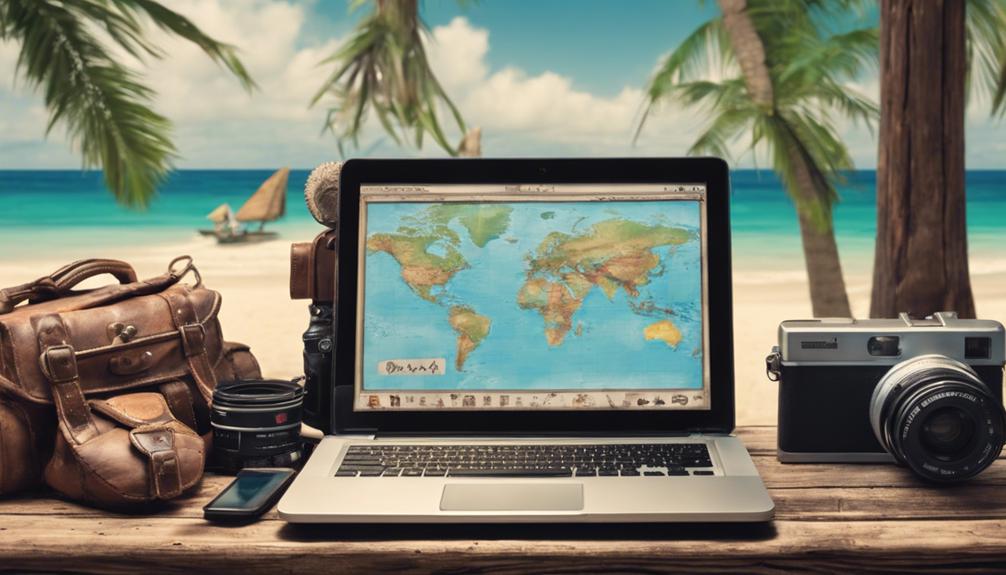
As we immerse ourselves in the world of freelance travel writing, our first priority is to land lucrative gigs that will take us to exotic destinations and pay the bills. It's not just about sipping margaritas on a beach in Maui; our focus is to find reliable sources of income that align with our passion for travel and storytelling.
To get started, we scour online job boards, social media, and professional networks to find opportunities that fit our niche. We also tap into our personal network, reaching out to friends, family, and colleagues who might have connections in the travel industry. We're always on the lookout for publications, websites, and brands that align with our interests and expertise, and we're not afraid to cold-pitch our ideas to editors and content managers.
We're also proactive about building our personal brand, creating a strong online presence through our website, blog, and social media profiles. This way, we're visible to potential clients and can showcase our writing chops, travel expertise, and unique voice. By being persistent, adaptable, and open to new opportunities, we're confident that we'll land those lucrative gigs that will take us on the adventures of a lifetime.
Crafting Compelling Pitch Letters
We craft pitch letters that stand out from the crowd by highlighting our unique selling proposition, weaving together a compelling narrative that showcases our expertise, and speaking directly to the editor's needs. As freelance travel writers, our pitch letters are often the first impression we make on editors, so it's essential to get it right.
To increase our chances of success, we focus on the three Cs: clarity, concision, and customization. We make sure our pitch letters are free of jargon and overly technical language, and instead, use clear and concise language that effectively communicates our ideas. We also tailor our pitches to each editor's specific needs, highlighting how our article will resonate with their audience.
Here's a breakdown of what makes a compelling pitch letter:
| Element | Description | Example |
|---|---|---|
| Hook | Grab the editor's attention | "Explore the hidden gems of Tokyo" |
| Summary | Clearly outline the article's focus | "Discover the city's best-kept secrets" |
| Unique angle | Highlight what sets our article apart | "Through the lens of a local photographer" |
Building a Professional Online Presence

Establishing a strong online presence is essential in today's digital age, allowing us to showcase our portfolio, connect with editors, and demonstrate our expertise as freelance travel writers. As we navigate the world of freelance travel writing, having a professional online presence is pivotal for attracting clients, building our brand, and staying competitive.
We've found that having a website or blog is indispensable for showcasing our work, sharing our experiences, and establishing ourselves as authorities in the travel writing niche. It's where we can share our published articles, highlight our specialties, and provide a glimpse into our writing style. Additionally, a website or blog serves as a digital business card, making it easy for editors and potential clients to find and contact us.
In addition to a website, we've learned that social media plays a significant role in building our online presence. Platforms like Twitter, Instagram, and Facebook allow us to connect with editors, share our work, and engage with our audience in real-time. By sharing our experiences, behind-the-scenes glimpses, and travel tips, we can build a community of followers who are interested in our work.
Managing Finances on the Road
Six months into our freelance travel writing career, we realized that managing finances on the road was essential to sustaining our nomadic lifestyle. As digital nomads, we don't have the luxury of a steady paycheck or a fixed address, which means we need to be intentional about our financial planning.
To stay on top of our finances, we've developed a few strategies that have become essential to our survival. Here are some of the most important ones:
- Track your expenses: We use an app to log every single transaction, no matter how small. This helps us stay aware of our spending habits and identify areas where we can cut back.
- Create a budget: Based on our income and expenses, we set a monthly budget that accounts for everything from accommodation and food to transportation and equipment.
- Set aside an emergency fund: Life is unpredictable, and things don't always go as planned. We make sure to save a portion of our income each month in case of unexpected expenses or dry spells.
Staying Productive in Unpredictable Environments

As digital nomads, we've learned to roll with the punches and adapt to unpredictable environments, from crowded cafes to noisy hostels, to stay productive on the road. We've developed strategies to maintain our focus and meet deadlines despite the distractions. For instance, we prioritize our tasks, breaking them down into manageable chunks, and tackle the most critical ones first. This approach helps us stay on track, even when our surroundings are less than ideal.
We've also mastered the art of finding pockets of productivity amidst chaos. A quiet corner in a bustling cafe, a secluded spot in a park, or even a hostel's common room during off-peak hours – we've learned to find solace in these hidden gems. We've invested in portable tools, like noise-cancelling headphones and portable Wi-Fi hotspots, to help us stay connected and focused. Additionally, we've developed a routine that works for us, whether it's a morning writing sprint or an afternoon editing session. By establishing a rhythm, we can navigate the unpredictability of our environments and stay productive.
Ultimately, as freelance travel writers, we've come to realize that our productivity is not solely dependent on our surroundings. It's about cultivating a mindset that's flexible, resilient, and adaptable. By doing so, we can turn even the most unpredictable environments into opportunities for growth and creativity.
Dealing With Rejection and Criticism
Our work, no matter how polished, is never immune to rejection and criticism, and we've learned to develop a thick skin to navigate the inevitable disappointments that come with pitching stories and submitting articles. It's tough to see our hard work dismissed or met with harsh criticism, but we've come to realize that it's an essential part of the freelance travel writing journey.
We've learned to separate our self-worth from our writing, recognizing that rejection is not a personal attack. Instead, we focus on the constructive feedback that can help us improve our craft. Here are a few strategies we use to deal with rejection and criticism:
- Don't take it personally: Remember that editors and publications receive countless submissions, and rejection often comes down to factors beyond our control.
- Learn from feedback: Use criticism as an opportunity to refine our writing and storytelling skills.
- Keep pitching and writing: Persistence is key in freelance travel writing; we can't let rejection hold us back from pursuing new opportunities and continuing to hone our craft.
Balancing Creativity With Commercial Appeal

As freelance travel writers, we’re constantly walking the tightrope between expressing our artistic vision and producing content that resonates with our audience. We need to craft compelling stories that transport readers to exotic destinations, while also considering what will sell and appeal to editors and readers alike. By finding this balance, we can create engaging travel pieces that satisfy our creative souls and commercial goals. To achieve this, we often draw inspiration from our personal experiences and the rich tapestry of cultures we encounter along the way. These journeys not only enrich our writing but also impart valuable insights that can be applied beyond the realm of travel. By sharing these adventures, we aim to offer world travel lessons for business that inspire our readers to see the global landscape as a source of inspiration and innovation in their professional lives.
Artistic Expression Vs. Sales
While crafting engaging travel narratives, we often find ourselves torn between expressing our artistic creativity and meeting the commercial demands of editors and readers. This constant tug-of-war can be overwhelming, but it's essential to find a balance between the two.
As freelance travel writers, we aim to create unique, compelling stories that showcase our artistic expression. However, we must also consider the commercial appeal of our work, ensuring it resonates with our target audience. To achieve this balance, we can:
- Know our audience: Understand what type of content resonates with our readers and tailor our writing accordingly.
- Set boundaries: Establish clear guidelines with editors and clients to maintain our creative vision.
- Stay authentic: Infuse our writing with personal experiences and perspectives, making our stories more relatable and engaging.
Crafting Compelling Storytelling
To craft compelling storytelling, it's evident that we must weave together vivid descriptions, engaging anecdotes, and insightful reflections that not only showcase our creativity but also resonate with our target audience. As freelance travel writers, we understand that our stories need to be both entertaining and informative. We want our readers to feel like they're right there with us, exploring the hidden gems of a foreign city or relaxing on a sun-kissed beach. To achieve this, we need to strike a balance between creativity and commercial appeal.
We've all been there – pouring our hearts out onto the page, only to realize that our masterpiece may not resonate with our intended audience. It's a delicate balance, but one that's essential for success in this industry. By crafting stories that are both engaging and informative, we can captivate our readers and leave them wanting more. So, how do we achieve this balance? It starts with understanding our audience and tailoring our writing style to their needs. By doing so, we can create compelling stories that not only showcase our creativity but also meet the commercial demands of the industry.
Adapting to Changes in the Industry
We've witnessed a seismic shift in the freelance travel writing landscape over the past decade, with the rise of online publishing and social media revolutionizing the way we research, write, and share our stories. As freelance travel writers, we've had to adapt quickly to these changes to stay relevant and competitive in the industry.
One of the most significant changes has been the shift from traditional print media to digital platforms. This has opened up new opportunities for us to reach a wider audience and share our stories in innovative ways. However, it's also created new challenges, such as maneuvering the ever-changing algorithms of social media platforms and ensuring our content remains visible in a crowded online space.
To stay ahead of the curve, we've learned to:
- Stay flexible and agile, being open to new platforms and formats as they emerge.
- Continuously develop our skills, staying up-to-date with the latest trends and best practices in digital storytelling.
- Build a strong online presence, creating a professional website and engaging with our audience through social media.
Frequently Asked Questions
How Do I Handle Taxes as a Freelance Travel Writer Abroad?
As we navigate the exotic landscapes of our freelance travel writing careers, taxes can be the dark cloud looming over our tropical paradises. We've learned that researching local tax laws and regulations is key. We also set aside a portion of our earnings for taxes, using online tools to stay organized. And, when in doubt, we consult a tax pro to make sure we're on the right path.
Can I Use My Existing Social Media for Professional Purposes?
We've built a social media presence, and now we're wondering if we can repurpose it for our freelance travel writing career. The answer is, absolutely! Since we've already established a following, we can leverage that audience to share our travel experiences and promote our writing. We'll just need to refine our content to appeal to both personal and professional followers. By doing so, we'll create a cohesive online brand that showcases our writing skills and travel expertise.
Do I Need Special Insurance to Travel and Work Abroad?
We've all heard the myth that travel writers are always on the go, carefree and reckless. But let's get real – we're not invincible. When working abroad, it's important to take into account insurance. Do we need special insurance to travel and work abroad? The answer is, it depends. Research your destination and the type of work you'll be doing. Check if your existing insurance policies cover you internationally. Better safe than sorry – we don't want to be stuck with a hefty medical bill or lost gear.
How Do I Prioritize Story Ideas and Manage My Time Effectively?
We prioritize story ideas by categorizing them into must-haves, nice-to-haves, and maybe-laters. We also consider our audience's interests and current trends. To manage our time effectively, we create a content calendar, setting realistic deadlines and allocating specific times for research, writing, and editing. We also leave some buffer time for unexpected tasks and self-care. By doing so, we guarantee we're producing quality content while maintaining a healthy work-life balance.
Can I Write off Travel Expenses as Business Deductions?
We're excited to delve into the world of tax deductions! As freelance travel writers, we're allowed to write off travel expenses as business deductions, but there's a catch. We must prove that our trips are primarily for business, not pleasure. We keep detailed records of our itineraries, receipts, and assignments to justify our deductions. By doing so, we can confidently claim our expenses and minimize our tax liability.
