

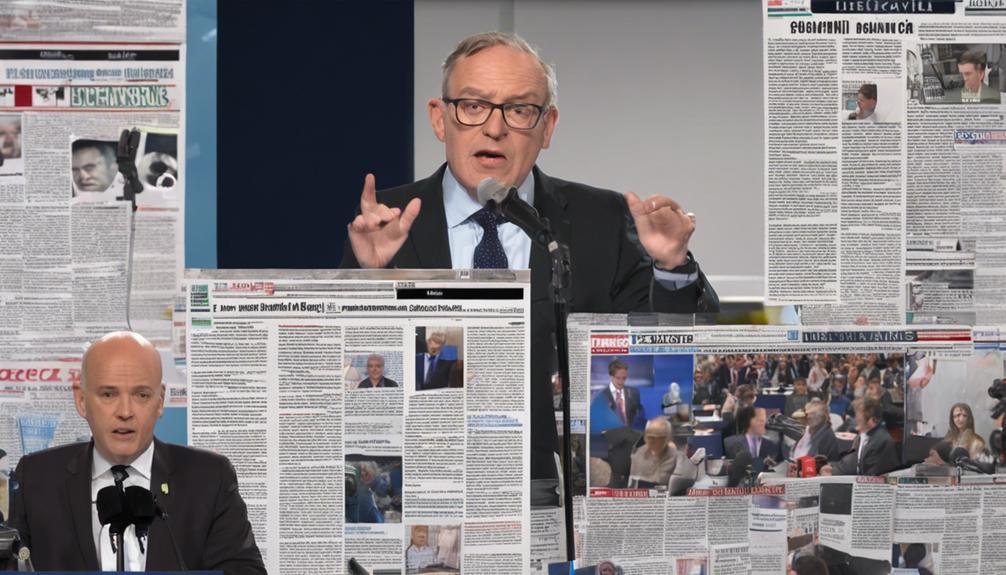
You're constantly consuming news and information that's curated by media outlets, which influences your understanding of political issues and ultimately shapes your opinions. The media's power lies in shaping public opinion, framing issues, and setting agendas. Politicians use media messaging tactics, crafting their public image, and spin doctor strategies to sway your opinions. But, the media also acts as a government watchdog, holding those in power accountable. As you navigate the complex relationship between politics and the media, you'll discover the importance of recognizing bias, seeking diverse sources, and fact-checking. There's more to uncover about the intricate dance between politics and the media.
Shaping Public Opinion Through Media
Through the strategic dissemination of information, the media wields significant influence over public opinion, often subtly shaping your perceptions and attitudes towards political issues. You might not even realize it, but the news you consume, the articles you read, and the social media posts you scroll through are all contributing to your understanding of the political landscape. The media has the power to frame issues, set agendas, and influence your opinions on everything from economic policies to social justice movements.
As you consume media, you're being exposed to a curated narrative that can sway your beliefs and attitudes. For instance, the way a news outlet frames a political scandal can affect how you perceive the involved parties and their actions. Even the language used can influence your emotional response, making you more or less sympathetic to a particular cause. It's essential to recognize that the media's influence is not always overt; sometimes, it's the subtle biases and underlying assumptions that can have the most significant impact on your worldview.
To navigate this complex landscape, it's vital to be aware of the media's influence and take an active role in critically evaluating the information you consume. By doing so, you can develop a more nuanced understanding of political issues and make informed decisions that align with your values and beliefs. Remember, the media's power lies not only in shaping public opinion but also in empowering you to think critically and make informed choices.
The Politician's Media Strategy
As you explore the politician's media strategy, you'll notice that it's all about controlling the narrative. You'll see how they expertly craft their public image, using media messaging tactics to sway public opinion. By examining these tactics, you'll uncover the spin doctor strategies that help politicians stay ahead of the curve.
Media Messaging Tactics
When crafting their media strategy, politicians often employ media messaging tactics to shape public opinion and sway voters to their side. You'll notice they focus on simplifying complex issues into catchy slogans and soundbites that resonate with their target audience. This is because they understand that you, as a voter, respond better to clear and concise messaging. By using emotional appeals and storytelling, politicians can create an emotional connection with you, making their message more relatable and memorable.
Politicians also use framing techniques to shape the narrative around their policies. They’ll often use positive framing to emphasize the benefits of their proposals, while negatively framing their opponents’ views. You might see them using rhetorical devices like repetition, metaphors, and analogies to make their message more engaging and persuasive. By mastering these media messaging tactics, politicians can influence public opinion and build a loyal following. As you consume political media, be aware of these tactics and critically evaluate the messages being conveyed. Furthermore, politicians often adapt their framing techniques to fit the context of political debates and public opinion, tailoring their messages to resonate with specific audiences. This strategic manipulation of rhetoric can significantly sway voter perceptions and shape the overall narrative surrounding critical issues. As a result, an informed electorate must remain vigilant, recognizing how these communication strategies can impact their understanding of policies and ideologies.
Crafting Public Image
Beyond shaping public opinion through media messaging tactics, politicians also carefully craft their public image to appeal to their target audience, and you're likely to notice how they use various strategies to shape your perception of them. You might catch them dressing in a way that resonates with their constituents, using body language that exudes confidence, or showcasing their personal story to create an emotional connection. They may also use social media to curate a relatable online persona, sharing behind-the-scenes glimpses into their daily life or highlighting their involvement in local community events.
Spin Doctor Strategies
Politicians and their teams employ spin doctor strategies to shape media narratives, carefully crafting their message to influence public perception and sway voter opinion. As you navigate the complex world of politics, understanding these tactics can help you make informed decisions at the ballot box. You might be wondering, what exactly are these spin doctor strategies? Let's take a closer look:
- Controlling the narrative: Politicians carefully select the information they release to the press, ensuring their message dominates the headlines.
- Framing the debate: By choosing the right words and tone, politicians can frame the conversation in their favor, setting the agenda for public discussion.
- Spinning controversies: When faced with scandals or criticism, politicians use spin to downplay or reframe the issue, minimizing damage to their reputation.
- Using surrogates: Politicians often use surrogates, like supporters or experts, to amplify their message and add credibility.
- Managing optics: Politicians carefully curate their visual presence, from attire to body language, to create a favorable impression on voters.
Media as Government Watchdog
As you turn to the news to stay informed about current events, you rely on the media to act as a government watchdog, holding those in power accountable for their actions. You expect them to scrutinize government policies, expose corruption, and bring to light any abuse of power. In a healthy democracy, a free press is essential in ensuring that those in power don't take advantage of their position.
A vigilant media can prevent governments from becoming complacent and corrupt. By investigating and reporting on government activities, the media can prevent scandals from happening or, at the very least, bring them to light quickly. This, in turn, keeps elected officials on their toes, knowing that their actions are being watched and reported on.
Moreover, a free press allows citizens to make informed decisions about their leaders and the policies they implement. When the media does its job effectively, you're better equipped to participate in the democratic process, making informed decisions at the polls. Ultimately, the media's role as a government watchdog is vital in maintaining a transparent and accountable government, which is essential for a thriving democracy.
Regulating the Flow of Information
You're constantly bombarded with information from various sources, but have you ever stopped to think about who's controlling the flow of news that reaches you? The answer might surprise you. Governments, corporations, and special interest groups all play a role in regulating the flow of information. They can influence what news stories get told, how they're presented, and even what information is withheld from the public.
The regulation of information flow is a complex issue, and it's essential to understand the various factors at play. Here are a few key points to ponder:
- Government agencies can classify information, limiting access to sensitive data.
- Media conglomerates can dictate the narrative, prioritizing stories that appeal to their target audience.
- Advertisers can exert pressure on media outlets, influencing the type of content that's produced.
- Social media algorithms can amplify certain voices while silencing others.
- Individual biases can shape how information is perceived and shared.
As you consume news and information, remember that there are forces at work behind the scenes, shaping the narrative and controlling the flow of information. By recognizing these influences, you can become a more discerning consumer of news and make more informed decisions.
The Impact of Media Bias
Media bias can skew your perception of reality, leading you to form opinions based on incomplete or misleading information. You might find yourself accepting a narrative without questioning its accuracy, simply because it aligns with your existing beliefs or values. This can lead to a distorted view of the world, where you're only seeing one side of the story.
As you consume news and information, it's important to be aware of the potential biases that shape the narrative. You might notice that certain outlets or journalists consistently present a particular perspective, often omitting or downplaying opposing viewpoints. This can create an echo chamber effect, where you're only exposed to information that confirms your existing beliefs.
It's essential to diversify your news sources and actively seek out diverse perspectives. By doing so, you'll be better equipped to form well-rounded opinions and make informed decisions. Remember, media bias is not always intentional; sometimes, it's a result of unconscious biases or limited resources. Nonetheless, it's your responsibility as a critical thinker to recognize these biases and take them into account when forming your opinions. By being mindful of media bias, you can break free from the constraints of a skewed reality and engage with the world in a more nuanced and informed way.
Navigating the Blurred Lines
As you navigate the complex landscape of politics and media, you'll encounter various tactics used to influence your opinions and shape your perceptions. You'll notice that biased news reporting can take many forms, from selective storytelling to outright misinformation. By recognizing these tactics, you can start to critically evaluate the information you're presented with and make more informed decisions.
Media Influence Tactics
When maneuvering through the blurred lines between politics and the media, one tactic employed by media outlets is to use emotional appeals to sway public opinion. As you navigate this complex relationship, it's essential to recognize the influence tactics used to shape your perceptions.
You're likely familiar with the feeling of being emotionally invested in a particular issue or cause. Media outlets often exploit this emotional connection to sway your opinion. Here are some common tactics to be aware of:
- Selective storytelling: Media outlets may focus on specific stories or anecdotes to evoke emotions, while ignoring contradictory evidence.
- Emotional labeling: You might be labeled as "caring" or "compassionate" if you support a particular cause, or "heartless" if you don't.
- Fear-mongering: Scare tactics are used to create anxiety and uncertainty, making you more susceptible to manipulation.
- Celebrity endorsements: Influential figures may be used to promote a particular agenda, relying on their popularity to sway your opinion.
- Sensational headlines: Attention-grabbing headlines are designed to elicit an emotional response, often without providing a balanced view.
Biased News Reporting
In the murky waters of news reporting, your perception of reality is often shaped by the subtle biases that seep into the stories you're told. You might not even realize it, but the language, tone, and emphasis used in news articles can sway your opinions and attitudes. Biased news reporting can be insidious, making it difficult to discern fact from fiction.
As you scroll through your social media feeds or flip through news channels, you're constantly exposed to information that's been curated to elicit a specific response. The use of loaded language, selective storytelling, and omission of crucial context can all contribute to a skewed narrative. It's important to be aware of these biases, recognizing that they can influence your beliefs and values.
To navigate these blurred lines, it's essential to engage critically with the news you consume. Seek out diverse sources, fact-check information, and question the motivations behind the stories you're told. By being proactive and discerning, you can break free from the biases that shape your perceptions and gain a more accurate understanding of the world around you.
Frequently Asked Questions
Can Social Media Influence Election Outcomes in a Significant Way?
You've probably wondered: can social media really sway election outcomes? The answer is yes, it can. Social media platforms have immense power to shape public opinion and influence voter decisions. You've seen it happen – a single tweet can spark a national conversation, and a well-crafted online campaign can make or break a candidate. With millions of users, social media can tip the scales in an election, making it an essential tool in modern politics.
Do Politicians Manipulate the Media to Shape Their Public Image?
You're probably aware that 70% of Americans get their news from social media. As you ponder whether politicians manipulate the media to shape their public image, consider this: they often hire experts to craft their message and manage their online presence. Think about it, you've seen politicians sharing carefully curated photos and statements on social media, all designed to create a specific impression. It's clear that they're actively working to shape your perception of them.
How Does Media Bias Impact Voter Decision-Making Processes?
You're probably wondering how media bias influences your own voting decisions. The truth is, it can shape your perceptions profoundly. Biased reporting can create a skewed view of candidates and issues, making it tough to form unbiased opinions. As you consume news, remember that media outlets often have agendas, and it's essential to seek out diverse sources to get a well-rounded understanding. By being aware of these biases, you can make more informed decisions at the polls.
Can Government Regulation of Media Compromise Press Freedom?
You're wondering if government regulation of media can compromise press freedom. The answer is yes, it can. When the government gets involved, it can lead to censorship and restrictions on what the media can report. This can stifle the free flow of information and limit your access to diverse perspectives. It's like having someone else control what you get to know and believe. That's not exactly what you signed up for in a democratic society, is it?
Are There Any Effective Ways to Combat Misinformation Online?
You're probably concerned about the spread of misinformation online, and rightly so. To combat this, you can start by verifying information through reputable fact-checking sites. You'll also want to diversify your sources, seeking out multiple perspectives on a story. And when you come across misinformation, report it to the platform or website. By taking these steps, you'll be doing your part to stop the spread of misinformation and promote a more informed online community.
