

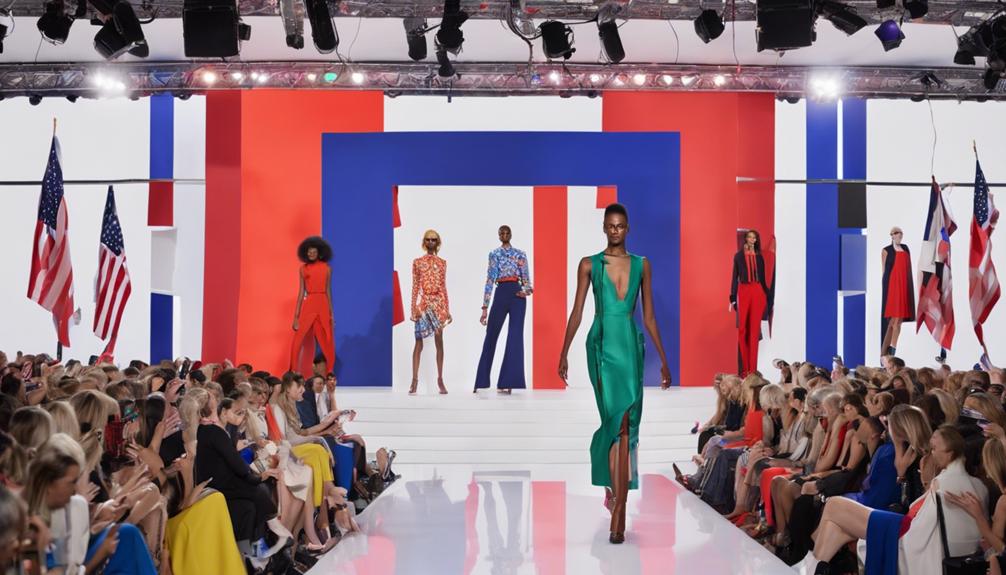
The intersection of politics and fashion presents a fascinating dynamic, where clothing and style convey powerful messages about identity, values, and beliefs. Politicians' sartorial choices can influence public perception, while designers use their platforms to amplify social causes and challenge stereotypes. Red carpet appearances become opportunities for celebrities to make symbolic statements about social justice, feminism, and sustainability. As fashion continues to play a significant role in shaping identity and driving conversations about inclusivity, it becomes clear that this intersection is ripe for exploration, and there is much more to uncover about the intricate relationships between politics, fashion, and society.
Fashion as a Form of Activism
How can fashion, an industry often associated with superficiality and extravagance, be harnessed as a powerful tool for social and political activism? This seemingly incongruous relationship has been increasingly explored in recent years, as designers, brands, and influencers recognize the potential for fashion to drive meaningful change.
Through thoughtful design, fashion can amplify marginalized voices, raise awareness about pressing issues, and inspire collective action. For instance, designers like Vivienne Westwood and Stella McCartney have long used their platforms to advocate for environmental sustainability and social justice. Meanwhile, brands like Patagonia and Everlane prioritize transparency and fair labor practices, setting a new standard for the industry.
Fashion can also serve as a form of cultural diplomacy, bridging divides and fostering cross-cultural understanding. The hijab, for example, has become a powerful symbol of resistance and empowerment for many Muslim women. By embracing diversity and inclusivity, fashion can help break down barriers and challenge harmful stereotypes.
Ultimately, fashion’s potential as a tool for social and political activism lies in its unique ability to intersect with various aspects of our lives, from identity and culture to politics and economics. By leveraging this influence, the fashion industry can become a driving force for positive change, inspiring a new generation of conscious consumers and activists. This transformative power can manifest in various ways, such as promoting sustainability, advocating for marginalized communities, and challenging societal norms. One significant avenue for this activism is through the integration of political messages in clothing, allowing individuals to express their beliefs and values while making bold statements about critical issues. As consumers increasingly seek to align their purchases with their personal convictions, the fashion industry has the opportunity to champion these messages and foster a culture of awareness and engagement.
Politicians' Style and Public Perception
The sartorial choices of politicians, often scrutinized by the public and media alike, can greatly influence their perceived leadership abilities and likability. A well-curated wardrobe can convey confidence, authority, and approachability, while a fashion faux pas can raise questions about a politician's judgment and character. In an era where social media amplifies every detail, politicians must navigate the fine line between personal expression and professional image.
Research has shown that voters are more likely to perceive politicians who dress conservatively and professionally as more competent and trustworthy. Conversely, those who push the boundaries of fashion may be seen as unconventional or even untrustworthy. For instance, former US President Barack Obama's tailored suits and Michelle Obama's chic ensembles helped to foster an image of sophistication and elegance, which contributed to their widespread popularity.
In contrast, politicians who deviate from traditional sartorial norms may face criticism and scrutiny. For example, former French President Emmanuel Macron's bold fashion choices, including a penchant for flashy suits and bold accessories, sparked controversy and raised questions about his suitability for office. Ultimately, a politician's style can have a significant impact on public perception, influencing how voters perceive their leadership abilities and, ultimately, their electability.
Designers as Social Commentators
Fashion designers, often regarded as arbiters of style, have increasingly become vocal social commentators, using their runway shows and designs to confront and challenge societal norms, sparking conversations about identity, inclusivity, and sustainability. This shift in the role of designers is significant, as they are no longer just creating beautiful clothes, but are now using their platforms to drive meaningful conversations and inspire change.
Some notable examples of designers using their platforms to make a statement include:
- Vivienne Westwood's runway shows, which often feature models carrying signs with environmental messages, highlighting the importance of sustainability in the fashion industry.
- Christian Siriano's commitment to body positivity, featuring models of all shapes and sizes on his runway, challenging traditional beauty standards.
- Stella McCartney's dedication to eco-friendly fashion, using sustainable materials and practices in her designs.
- Dior's feminist-inspired collections, celebrating the power and strength of women.
The Symbolism of Red Carpet Choices
As celebrities make their way down the red carpet, their outfit choices often transcend mere aesthetics, instead serving as deliberate statements about their values, beliefs, and identities. These sartorial decisions can be seen as a form of nonverbal communication, conveying messages about the wearer's stance on social and political issues.
| Celebrity | Red Carpet Choice | Symbolism |
|---|---|---|
| Lady Gaga | Armani Prive gown with a train resembling a American flag | Patriotism, support for LGBTQ+ rights |
| Emma Watson | Custom Louis Vuitton gown with a sustainable fabric | Environmental activism, feminism |
| Colin Kaepernick | Custom tuxedo with a kente cloth pattern | Black pride, social justice |
| Meryl Streep | Chanel gown with a subtle nod to the suffragette movement | Feminism, women's empowerment |
| Harry Styles | Custom Gucci suit with a bold, androgynous design | Gender fluidity, LGBTQ+ allyship |
These examples illustrate how celebrities leverage their red carpet appearances to make bold statements about their values and beliefs. By doing so, they not only bring attention to important social and political issues but also inspire their fans to engage in meaningful conversations and take action. As the intersection of politics and fashion continues to evolve, it will be fascinating to observe how celebrities continue to use their platforms to drive change and spark meaningful dialogue.
Fashion's Role in Shaping Identity
Beyond mere aesthetics, clothing has the profound ability to convey an individual's identity, values, and beliefs, making it a powerful tool for self-expression and personal narrative. Fashion is not just about following trends or keeping up with the latest styles; it is an integral part of how we present ourselves to the world. Our clothing choices can signal our affiliations, interests, and values, sending subtle yet powerful messages to those around us.
- Subcultural identification: Fashion can be a badge of honor for those who identify with specific subcultures, such as punk, goth, or hip-hop. Through their clothing choices, individuals can signal their affiliation with a particular group and connect with like-minded individuals.
- Personal values: Clothing can also convey an individual's values and beliefs, such as sustainability, feminism, or social justice. By wearing clothing that reflects these values, individuals can express their commitment to a particular cause or ideology.
- Cultural heritage: Fashion can be a powerful tool for expressing cultural heritage and pride. Through traditional clothing, accessories, or hairstyles, individuals can connect with their cultural roots and celebrate their unique identity.
- Personal style: Ultimately, fashion is a means of self-expression, allowing individuals to convey their personality, creativity, and individuality. By curating a personal style, individuals can communicate their unique perspective and aesthetic to the world.
Frequently Asked Questions
Can Fashion Bloggers Be Considered Political Influencers?
The notion of fashion bloggers as political influencers warrants examination. While their primary focus is on style and aesthetics, many bloggers leverage their platforms to raise awareness about social and environmental issues. By doing so, they subtly merge fashion with politics, using their influence to shape cultural narratives and inspire change. As their reach and credibility grow, so does their potential to mobilize audiences and drive political discourse.
Do Politicians' Fashion Choices Affect Their Credibility?
As the ancient Greek aphorism "know thyself" echoes through the ages, we find ourselves pondering the curious case of politicians' fashion choices and their impact on credibility. Do well-tailored suits and stylish accessories bolster confidence in a leader's abilities, or do they detract from the substance of their policies? The answer lies in the intricate dance between aesthetics and authenticity, where a politician's fashion sense can either humanize or alienate them from their constituents.
Are Fashion Designers Responsible for Promoting Diversity?
Fashion designers have a significant role to play in promoting diversity. By featuring diverse models, fabrics, and aesthetics, they can challenge traditional beauty standards and celebrate individuality. Additionally, designers can use their platforms to advocate for inclusivity, body positivity, and social justice. By doing so, they can inspire a cultural shift towards greater acceptance and empathy. Ultimately, designers have a responsibility to promote diversity, fostering a more equitable and inclusive fashion industry.
Can Fashion Trends Predict Societal Shifts in Values?
The notion that fashion trends can predict societal shifts in values is a fascinating concept. By examining the cultural and social nuances embedded in fashion, we may uncover early indicators of emerging values and attitudes. Fashion's ability to reflect and influence cultural narratives makes it a potent predictor of societal shifts. As a cultural barometer, fashion can signal changing attitudes towards identity, morality, and aesthetics, providing valuable insights for policymakers, marketers, and social commentators alike. By analyzing fashion trends, we may uncover the underlying values and sentiments driving societal evolution.
Is Sustainable Fashion Inherently a Political Statement?
As the threads of sustainability weave through the fabric of the fashion industry, a profound question emerges: is sustainable fashion inherently a political statement? Like a subtle yet unyielding current, sustainable fashion whispers a quiet rebellion against the status quo, challenging the very core of our consumption-driven society. By choosing eco-friendly practices, designers and consumers alike make a deliberate choice to disrupt the norms, effectively casting a vote for a more conscious, responsible future.
