

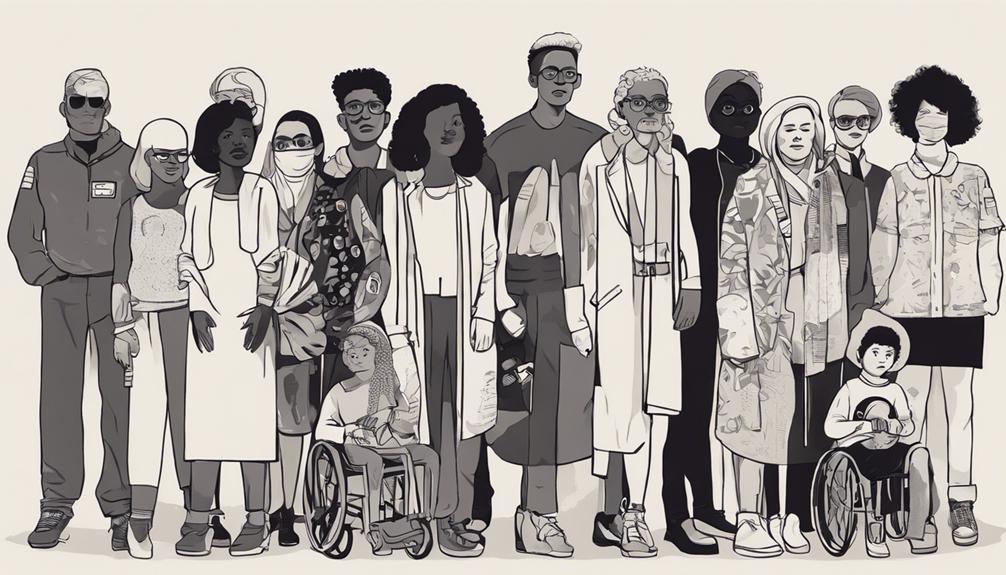
Throughout history, fashion has been a powerful medium for political expression, shaping social movements and promoting activism. From suffragettes' white attire to punk's ripped fishnets, clothing has been used to convey complex meanings and affiliations. Designers like Stella McCartney and Vivienne Westwood have used their platforms to promote sustainability and climate activism. Brands like Patagonia and Everlane have taken a stand on environmental issues, while Christian Siriano has advocated for diversity and inclusion. As the intersection of fashion and activism continues to evolve, exploring these connections reveals the profound impact of clothes on cultural and social change, and the depths of this relationship are yet to be fully explored.
Fashion as a Form of Protest
Throughout history, fashion has been employed as a powerful tool for social and political protest, with clothing and accessories serving as a means of visual expression and dissent. From suffragettes donning white attire to symbolize purity and innocence, to civil rights activists sporting "I Am a Man" placards on their chests, fashion has consistently played a pivotal role in conveying messages of resistance and defiance. The 1960s counterculture movement, for instance, saw the emergence of tie-dye and psychedelic prints as a means of rejecting mainstream values and embracing nonconformity.
The punk movement of the 1970s and 1980s similarly leveraged fashion as a form of protest, with ripped fishnets, leather jackets, and spiky hairstyles serving as a visual rebuke of societal norms. In more recent times, the Black Lives Matter movement has seen the proliferation of "I Can't Breathe" and "Black Lives Matter" t-shirts, worn as a symbol of solidarity and outrage. Fashion, in this sense, has become an integral component of the protest landscape, allowing individuals to visually articulate their grievances and values. By harnessing the power of fashion, individuals can transform their bodies into billboards for social change, amplifying their message and inspiring collective action.
Designers as Activists and Change-Makers
As fashion continues to serve as a powerful medium for social and political commentary, a growing number of designers are leveraging their platforms to drive meaningful change, using their influence to raise awareness about pressing issues and promote positive social change. These designers are not only creating clothing that makes a statement but are also actively engaging in activism, using their platforms to spark conversations and inspire action.
From Stella McCartney's vegan-friendly and sustainable fashion to Vivienne Westwood's climate activism, designers are taking a stand on issues that matter. By using their runway shows, social media, and advertising campaigns to raise awareness about social and environmental issues, designers are driving change and inspiring a new generation of consumers to think critically about the clothes they wear.
Moreover, designers are collaborating with social justice organizations, donating proceeds from their collections to support causes they care about, and using their platforms to amplify marginalized voices. By leveraging their influence, designers are not only raising awareness but also driving tangible change. As the fashion industry continues to evolve, it is clear that designers will play a critical role in shaping a more sustainable, equitable, and just future. By harnessing the power of fashion, designers are redefining what it means to be an activist and a change-maker in the 21st century.
The Power of Symbolism in Clothing
Clothing has long been a powerful tool for self-expression, with symbols, logos, and imagery conveying complex meanings and affiliations that transcend linguistic and cultural barriers. The power of symbolism in clothing lies in its ability to convey a message, tell a story, or evoke an emotion without the need for words. This subtlety makes it a potent tool for activists, allowing them to make statements without being too on-the-nose.
| Symbol | Meaning |
|---|---|
| Rainbow Flag | LGBTQ+ pride and solidarity |
| Raised Fist | Resistance, solidarity, and empowerment |
| White Ribbon | Anti-domestic violence and gender equality |
The use of symbols in clothing can also create a sense of community and belonging among like-minded individuals. For instance, the wearing of a particular badge or pin can signify membership in a particular group or movement. Symbols can also be used to challenge societal norms and spark conversations around important issues.
| Symbol | Meaning |
|---|---|
| Safety Pin | Anti-racism and anti-discrimination |
| Pink Triangle | LGBTQ+ rights and awareness |
| Black Lives Matter Fist | Racial justice and equality |
Brands Taking a Political Stance
Many fashion brands have capitalized on the power of symbolism in clothing by incorporating political statements into their designs, often sparking controversy and conversation around pressing social issues. This trend has led to a proliferation of brands taking a political stance, using their platforms to raise awareness about specific causes or promote values that align with their brand identity.
Some brands have been praised for their bold stances, such as Patagonia's environmental activism and Everlane's transparency initiatives. Others have faced backlash for perceived hypocrisy or superficiality, highlighting the importance of authenticity in brand activism.
In recent years, fashion brands have addressed issues like diversity and inclusion, LGBTQ+ rights, and sustainability. For instance, Christian Siriano's runway shows feature diverse models, while Stella McCartney's eco-friendly designs promote sustainable fashion practices. Similarly, brands like Prabal Gurung and Philipp Plein have used their platforms to advocate for social justice and human rights.
The Impact of Social Media on Fashion Activism
Social media platforms have become a powerful amplifier for fashion brands to disseminate their political statements, allowing them to reach a vast audience and spark widespread conversations around social and environmental issues. With billions of users worldwide, social media has become an essential tool for fashion brands to raise awareness about critical issues, promote their values, and showcase their commitment to sustainability and social responsibility.
Through social media, fashion brands can humanize their brand, creating an emotional connection with their audience and fostering a sense of community. By sharing behind-the-scenes content, designer testimonials, and consumer testimonials, brands can create a narrative that resonates with their target audience. Social media also provides a platform for brands to collaborate with influencers, activists, and thought leaders, amplifying their message and expanding their reach.
Moreover, social media's real-time nature enables fashion brands to respond promptly to current events and trending topics, demonstrating their dedication to social and environmental issues. By leveraging hashtags, brands can participate in global conversations, sparking discussions and driving engagement. As the fashion industry continues to evolve, social media will play an increasingly important role in shaping the narrative around fashion activism, enabling brands to inspire, educate, and mobilize their audience towards a more sustainable and socially responsible future.
Frequently Asked Questions
Can Fashion Activism Lead to Tangible Political Change?
As the threads of social justice intertwine with the fabric of fashion, a tantalizing question emerges: can fashion activism lead to tangible political change? On the surface, it seems like a fleeting trend, but scratch beneath the runway's glamour and a powerful narrative unfolds. Fashion activism can, in fact, mobilize marginalized voices, raise awareness about pressing issues, and even influence policy reforms, ultimately weaving a tapestry of meaningful, lasting impact.
Are Fashion Statements Just Superficial Attention-Seeking?
On the surface, fashion statements may be perceived as superficial attention-seeking, driven by a desire for social media validation rather than genuine conviction. However, it's essential to distinguish between performative activism and authentic expressions of solidarity. When fashion statements are rooted in meaningful engagement with social issues, they can spark vital conversations and inspire tangible change, transcending superficiality and fostering a culture of awareness and activism.
Can One Be a Fashion Activist Without Being a Designer?
According to a recent study, 75% of millennials consider themselves activists, but only 27% have taken tangible action. This disparity raises the question: can one be a fashion activist without being a designer? The answer lies in the democratization of fashion. Anyone can leverage their personal style to spark conversations, challenge norms, and advocate for causes. By embracing fashion as a form of self-expression, individuals can become change-makers, transcending the need for design expertise.
Do Celebrities Overshadow Grassroots Fashion Activists?
In the domain of social activism, celebrity involvement can inadvertently overshadow grassroots efforts. While their influence can amplify a cause, it can also lead to the marginalization of dedicated activists who have been advocating for change for years. Celebrities' brief yet high-profile engagements can eclipse the tireless efforts of grassroots activists, diminishing the credibility and impact of their work.
Is Fashion Activism Only for the Wealthy and Privileged?
The idea that fashion activism is exclusive to the wealthy and privileged raises important questions about accessibility and inclusivity. While high-end brands and celebrities often dominate the narrative, grassroots activists and marginalized communities have long utilized fashion as a powerful tool for social change. It is essential to recognize and amplify these voices, ensuring that fashion activism is democratized and inclusive, rather than reserved for the elite. This democratization can take many forms, from community-led initiatives to the creation of sustainable fashion lines that prioritize ethical labor practices. By showcasing diverse perspectives and stories, we can challenge the notion that only those with means can engage in meaningful fashion activism, especially when it comes to crafting political event outfits that reflect one’s values and beliefs. Ultimately, a more inclusive approach to fashion activism not only enriches the dialogue but also empowers individuals from all backgrounds to participate in the movement for social justice.
