

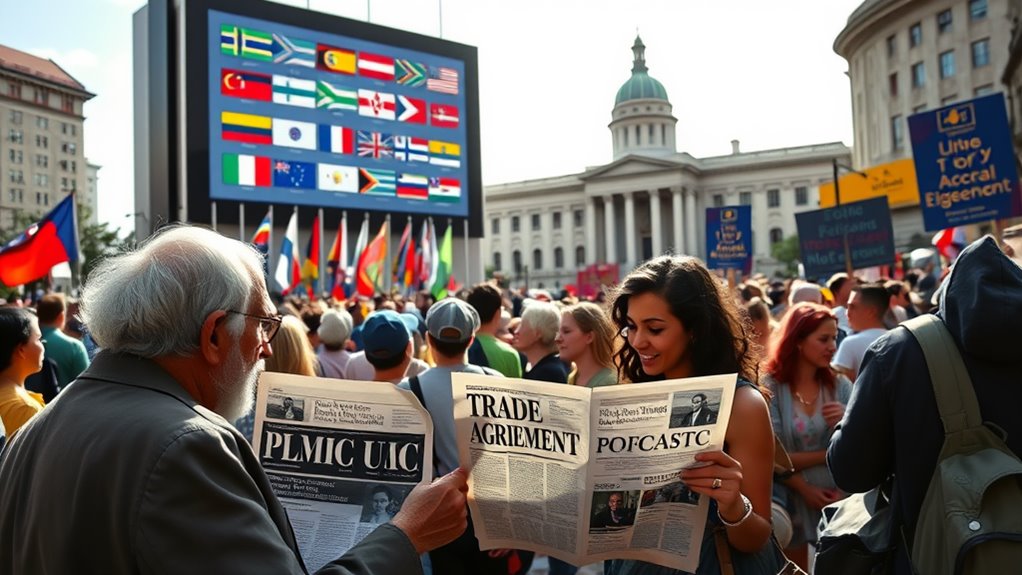
International relations greatly shape domestic policies through economic strategies, security measures, and social reforms. Globalization necessitates the adaptation of trade agreements to align with international standards. Furthermore, foreign aid prompts policy reforms that improve governance and infrastructure. National defense policies evolve in response to global threats, as climate treaties influence local environmental regulations. Health crises lead to global cooperation, impacting local health responses. Exploring these interconnections reveals deeper insights into the intricacies of policy-making.
The Globalization Effect on Domestic Policy
As globalization reshapes economies and cultures worldwide, its impact on domestic policy becomes increasingly pronounced. Nations find themselves maneuvering complex global market dynamics that challenge traditional policy frameworks. The integration of economies leads to an interdependence that compels governments to reconsider their approaches to economic governance.
Trade policy implications are particularly significant, as domestic policies must adapt to align with international standards and practices. This adaptation often includes re-evaluating tariffs, regulations, and standards to remain competitive in an evolving global milieu. Furthermore, policymakers may encounter pressure from multinational corporations seeking favorable conditions that can further influence legislative agendas. Additionally, the interplay between trade policies and foreign relations becomes increasingly intricate, especially when considering the impact of sanctions on foreign policy. Such sanctions can limit market access for domestic businesses while simultaneously shaping international partnerships and alliances. As countries navigate these complexities, they must balance economic interests with geopolitical strategies to ensure long-term stability and growth.
Consequently, domestic policies increasingly reflect not just national interests but also the broader requirements and realities of globalization. As these interconnected forces shape decision-making, comprehending the nuances of global market dynamics becomes crucial for effective governance and policy formulation.
Trade Agreements and Economic Strategies
Trade agreements play a critical role in shaping local industries, influencing both job creation and losses within various sectors. These economic strategies often necessitate alignment of regulatory standards, which can lead to varying impacts on domestic markets. Comprehending these dynamics is crucial for evaluating the broader implications of international trade on national economies.
Impact on Local Industries
As trade agreements and economic strategies are often viewed through the lens of international relations, their repercussions on local industries can be profound and intricate. These agreements shape local market dynamics, influencing how businesses engage with global supply chains. While they can improve export promotion strategies, they may also expose domestic industries to import dependency issues, creating challenges for local competitors. Moreover, international trade policies often shift the trade balance effects, impacting regional economic dynamics. Multinational corporations exert considerable influence, sometimes undermining domestic innovation incentives. As local industries navigate these intricacies, they face significant domestic competition challenges, which can either stimulate growth or hinder sustainability, ultimately affecting the broader economic terrain within the nation.
Job Creation and Losses
The interplay between international trade agreements and domestic economic strategies greatly influences job creation and losses within local markets. These agreements can result in significant job market fluctuations as companies adapt to new competitive pressures and opportunities. Employment policies must be crafted to address the dynamic nature of these changes, ensuring that the workforce is equipped to meet emerging demands.
- Trade agreements can lead to increased foreign investment, generating new job opportunities.
- Conversely, they may likewise contribute to job losses in sectors unable to compete with lower-cost imports.
- Effective employment policies are crucial for retraining workers affected by these shifts, promoting economic resilience.
Regulatory Standards Alignment
Although aligning regulatory standards across nations can encourage smoother trade relations, it likewise presents challenges that impact domestic economic strategies. Regulatory harmonization aims to create a unified framework that facilitates cross-border trade, yet it often leads to compliance challenges for businesses. Firms may struggle to adapt to new regulations that differ from their established practices, resulting in increased operational costs and potential disruptions. Furthermore, during harmonization can improve competitiveness, it may as well limit a country's ability to tailor regulations that address specific domestic needs. In the end, the pursuit of aligned standards requires a careful balance between global integration and local economic priorities, ensuring that the benefits of trade agreements do not undermine domestic industries or consumer protections.
Foreign Aid and Its Domestic Implications
Foreign aid plays an essential role in shaping domestic policies, particularly through its influence on economic growth initiatives. By providing financial resources, it often encourages governments to implement necessary policy reforms aimed at promoting development. This interaction highlights the intricacies of how external support can drive internal changes within recipient countries.
Economic Growth Initiatives
Economic growth initiatives often hinge on the provision of foreign aid, which can considerably influence domestic policies within recipient countries. These initiatives typically aim to promote sustainable development during attracting foreign investment. The relationship between foreign aid and domestic policy is multifaceted and can lead to significant changes in economic structures.
- Improved infrastructure development
- Improved access to education and healthcare
- Strengthened governance and institutional frameworks
Through these channels, foreign aid can act as a catalyst for economic growth, enabling countries to align their domestic priorities with international standards. As a result, the implications of foreign aid extend beyond mere financial assistance, shaping the trajectory of national development and impacting societal well-being on multiple levels.
Policy Reform Incentives
How can foreign aid serve as a strong incentive for policy reform within recipient countries? Foreign aid often provides crucial resources that empower governments to implement necessary policy changes. By tying financial assistance to specific reform strategies, donor countries create policy incentives that encourage recipients to adopt practices aligned with international standards. These incentives can lead to improvements in governance, economic management, and social welfare. As recipient nations endeavor to meet donor expectations, they may prioritize reforms that improve transparency, accountability, and institutional effectiveness. In the end, foreign aid can catalyze significant domestic transformations when effectively utilized as a tool for incentivizing policy reform, thereby promoting a more stable and prosperous environment conducive to sustained development.
International Security Concerns and National Defense Policies
As global threats evolve, nations increasingly prioritize their national defense policies to address emerging international security concerns. This shift often leads to significant adjustments in defense budgets and the formation or strengthening of military alliances. Countries recognize that collaboration with allies amplifies their strategic capabilities and deterrence efforts, particularly in uncertain geopolitical climates.
- Increased investment in advanced military technologies.
- Improved intelligence sharing among allied nations.
- Reassessment of defense strategies to counter hybrid threats.
In response to changing dynamics, governments may allocate more resources in the direction of counter-terrorism, cyber defense, and regional security initiatives. As a result, domestic policies become closely intertwined with international security imperatives, reflecting an awareness that national safety is often dependent on global stability. By adapting their defense frameworks, nations aim to safeguard their interests during contributing to a more secure international environment.
Climate Change Treaties and Local Environmental Regulations
As global climate change treaties set ambitious targets for reducing carbon emissions, local environmental regulations play an significant role in translating these international commitments into actionable policies. These treaties often encourage municipalities to implement specific measures that align with national goals. Local governments are tasked with developing regulations that promote renewable energy sources, such as solar and wind energy, to decrease reliance on fossil fuels.
By establishing incentives for clean energy projects, cities can stimulate innovation and attract investment, thereby contributing to both environmental sustainability and economic growth. In addition, local regulations may include stricter emissions standards for vehicles and industrial operations, reinforcing the objectives outlined in international agreements.
The effectiveness of these local initiatives hinges upon collaboration between federal, state, and local authorities, ensuring that communities can effectively address climate change during adhering to their international obligations. As a result, the interplay between global treaties and local regulations is vital for meaningful environmental progress.
Immigration Policies Shaped by International Relations
Though international relations considerably influence domestic immigration policies, the dynamics of diplomacy and geopolitical considerations often determine the framework within which these policies are developed. Countries frequently align their immigration strategies with international treaties and humanitarian obligations, affecting areas such as border security and visa regulations. As nations engage in diplomacy, they may adapt their asylum policies to respond to global refugee crises or improve citizenship pathways to facilitate migrant labor.
- Increased focus on refugee resettlement in response to international conflicts
- Initiatives for multicultural integration shaped by diaspora engagement
- Collaborative efforts to guarantee humane immigration practices
These factors underscore the interconnectivity between international relations and domestic immigration policies, demonstrating that governments must navigate complex global dynamics to formulate effective strategies that address both security and humanitarian needs.
Human Rights Commitments and Domestic Law
Human rights commitments play a significant role in shaping domestic law, particularly as nations navigate their obligations under international treaties and conventions. These commitments often compel governments to enact legislation aimed at preventing human rights violations and ensuring that citizens are protected. By aligning domestic laws with international standards, countries promote a legal framework that encourages justice and equality.
Moreover, the integration of human rights principles into domestic law improves accountability mechanisms. Governments are held responsible for addressing human rights violations, which encourages transparency and public confidence in legal systems. This accountability is vital, as it prompts authorities to investigate abuses and provide remedies for victims. As a result, the interplay between international human rights obligations and domestic legislation not only raises the legal status of individuals but likewise reinforces the rule of law. In the end, this relationship shapes a society that prioritizes human dignity and respect for all its members.
Health Crises: Global Cooperation and Local Responses
When health crises emerge, the necessity for global cooperation becomes evident, as nations must work together to address the widespread challenges posed by pandemics and epidemics. Effective responses depend not merely on international collaboration but also on how local governments adapt these strategies to their specific contexts. This interplay influences public health measures and vaccine distribution systems, highlighting the importance of local governance in implementing global directives.
- Coordination between countries improves the efficiency of vaccine distribution.
- Local health authorities play an essential role in addressing community-specific needs.
- Global data sharing can inform local responses and improve public health strategies.
In this complex environment, the relationship between international efforts and domestic policies is significant. In the end, the success of health initiatives hinges on both global solidarity and the adaptability of local responses to the unique challenges faced by communities.
The Role of International Organizations in Domestic Governance
As international organizations increasingly influence domestic governance, their role becomes pivotal in shaping policies that address both global challenges and local needs. These organizations, such as the United Nations and the World Health Organization, promote international collaboration by providing platforms for member states to align their governance frameworks with shared objectives. Through technical assistance and the establishment of best practices, they help countries develop policies that are not merely effective but also compliant with international standards.
Moreover, the presence of international organizations nurtures accountability in domestic governance, encouraging countries to adopt transparent practices. By engaging in dialogues and sharing resources, these entities enable nations to address complex issues, such as climate change and public health, in a coordinated manner. In the end, the influence of international organizations serves to improve the efficacy of domestic policies, ensuring they are responsive to both local contexts and global imperatives.
Cultural Diplomacy and Social Policies
Cultural diplomacy plays a pivotal role in shaping social policies through cultural exchange programs that encourage mutual comprehension between nations. By employing soft influence strategies, countries can affect public opinion and promote their values on the global stage. Furthermore, community engagement initiatives serve to strengthen ties at the grassroots level, enhancing collaborative efforts in addressing shared challenges.
Cultural Exchange Programs
Nurturing international awareness and collaboration, cultural exchange programs serve as crucial instruments of cultural diplomacy and social policy. These initiatives not only improve diplomatic relations but also promote mutual awareness among diverse populations. By facilitating cultural exchange, nations can strengthen their ties and address global challenges collaboratively.
- Promoting Cross-Cultural Awareness: Participants gain firsthand experience of different customs and values.
- Encouraging Economic Collaboration: Cultural exchanges can lead to increased trade and investment opportunities.
- Improving Educational Opportunities: Academic programs enable students to broaden their horizons and develop global competencies.
Through these multifaceted benefits, cultural exchange programs contribute greatly to shaping domestic policies that reflect a nation's commitment to global engagement and cooperation.
Soft Power Strategies
Building on the foundation established by cultural exchange programs, soft influence strategies play a significant role in shaping international relations through cultural diplomacy and social policies. These strategies leverage cultural influence to improve diplomatic engagement, allowing nations to cultivate goodwill and mutual comprehension. By promoting arts, education, and shared values, countries can create a favorable image abroad, eventually impacting foreign policy decisions. Social policies that prioritize inclusivity and diversity further strengthen these diplomatic ties, as they resonate with international audiences. Through cultural initiatives, nations can effectively communicate their values, creating a platform for dialogue and collaboration. This approach not only improves a country's global standing but likewise influences domestic policies, aligning them with broader international interests.
Community Engagement Initiatives
How do community engagement initiatives improve cultural diplomacy and social policies? These initiatives cultivate stronger connections between diverse populations, enriching mutual comprehension and cooperation. By promoting community outreach and encouraging civic participation, they create a more inclusive environment that benefits both local and international relationships.
- Strengthens social cohesion through collaborative projects
- Enriches cultural awareness and appreciation among different communities
- Facilitates dialogue that addresses local and global issues
As a result, community engagement initiatives serve as essential tools in bridging gaps between nations and their citizens, ultimately leading to more effective and responsive social policies. This engagement not only enriches cultural diplomacy but also empowers communities to play an active role in shaping their social environment.
Case Studies: Countries Navigating International and Domestic Landscapes
Countries around the globe often find themselves at the intersection of international relations and domestic policies, where strategic decisions must reflect both global imperatives and local realities. For example, Germany's approach to energy policy illustrates how diplomatic negotiations with neighboring countries can necessitate policy alignment that addresses both climate commitments and economic stability. By engaging in international agreements, Germany has sought to shift to renewable energy concurrently ensuring energy security.
Similarly, Brazil navigates international trade relations as it addresses domestic agricultural policies. Its participation in global trade agreements requires balancing the interests of local farmers with the demands of international markets. These case studies exemplify how countries must adeptly maneuver through the intricacies of international relations and domestic challenges, ensuring that their policies resonate with both global expectations and local needs. Such navigation underscores the importance of strategic foresight in crafting effective policies that serve multiple stakeholders.
Frequently Asked Questions
How Do Domestic Policies Align With International Public Opinion?
Domestic policies often reflect public sentiment, as governments seek to maintain legitimacy and support from their citizens. When crafting legislation, leaders may consider global standards to align with international public opinion, ensuring their policies resonate positively both at home and abroad. This alignment helps cultivate a sense of responsibility toward global issues, as policymakers recognize the influence of international perspectives on domestic governance, ultimately shaping the policies that govern their nations.
What Role Do Multinational Corporations Play in Shaping Domestic Laws?
Multinational corporations play a significant role in shaping domestic laws through corporate lobbying and regulatory influence. By leveraging their financial resources and extensive networks, these corporations advocate for policies that favor their interests. They engage with lawmakers to promote legislation that can create favorable business environments. This dynamic interaction often leads to the crafting of regulations that reflect corporate priorities, thereby impacting the overall governance and economic framework of the nation.
How Do Domestic Political Parties Respond to International Pressures?
In the grand circus of politics, domestic parties often dance to the tune of international pressures, donning masks of party alignment and choreographing their electoral strategies. When foreign actors demand attention, these parties twist and turn, reshaping their platforms to woo both voters and investors. This performance can lead to a delightful spectacle of policy shifts, as leaders endeavor to appear responsive, all during ensuring their seats remain comfortably warm.
Are There Examples of Successful Domestic Policies Influenced by Global Movements?
Examples of successful domestic policies influenced by global movements include climate policy and trade agreements. Countries have implemented thorough climate action plans in response to international environmental agreements, showcasing their commitment to sustainability. Furthermore, trade agreements often lead to the adoption of policies that align with global economic standards, promoting innovation and competitiveness. These instances illustrate how nations can effectively integrate global priorities into their domestic frameworks, benefiting both their economies and the environment.
How Do Cultural Perceptions Affect International Relations and Domestic Policy?
Cultural perceptions play an essential role in shaping international relations and domestic policy. Through cultural diplomacy, nations can cultivate mutual comprehension, which often leads to more favorable diplomatic outcomes. Effective perception management helps countries project their values and beliefs, influencing how they are viewed globally. As a result, this perception can guide policymakers in crafting domestic policies that align with international image and expectations, eventually affecting national interests and international collaboration.
