

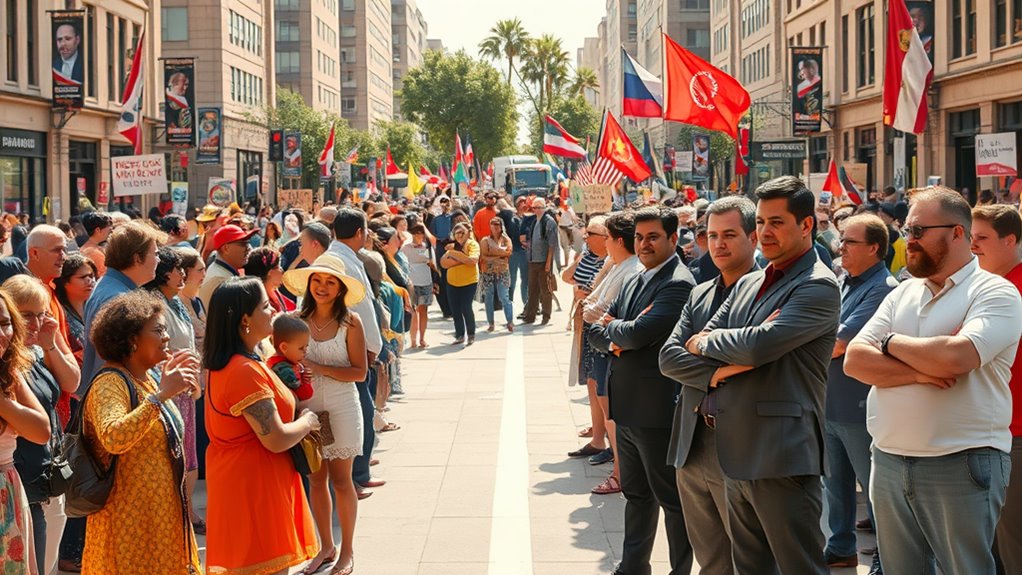
Political polarization greatly impacts society by eroding trust and creating divisions within communities. Interpersonal relationships often become strained, overshadowing shared values. Educational environments may turn contentious, reflecting societal divides. In workplaces, productivity can suffer as a result of disruptive political discussions. Media consumption is influenced by echo chambers, limiting exposure to diverse perspectives. This fragmentation breeds social isolation and hinders collaboration. Comprehending these dynamics offers insight into the broader effects of polarization and its implications for future engagement.
The Impact of Polarization on Interpersonal Relationships
As political polarization intensifies, its effects on interpersonal relationships become increasingly evident. Trust erosion emerges as a significant consequence, with individuals often questioning the motives and integrity of those who hold opposing views. This skepticism can lead to the disintegration of long-standing friendships and familial bonds, as political differences overshadow shared values and experiences.
Furthermore, communication barriers arise, complicating discussions and cultivating an environment of hostility rather than comprehension. People may avoid conversations about politics altogether, fearing conflict and further division. This reluctance to engage can reinforce echo chambers, where individuals only interact with like-minded peers, deepening their biases.
Ultimately, the impact of polarization on interpersonal relationships manifests in a pervasive sense of isolation, as people retreat into their ideological silos, making genuine connections increasingly rare. The result is a society where empathy diminishes, and meaningful dialogue becomes a challenging endeavor.
Political Polarization and Community Division
As communities have historically served as spaces for diverse viewpoints and collective problem-solving, the rise of political polarization has increasingly fragmented these social structures. This division manifests in various ways, impacting community cohesion and the ability to engage in constructive dialogue.
- Erosion of Community Dialogue: Polarization stifles open communication, leading to echo chambers where individuals only engage with like-minded perspectives.
- Decline in Local Activism: Divisive politics can diminish participation in local initiatives, as individuals become more focused on partisan interests than on community welfare.
- Increased Social Isolation: As people gravitate toward others who share their political views, the sense of belonging within the community diminishes, nurturing isolation.
Consequently, political polarization poses significant challenges to community unity, making it imperative to prioritize inclusive dialogue and collaborative local activism to rebuild social bonds.
Effects on Educational Environments
As the rise of political polarization has transformed various aspects of society, its effects on educational environments are particularly pronounced. Curriculum bias becomes evident when educational materials reflect specific political ideologies, potentially skewing students' comprehension of diverse perspectives. This polarization can stifle teacher neutrality, making it challenging for educators to nurture balanced classroom discussions. In many cases, teachers may feel pressured to align with prevailing political sentiments, compromising their role as impartial facilitators of critical thinking.
Moreover, student activism often mirrors the broader societal divides, leading to contentious debates in classrooms. As civic education aims to equip students with the tools for informed participation, the polarized climate can hinder meaningful engagement. As a result, the educational terrain risks becoming a battleground rather than a space for collaborative learning, eventually affecting students' ability to navigate differing viewpoints and develop vital critical thinking skills.
The Workplace: Navigating Political Differences
In an increasingly polarized society, maneuvering political differences in the workplace has become a significant challenge for employees and employers alike. Political discussions can disrupt team dynamics and adversely affect productivity. To address these challenges, organizations need to implement effective workplace policies that promote respect and comprehension among employees.
Consider the following strategies:
- Establish Clear Guidelines: Organizations should create policies that define acceptable behavior regarding political discussions at work.
- Encourage Open Dialogue: Cultivating an environment where employees can express their views respectfully can help bridge divides and improve collaboration.
- Focus on Common Goals: Emphasizing shared objectives can unite teams and overshadow political affiliations, promoting a cohesive work environment.
Media Consumption and Echo Chambers
As individuals seek information that aligns with their beliefs, media consumption often leads to the formation of echo chambers, where dissenting viewpoints are marginalized. This phenomenon is exacerbated by confirmation bias, which drives users to favor information that reinforces existing opinions. Online algorithms further entrench these information silos, curating content that aligns with users' preferences during filtering out diverse perspectives. The rise of partisan journalism complicates the terrain, as media outlets increasingly cater to specific ideological audiences, compromising journalistic integrity. As a result, news consumption becomes a selective process, limiting exposure to differing viewpoints. Enhancing media literacy and digital literacy is crucial for individuals to navigate this fragmented information environment. By developing critical thinking skills, consumers can better recognize echo chamber effects and challenge their biases, nurturing a more informed and open-minded society. Grasping these dynamics is crucial for addressing political polarization and its implications for public discourse.
Social Media's Role in Amplifying Polarization
Social media frequently serves as a catalyst for amplifying political polarization, facilitating the swift spread of extreme viewpoints and divisive content. The mechanisms behind this phenomenon largely involve social media algorithms, which prioritize engagement over accuracy. As a result, users are often exposed to content that reinforces their beliefs rather than challenging them.
Key factors contributing to this amplification include:
- Echo Chambers: Users interact mostly within like-minded groups, limiting exposure to diverse opinions.
- Misinformation Spread: False information circulates quickly, further entrenching divisive narratives and fueling polarization.
- Emotional Engagement: Content designed to provoke strong reactions is favored by algorithms, increasing visibility and engagement at the expense of rational discourse.
As these elements intertwine, they create an environment where political polarization thrives, making it increasingly difficult for individuals to engage in constructive conversations across differing viewpoints.
Mental Health Implications of a Divided Society
Political polarization has significant mental health implications for individuals traversing a divided society. Heightened anxiety levels often emerge as individuals grapple with conflicting ideologies and societal tensions. This environment can exacerbate feelings of isolation, making it imperative to nurture robust support networks that provide emotional well-being. Effective coping strategies, such as mindfulness and open communication, can empower individuals to navigate their stressors, promoting resilience building. Furthermore, stigma reduction is important in encouraging those affected to seek help and share their experiences. By normalizing discussions around mental health within polarized contexts, individuals can better understand their emotional struggles. Engaging with diverse perspectives may also improve empathy, further easing anxiety. In the end, recognizing and addressing the mental health implications of political polarization is fundamental for cultivating a healthier society, where individuals can thrive amidst differences and maintain their psychological resilience.
Strategies for Fostering Constructive Dialogue
When individuals engage in constructive dialogue, the potential for bridging divides and nurturing comprehension increases considerably. By employing specific strategies, participants can encourage an environment conducive to insight and collaboration.
- Active Listening: Encouraging individuals to truly hear and consider diverse perspectives allows for a richer exchange of ideas and promotes empathy building.
- Respectful Disagreement: Establishing ground rules for discussions can lead to respectful disagreement, wherein differing opinions are expressed without hostility, creating a safe space for dialogue.
- Finding Common Ground: Identifying shared values or goals can help participants focus on collaborative solutions, moving beyond stark divisions and cultivating constructive feedback.
Incorporating these strategies creates opportunities to navigate political polarization and promotes a culture that values insight, eventually leading to more productive discussions and a cohesive society.
The Future of Political Engagement in a Polarized World
In a setting marked by deepening divides, the future of political engagement hinges on the ability of individuals and communities to adapt their approaches. Civic engagement will likely evolve through improved political literacy, empowering citizens to navigate polarized environments effectively. Youth activism is poised to play a pivotal role, as younger generations increasingly demand inclusive governance and actively participate in grassroots movements.
Bipartisan initiatives may emerge as crucial vehicles for collaboration, promoting dialogue across political lines. Community dialogues can serve as platforms for constructive discussions, bridging gaps and encouraging mutual comprehension. Additionally, electoral participation will be critical, as citizens recognize that their votes impact governance directly.
Ultimately, the trajectory of political engagement will depend on cultivating a culture that values diverse perspectives during the promotion of unity. By emphasizing collaboration and active involvement, societies can work toward a more engaged and informed citizenry in the face of polarization.
Frequently Asked Questions
How Does Political Polarization Influence Voting Behavior in Elections?
In the electoral arena, where the battleground is marked by stark divides, political polarization serves as a double-edged sword. It can ignite voter turnout, as individuals passionately rally behind their beliefs, akin to moths drawn to a flame. Election strategies shift dramatically, with candidates tailoring their messages to resonate with their base, often overlooking moderate voices. This intensification of allegiance often distorts the broader electoral terrain, creating a chasm that complicates consensus-building.
What Role Does Age Play in Political Polarization Trends?
Age plays a significant role in political polarization trends, revealing noticeable generational differences. Younger individuals tend to align more with progressive ideologies, whereas older generations often exhibit conservative tendencies. This age-based alignment can lead to divergent political priorities and values, influencing overall engagement in political discourse. As societal issues evolve, the varying perspectives among age groups contribute to the growing polarization, shaping how different generations interact with and respond to political matters.
Can Political Polarization Impact Economic Policies and Decisions?
In a world where consensus is as rare as a unicorn, political polarization dances merrily through economic decision-making. Economic inequality blooms, nurtured by policy inconsistencies that sprout from partisan divides. With each side clinging to their ideologies, the policies often resemble a patchwork quilt—colorful yet riddled with holes. Consequently, the economic terrain becomes a battleground, where the struggles of the many are overshadowed by the whims of the few, leaving society in a precarious position.
How Do Cultural Identities Intersect With Political Polarization?
Cultural identities greatly intersect with political polarization, as individuals often align their beliefs with broader cultural narratives. This alignment can lead to identity politics, where group identity dictates political preferences and affiliations. As these cultural narratives become more entrenched, they can intensify divisions, making it difficult for individuals to engage across differing viewpoints. As a result, the interplay between cultural identities and political polarization shapes societal discourse, often reinforcing biases and limiting constructive dialogue.
Are There Any Positive Effects of Political Polarization on Society?
Political polarization can lead to certain positive effects within society. It often sparks unity initiatives, where individuals from opposing sides come together to address common concerns. This environment may improve civic engagement, as citizens feel compelled to participate more actively in discussions and political processes. As a result, polarization can nurture a sense of purpose among community members, encouraging collaboration and dialogue aimed at overcoming differences and working in the direction of shared goals.
