

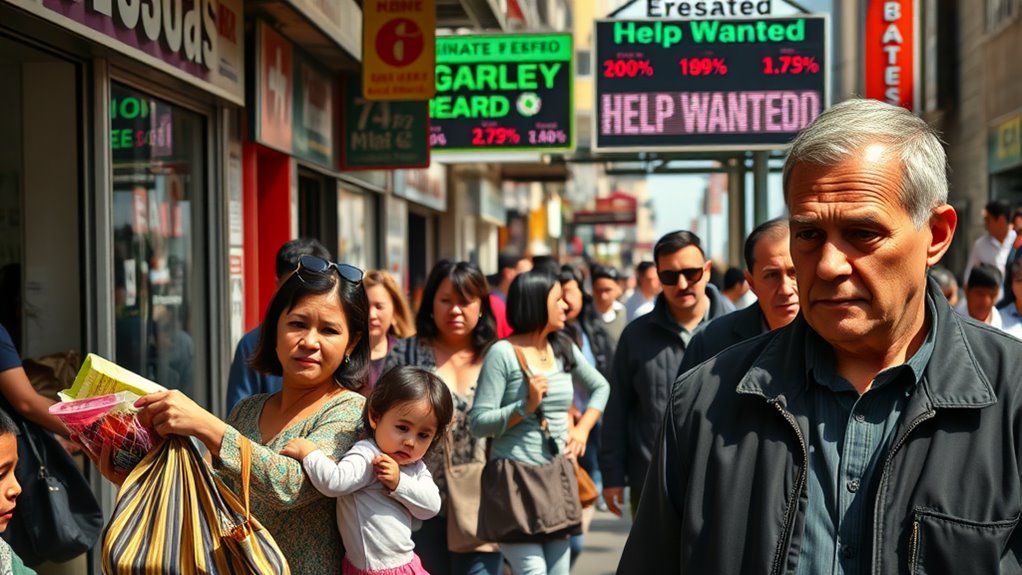
Economic policies greatly affect everyday citizens by influencing household budgets, access to public services, and overall quality of life. Taxation impacts disposable income, as government spending determines the availability of vital services like education and healthcare. Furthermore, minimum wage laws and trade agreements shape local job markets. Inflation can strain budgets, making basic necessities less affordable. Comprehending these dynamics highlights the direct link between policy decisions and individual circumstances, leading to insights into further implications for society.
The Impact of Taxation on Household Budgets
How do taxation policies influence the financial well-being of households? Taxation plays a critical role in shaping household budgets, primarily through the establishment of tax brackets and the allocation of tax credits. Tax brackets determine the rate at which income is taxed, meaning that households in higher tax brackets pay a larger percentage of their income in taxes. This can greatly impact disposable income and overall financial stability.
Conversely, tax credits provide direct reductions in tax liability, effectively lowering the amount owed to the government. These credits can alleviate the financial burden for low- to middle-income families, allowing them to allocate more funds toward vital expenses like housing, education, and healthcare. As a result, the structure of taxation policies, including the distribution of tax brackets and the availability of tax credits, directly influences the capacity of households to manage their finances and pursue long-term economic well-being.
How Government Spending Affects Public Services
As government spending serves as a fundamental mechanism for funding public services, its allocation directly impacts the quality and availability of these services for citizens. Effective budget allocation determines how resources are distributed among essential sectors such as education, healthcare, and infrastructure. When government spending is prioritized for public service funding, it improves the quality of life for individuals by ensuring access to critical services. Conversely, insufficient funding can lead to overcrowded schools, under-resourced hospitals, and deteriorating public infrastructure.
The consequences of budget allocation decisions are evident in everyday experiences; citizens may find themselves facing longer wait times for medical care or fewer educational opportunities. Ultimately, government spending shapes the foundation of public services, influencing both the immediate wellbeing of communities and their long-term development and prosperity. Comprehending the dynamics of government spending is vital for citizens seeking to grasp how economic policies affect their daily lives.
The Role of Minimum Wage Laws in Income Inequality
Minimum wage laws play an essential role in shaping income distribution within society. By establishing a baseline income, these laws can influence the wage gap between low-income earners and higher-paid workers. An analysis of their impact reveals their potential to mitigate income inequality, but furthermore highlights ongoing debates about their effectiveness and implications for the labor market.
Minimum Wage Impact
Although many economic policies aim to address income inequality, the implementation of minimum wage laws plays a critical role in shaping the financial terrain for low-wage workers. These laws are designed to establish a baseline income, promoting wage growth that can uplift individuals and families from poverty. By ensuring that workers receive a fair wage, minimum wage laws contribute to improved living standards, enabling citizens to afford basic necessities such as food, housing, and healthcare. Additionally, raising the minimum wage can stimulate local economies, as low-wage workers typically reinvest their earnings into their communities. Consequently, the impact of minimum wage laws extends beyond individual workers, influencing broader economic stability and social equity.
Wage Gap Analysis
The wage gap remains a significant issue in discussions about income inequality, with minimum wage laws playing a vital role in shaping this dynamic. These laws aim to establish a baseline income that can help mitigate wage disparity trends across various sectors. Nevertheless, in spite of these efforts, the gender wage gap persists, revealing deeper societal and structural issues. Women, particularly those in lower-paying jobs, often find themselves disproportionately affected by inadequate minimum wage regulations. As minimum wage levels rise, they can help close the income gap, but extensive strategies are needed to address the systemic factors contributing to wage disparities. In the end, examining the intersection of minimum wage laws and income inequality is essential for nurturing equitable economic opportunities for all citizens.
Trade Agreements and Their Influence on Local Jobs
How do trade agreements shape the terrain of local employment? These agreements can greatly influence job security and the trade balance within a community. Although some sectors may flourish because of increased exports, others may face challenges as imports rise, potentially displacing local jobs.
| Impact on Local Jobs | Trade Balance Effects | Job Security Concerns |
|---|---|---|
| Job creation in export-driven industries | Positive trade balance | Workers faced with layoffs |
| Job loss in import-sensitive sectors | Negative trade balance | Increased job instability |
| Shift in workforce skills | Varied impacts | Need for retraining programs |
In this complex setting, local economies must adapt to the shifting dynamics of trade. Policymakers are tasked with balancing the benefits of trade agreements against the potential risks to job security, ensuring that communities can thrive in a globalized economy.
The Effects of Inflation on Cost of Living
Inflation considerably affects the cost of living, leading to rising prices that strain household budgets. As wages often fail to keep pace with inflation rates, many individuals find their purchasing capacity diminished. This situation creates affordability issues for vital goods, further complicating the financial realities faced by everyday citizens.
Rising Prices Impact Budgets
Recent economic trends have shown that rising prices greatly impact household budgets, altering the financial environment for everyday citizens. As inflation escalates, many families find themselves facing increased costs for vital goods and services. This heightened price sensitivity forces individuals to make significant budget adjustments to accommodate the changing environment. Essentials such as food, housing, and transportation often see the most dramatic price increases, compelling households to prioritize spending and reconsider their financial strategies. As a result, families may cut back on discretionary expenses or seek alternative sources of income to maintain stability. These adaptations underscore the profound effects inflation can have on the day-to-day financial decisions of citizens, highlighting the need for awareness and proactive management of personal finances in uncertain economic times.
Wages vs. Inflation Rates
As household budgets face pressure from rising prices, the relationship between wages and inflation becomes increasingly significant. Wage stagnation consequences can exacerbate financial stress, as many workers find their earnings failing to keep pace with inflation. This disconnect leads to diminished purchasing capacity, forcing families to re-evaluate their spending habits. Additionally, inflation expectations influence economic behavior, where individuals anticipate future price increases, often resulting in reduced consumer spending. This cycle can stifle economic growth, creating a challenging environment for wage increases. In the end, the interplay between stagnant wages and rising inflation highlights the urgent need for policies that address these disparities, ensuring that citizens can maintain their standard of living amidst fluctuating economic conditions.
Essential Goods Affordability Issues
How do rising prices impact the ability of families to afford important goods? As inflation escalates, the affordability of fundamental items such as food and healthcare diminishes, straining household budgets. Families often have to make difficult choices, prioritizing basic needs over discretionary spending. This shift can lead to decreased consumer confidence, as individuals worry about their financial stability and future expenses. Additionally, when price stability becomes elusive, it exacerbates economic uncertainty, prompting families to save rather than spend. This reduced consumption can hinder overall economic growth, creating a cycle that affects not only individual households but also businesses reliant on consumer spending. Addressing fundamental goods affordability is imperative for restoring consumer confidence and encouraging a stable economic environment.
Housing Policies and Their Impact on Affordability
What factors contribute to the growing challenges of housing affordability in urban areas? One significant issue is the imbalance between housing supply and demand. Rapid urbanization and population growth have outpaced the creation of affordable housing, leading to increased competition and rising prices. Furthermore, restrictive zoning laws and lengthy permitting processes hinder the development of new housing units, further exacerbating the shortage.
Rental assistance programs are vital in addressing affordability challenges, as they provide financial support to low-income families. On the other hand, these programs often face budget constraints and limited reach, leaving many eligible households without necessary aid.
Moreover, gentrification can displace long-standing residents, pushing them out of their communities as property values soar. Overall, housing policies must adapt to address these interconnected issues to improve affordability for everyday citizens, ensuring that urban living remains accessible to all.
The Significance of Healthcare Policies for Families
Healthcare policies play a vital role in determining families' access to affordable medical care. These policies directly influence the financial strain on family budgets, impacting their overall quality of life. Grasping this significance is fundamental for evaluating how economic policies shape everyday experiences for citizens.
Access to Affordable Care
Access to affordable care remains a crucial concern for families traversing the intricacies of modern healthcare systems. Healthcare accessibility is increasingly influenced by economic policies that determine insurance affordability and availability. Families often face intimidating choices when selecting plans that fit their needs during budget constraints. The rising costs of premiums and out-of-pocket expenses can limit access to fundamental services, exacerbating health disparities among different socioeconomic groups. Additionally, policies that promote equitable healthcare access are important for ensuring that all families can receive necessary medical attention without financial strain. In the end, the effectiveness of healthcare policies directly impacts families' overall well-being, highlighting the importance of ongoing dialogue and reform in this area to improve healthcare accessibility for all.
Impact on Family Budget
How do economic policies shape the financial environment for families traversing healthcare costs? The impact on family budgets can be profound, influencing their overall financial stability. Effective healthcare policies can ease the burden of medical expenses and encourage better budgeting strategies.
Families may consider the following factors in their financial planning:
- Premiums and Out-of-Pocket Costs: Comprehending monthly premiums and potential out-of-pocket expenses is essential.
- Preventive Care Benefits: Policies that promote preventive care can reduce long-term costs and improve health outcomes.
- Access to Financial Literacy Programs: Programs aimed at enhancing financial literacy empower families to make informed decisions about healthcare spending.
Incorporating these elements into budgeting strategies can help families navigate the intricacies of healthcare expenses more effectively.
Education Funding and Its Consequences for Future Generations
Although education funding is often viewed through the lens of immediate budgetary constraints, its long-term implications greatly shape the future of society. Adequate funding is critical for ensuring education equity, as it directly influences the quality of educational resources available to students. Funding disparities can lead to significant gaps in educational opportunities, particularly in low-income areas. These gaps not only impact academic performance but also limit future economic mobility for disadvantaged youth. When schools lack sufficient financial support, fundamental programs, experienced teachers, and extracurricular activities often suffer, perpetuating cycles of inequality. As society invests in education, it simultaneously invests in its future workforce and leaders. Therefore, addressing funding disparities is essential for cultivating an educated populace capable of maneuvering and contributing to an increasingly complex world. In the end, equitable education funding is a cornerstone for nurturing social cohesion and economic prosperity across generations.
The Influence of Monetary Policy on Interest Rates
Monetary policy plays a pivotal role in shaping the economic environment, particularly through its influence on interest rates. Central banks adjust interest rates to manage economic activity, affecting everyday citizens in various ways:
- Borrowing Costs: Lower interest rates make loans cheaper, encouraging individuals to borrow for homes, cars, or education.
- Savings Returns: Conversely, higher rates can benefit savers, providing better returns on savings accounts and fixed-income investments.
- Consumer Spending: Changes in interest rates can influence consumer confidence, impacting spending habits and overall economic growth.
Through these mechanisms, monetary policy directly affects financial decisions and, as a result, the quality of life for citizens. By comprehending the relationship between monetary policy and interest rates, individuals can better navigate their financial choices and prepare for economic fluctuations. Therefore, knowledge of this relationship is crucial for making informed economic decisions.
Social Safety Nets and Their Role in Economic Stability
Whereas economic stability often hinges on robust financial policies, social safety nets play an equally critical role in supporting citizens during times of uncertainty. These safety nets, including universal basic income and various welfare programs, are designed to provide financial assistance to individuals facing economic hardships. Their effectiveness can markedly influence the overall economic environment.
For instance, universal basic income offers a guaranteed financial floor, which can stimulate consumer spending and promote economic resilience. Moreover, the effectiveness of welfare programs can be measured by their ability to reduce poverty rates and improve social mobility. A well-structured social safety net not only protects vulnerable populations but also contributes to a more stable economy by mitigating the impacts of economic downturns. Consequently, the interplay between social safety nets and economic policies is essential for ensuring that citizens can navigate financial challenges with greater security and confidence.
Community Development Initiatives and Local Economies
As communities strive for economic growth, community development initiatives emerge as vital instruments for nurturing local economies. These initiatives focus on promoting economic empowerment through various strategies that engage local stakeholders and create sustainable partnerships.
Key components of successful community development initiatives include:
- Community Partnerships: Collaborations between local businesses, government agencies, and non-profits improve resource sharing, leading to innovative solutions customized to local needs.
- Skill Development Programs: Training and educational opportunities equip residents with the skills necessary for employment, thereby increasing individual income and overall community wealth.
- Local Investment Opportunities: Encouraging investments in local enterprises stimulates job creation and economic diversification, strengthening the community's resilience against economic downturns.
Through these efforts, communities can cultivate an environment where residents thrive, eventually leading to a more robust local economy and improved quality of life for all citizens.
Frequently Asked Questions
How Do Economic Policies Affect Mental Health and Well-Being?
Economic policies wield an almost magical influence over mental health and well-being, transforming lives like a sorcerer's spell. Economic stress looms large, creating clouds of policy anxiety that suffocate joy and spark despair. Individuals navigate a maze of uncertainties, where the fear of financial instability gnaws at their peace of mind. As policies shift, so too does the emotional terrain, illustrating how economic decisions resonate deeply within the psyche, shaping well-being in profound ways.
What Role Do Citizens Play in Shaping Economic Policies?
Citizens play a vital role in shaping economic policies through active participation in citizen engagement and policy advocacy. By voicing their opinions, attending town hall meetings, and mobilizing community efforts, individuals influence decision-makers. Engaged citizens can highlight pressing issues, propose solutions, and hold leaders accountable. This collective action nurtures a more responsive governance system, ensuring that economic policies reflect the needs and aspirations of the population, thereby enhancing democratic processes and societal welfare.
How Do Economic Policies Influence Consumer Behavior and Spending?
Economic policies greatly influence consumer behavior and spending. When policies promote economic stability, consumer confidence typically rises, encouraging individuals to spend more freely. Conversely, uncertainty in fiscal policies may lead to cautious spending patterns, as consumers prioritize savings. For instance, tax cuts can boost disposable income, prompting increased purchases, whereas austerity measures may result in reduced expenditure. In the end, the interplay between economic policies and consumer sentiment shapes the overall economic environment.
Are Economic Policies Equally Beneficial for Urban and Rural Areas?
The scales of justice often tip unevenly, reflecting urban disparities against the backdrop of rural challenges. Economic policies rarely cater equally to both environments. Urban areas, with their lively infrastructure, may benefit from initiatives aimed at growth, whereas rural regions often grapple with inadequate resources and support. This divergence in policy impact highlights the necessity for customized approaches that acknowledge and address the unique needs of each community, nurturing a more equitable economic environment.
How Can Individuals Advocate for More Equitable Economic Policies?
Individuals can advocate for more equitable economic policies through grassroots movements and policy education. By organizing community groups, they can raise awareness about economic disparities and promote inclusive policies. Engaging in local discussions and leveraging social media platforms can amplify their voices. In addition, educating themselves and others on the intricacies of economic policies enables informed advocacy, nurturing a shared comprehension of the issues at hand and driving change in the direction of more equitable solutions.
