

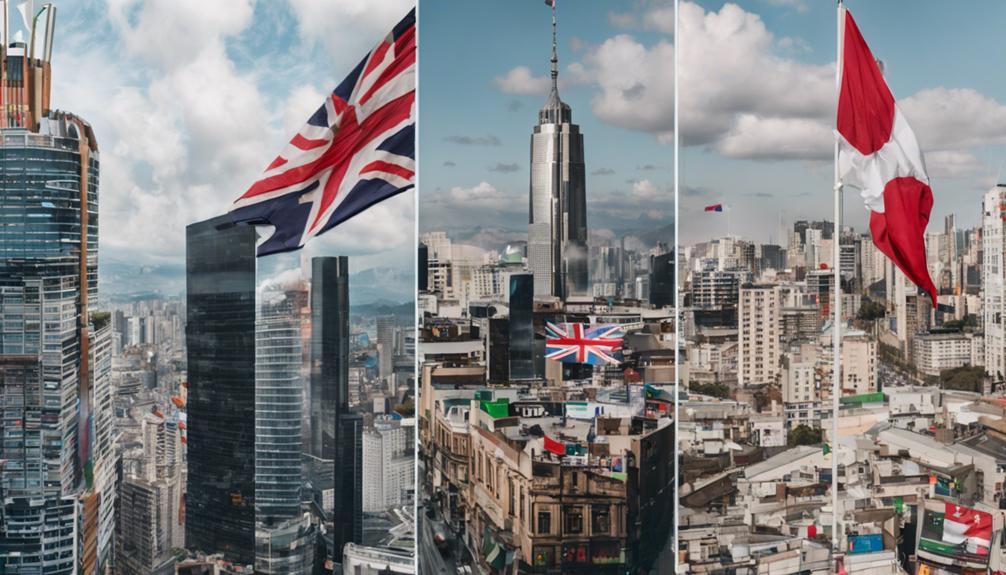
As we navigate the complexities of global politics, we're forced to confront the harsh reality that geopolitical tensions, trade wars, and economic sanctions are disrupting local businesses, from farmers struggling to maintain export markets to retailers facing increased costs and disrupted supply chains. We're witnessing the unintended consequences of economic sanctions, restricting access to essential supplies and impacting entire communities. But amidst the uncertainty, we're also seeing shifting trade winds that create new opportunities for entrepreneurs and local businesses. As we explore the impact of global politics, we're uncovering strategies to not only survive but thrive in this new normal.
Geopolitical Tensions and Trade Wars

As we explore the intricate web of global politics, it’s clear that geopolitical tensions and trade wars have become a major disruptor for local businesses. We’re not just talking about multinational corporations; even small, family-owned shops are feeling the ripple effects. When governments impose tariffs or engage in trade disputes, it can lead to increased costs, reduced demand, and disrupted supply chains. This delicate balance can make it difficult for local businesses to thrive in an uncertain environment. Furthermore, the impact of trade agreements can either exacerbate or alleviate these challenges, depending on how favorable they are to specific industries. As policymakers negotiate terms that could either open new markets or heighten barriers, small enterprises must navigate these changes with agility to remain competitive.
We've seen it happen in our own communities. Local retailers struggle to keep prices low as the cost of imported goods skyrockets. Farmers face uncertainty as export markets dry up. And entrepreneurs putting everything on the line to launch a new venture are forced to navigate a treacherous landscape of shifting regulations and trade agreements.
It's not just about the economic impact, either. Geopolitical tensions can also affect consumer confidence and sentiment. When we're bombarded with news of trade wars and diplomatic spats, it's natural to feel anxious about the future. And that anxiety can translate into tighter purse strings and delayed purchasing decisions – which, in turn, can have a devastating impact on local businesses.
As we explore further into the complex relationships between global politics and local economies, it's essential to acknowledge the human cost of these macro-level conflicts. We're not just talking about numbers on a spreadsheet; we're talking about people's livelihoods, their families, and their communities.
Economic Sanctions and Local Fallout
When we impose economic sanctions on a rival nation, we often overlook the unintended consequences on our own local businesses, which can be devastating. We assume that these measures will weaken the targeted country's economy, but we rarely consider the ripple effects on our own communities. The truth is, economic sanctions can have a profound impact on local businesses, particularly those that rely on international trade.
Take, for instance, a small business that imports goods from the sanctioned country. Suddenly, they're faced with restricted access to essential supplies, leading to production delays, increased costs, and even bankruptcy. We've seen this play out in various industries, from agriculture to manufacturing, where local businesses are forced to adapt to new, often unfeasible, circumstances.
Moreover, economic sanctions can lead to a decline in tourism, as travelers from the targeted country are deterred from visiting our cities. This, in turn, affects local hotels, restaurants, and shops that rely on tourist revenue. The consequences can be far-reaching, with entire communities feeling the pinch.
As we navigate the complex landscape of international relations, it's essential that we consider the potential fallout on our local businesses. By acknowledging these unintended consequences, we can work to mitigate the damage and find ways to support our local entrepreneurs during these challenging times.
Shifting Trade Winds and Opportunities
We're now witnessing a seismic shift in global trade dynamics, creating opportunities for local businesses to tap into new markets and forge novel partnerships. As traditional trade agreements are reevaluated and rewritten, we're seeing new doors open for entrepreneurs and small business owners. The shifting landscape is prompting companies to think creatively about their export strategies, and many are finding innovative ways to capitalize on emerging trends.
We're not just talking about established industries, either. The changing trade winds are also sparking new opportunities in unexpected areas, such as sustainable energy, eco-tourism, and social entrepreneurship. Local businesses that can adapt quickly to these shifts are poised to reap the benefits, whether it's by tapping into growing demand for eco-friendly products or by partnering with international companies looking to invest in socially responsible ventures.
Of course, addressing these changes won't be without its challenges. But for local businesses that are willing to be agile and forward-thinking, the rewards can be significant. By staying attuned to global trade developments and being open to new partnerships and opportunities, we can turn what might seem like uncertainty into a catalyst for growth and innovation. As we explore the intersection of global politics and local business, it's clear that the shifting trade winds are bringing opportunities that are ripe for the taking.
Navigating Global Uncertainty Successfully
Global uncertainty is the new normal, and our businesses must develop a sixth sense for adapting to sudden changes in the global economy to stay ahead of the curve. We can't control the whims of geopolitics, but we can control how we respond to them. To navigate this uncertainty successfully, we need to be proactive, not reactive.
Here are some strategies we can use to stay ahead of the curve:
- Stay informed, not alarmed: We need to stay up-to-date on global events, but avoid getting caught up in the emotional rollercoaster of sensationalized news. We must separate signal from noise to make informed decisions.
- Diversify and hedge: We shouldn't put all our eggs in one basket. By diversifying our supply chains, investments, and revenue streams, we can reduce our exposure to global risks.
- Build agility into our operations: We need to be able to pivot quickly in response to changing circumstances. This means streamlining our processes, staying lean, and fostering a culture of innovation.
- Develop a long-term perspective: We must balance short-term needs with long-term goals. By taking a step back and looking at the big picture, we can make decisions that will benefit our businesses in the years to come.
Adapting to Emerging Market Trends
Our businesses must be agile enough to capitalize on emerging market trends, which can be a significant source of competitive advantage in today's fast-paced global economy. We need to stay ahead of the curve, anticipating and adapting to shifts in consumer behavior, technological advancements, and changing regulatory landscapes. This requires us to be proactive, continually monitoring market developments and identifying opportunities to innovate and improve our offerings.
As we navigate the complexities of global politics, we must remain flexible and responsive to emerging trends. We're seeing a rise in sustainable and eco-friendly products, for instance, and businesses that can quickly adapt to this trend are more likely to attract environmentally conscious consumers. Similarly, the growth of e-commerce and digital payments presents opportunities for businesses to expand their online presence and reach new customers.
To stay competitive, we need to stay informed about emerging market trends and be willing to pivot our strategies accordingly. This might involve investing in new technologies, developing new products or services, or exploring new markets and partnerships. By doing so, we can not only stay afloat but thrive in an increasingly interconnected and rapidly changing global economy. By being adaptable and responsive to emerging trends, we can turn uncertainty into opportunity and stay ahead of the competition.
Frequently Asked Questions
How Do I Stay Informed About Changing Global Political Landscapes?
Staying informed about changing global political landscapes is like trying to drink from a firehose – it can be overwhelming! We prioritize reliable sources, like The Economist and BBC News, to stay current. We also set up Google Alerts for keywords like "trade policy" and "geopolitics" to get timely updates. Additionally, we follow experts and think tanks on social media to stay informed about emerging trends and analysis.
Can Local Businesses Influence National Trade Policy Decisions?
Can we, as local businesses, really influence national trade policy decisions? We think it's possible, but it takes effort. We can start by staying informed about changing global political landscapes, as we discussed earlier. Then, we can mobilize our community, build relationships with policymakers, and advocate for our interests. We can also join trade associations and lobby groups to amplify our voice. It won't be easy, but by working together, we can make our voices heard and shape the policies that affect our businesses.
What Role Do Local Governments Play in Mitigating Global Risks?
'As the old adage goes, 'all politics is local,' and we're about to find out just how true that is. When it comes to mitigating global risks, local governments play a vital role. We're not just talking about emergency responders; we're talking about proactive policy makers. They're the ones creating business-friendly environments, fostering innovation, and building resilience. By doing so, they're safeguarding local economies from the whims of global markets.'
How Can Businesses Balance Global Ambitions With Local Responsibilities?
As we navigate the complexities of global commerce, we're faced with an important dilemma: how to balance our global ambitions with local responsibilities. We believe it's essential to stay connected to our local roots while expanding our reach. By engaging with our community, sourcing locally, and investing in social initiatives, we can make sure our global pursuits don't come at the expense of our local values. It's a delicate balance, but one we're committed to achieving.
Are There Benefits to Focusing on Local Markets Amidst Global Uncertainty?
While the world outside seems chaotic, we're finding solace in our own backyard. Amidst global uncertainty, focusing on local markets can be a welcome change. We're realizing that by concentrating on our local customer base, we can build strong, loyal relationships and create a stable foundation for our business. It's a chance to reconnect with our community and make a meaningful impact, all while the global landscape sorts itself out.
