

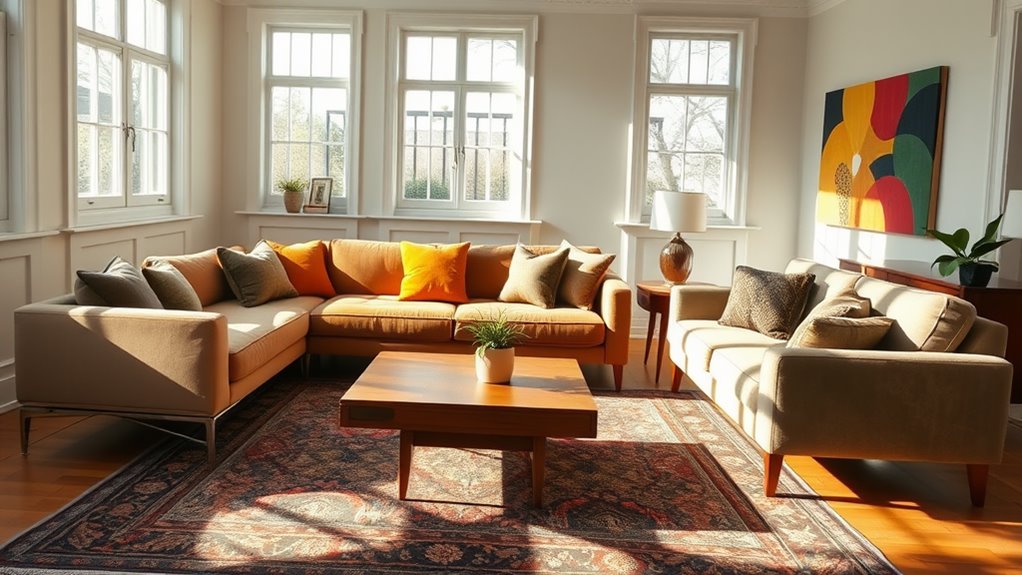
To blend classic and contemporary styles seamlessly, start by evaluating your space and identifying its key features. Choose a cohesive color palette that unites both styles, and select furniture pieces that bridge the gap between old and new. Mix textures for depth and layer your lighting for a balanced ambiance. Incorporate architectural elements that improve the fusion, and create focal points that celebrate both eras. There's plenty more to explore for a beautifully harmonized space.
Understanding the Essence of Classic and Contemporary Styles
When you explore classic and contemporary styles, you'll quickly notice that each has its own distinct characteristics. Classic styles radiate timeless elegance, often showcasing intricate details and rich materials that evoke a sense of history. You appreciate the artistry in ornate moldings, rich wood tones, and luxurious fabrics, all embodying a sense of permanence and tradition.
On the flip side, contemporary styles embrace a stylistic evolution that prioritizes simplicity and functionality. You'll find clean lines, open spaces, and innovative materials that reflect modern living. This approach isn't just about aesthetics; it's about creating environments that inspire and invigorate.
Assessing Your Space: Identifying Key Features
To successfully blend classic and contemporary styles in your space, you must first assess its key features. Start by measuring your space dimensions to understand how much room you have to work with. Consider the architectural style, as it sets the tone for your design. Take note of existing furnishings; these can serve as anchors for your new look. Evaluate your light sources—natural and artificial—as they influence mood and functionality. Determine the room function; this helps prioritize design elements. Reflect on your personal taste; your style should shine through in the final blend. Verify layout flow is seamless, allowing for movement during the showcasing of both styles. Finally, align every choice with your design goals, confirming a cohesive and innovative approach that marries the charm of classic design with the sleekness of contemporary aesthetics.
Choosing a Color Palette That Unites Both Styles
In the process of blending classic and contemporary styles, choosing a cohesive color palette is essential for unifying the two aesthetics. Start by identifying colors that resonate with both styles—think deep navy or rich burgundy for classic vibes, paired with fresh whites or muted pastels typical of contemporary design. This color harmony will not just create visual appeal but will additionally improve the overall mood of your space.
Consider how different hues can influence emotions; warm tones exude comfort and sophistication, whereas cooler shades evoke calm and modernity. Experiment with accent colors to draw attention to specific features, ensuring they complement rather than clash. Don't shy away from bold choices—an innovative pop of color can serve as a striking bridge between the classic and contemporary elements. By carefully curating your palette, you'll craft an inviting atmosphere that feels both timeless and fresh.
Selecting Furniture That Bridges the Gap
During selecting furniture that bridges the gap between classic and contemporary styles, focus on pieces that embody elements of both aesthetics. Look for items that incorporate vintage accents, like a mid-century modern chair with elegant upholstery, which adds a nostalgic touch as it remains sleek. Choose multifunctional furniture, such as a stylish coffee table that doubles as extra storage or a contemporary sofa with classic lines, to optimize your space without sacrificing style.
Don't shy away from mixing materials; a wooden dining table with metal legs can seamlessly blend old-world charm with modern sensibilities. When you prioritize innovative designs that respect both styles, you create a harmonious environment that feels intentional and cohesive. Remember, the goal is to create a dialogue between the old and the new—where each piece tells a story as it serves a purpose in your contemporary lifestyle.
Mixing Textures for Added Depth and Interest
Mixing textures can transform your space and add layers of depth. By layering fabrics effectively and choosing contrasting materials, you'll create a visually dynamic environment. Don't forget to incorporate natural elements for a revitalizing touch that ties everything together.
Layering Fabrics Effectively
Even though layering fabrics can seem intimidating, it's a strong way to infuse your outfit with depth and personality. Start by exploring fabric combinations that create texture harmony. Think about how a chunky knit can play off a smooth silk or how a structured denim jacket complements a flowy cotton dress. Experiment with different weights and weaves to add richness to your look. Don't shy away from mixing patterns, either; a subtle plaid can amplify a floral without overwhelming it. Remember, the key is to maintain balance—too many competing textures can create chaos. Instead, focus on a cohesive palette that ties your fabrics together, ensuring each layer adds intrigue without clashing. Embrace the innovative possibilities of fabric layering!
Contrasting Materials Choice
Contrasting materials can improve your outfit by adding depth and interest. By thoughtfully mixing textures, you create a visually appealing ensemble that captures attention. Consider these innovative combinations:
- Wood and metal: Pair a sleek metal accessory with wooden accents for a balanced, modern look.
- Fabric and leather: Combine soft fabrics with structured leather to create a dynamic contrast that boosts your style.
- Knits and silks: Layer chunky knitwear over delicate silk pieces to juxtapose warmth and elegance.
- Denim and suede: Match rugged denim with luxurious suede for a chic yet casual vibe.
Experimenting with these materials not merely showcases your creativity but also highlights your unique fashion sensibility. Embrace the art of contrast and watch your outfits come alive.
Incorporating Natural Elements
Incorporating natural elements into your wardrobe improves your style by adding layers of texture and richness. When you mix natural materials like linen, cotton, and wood with contemporary pieces, you create a striking balance that's both fresh and timeless. Think about pairing a classic wool blazer with a sustainable design turtleneck made from organic cotton. This combination not just showcases innovation but also raises your overall aesthetic. Add accessories made from reclaimed wood or natural stones for that extra depth. By thoughtfully blending these textures, you'll cultivate a unique look that reflects your commitment to sustainability as you embrace modern trends. Embrace the beauty of nature in your style, and watch your wardrobe transform into a harmonious expression of elegance and creativity.
Incorporating Artwork and Accessories Thoughtfully
When you incorporate artwork and accessories, think about how they complement your existing decor. Mixing different textures and materials adds depth, whereas layering accessories intentionally creates a cohesive look. By choosing pieces that resonate with both classic and contemporary styles, you can enhance your space beautifully.
Selecting Complementary Artwork
Choosing artwork that complements your space can improve the overall aesthetic of your home, especially when blending classic and contemporary styles. To achieve a seamless art style fusion, consider these tips for effective artwork placement:
- Select pieces with a shared color palette to unify the classic and contemporary elements.
- Incorporate bold, modern artwork alongside traditional pieces to create a striking contrast.
- Mix various mediums—like paintings, sculptures, and photography—to add depth and interest.
- Curate your gallery wall thoughtfully, ensuring each piece tells a story and flows together.
Mixing Textures and Materials
Art isn't merely about the visuals; it's similarly about how different textures and materials play off each other to create a cohesive atmosphere. To achieve a fascinating blend of classic and contemporary, experiment with bold texture combinations. Pair sleek metals with rich woods, or combine soft textiles with rugged stone to form intriguing material contrasts. This dynamic interplay not only improves visual interest but additionally evokes emotion and depth in your space. Consider how each piece interacts within the overall aesthetic—whether a striking sculpture or a textured painting. By thoughtfully selecting artwork and materials that challenge conventions, you'll cultivate an innovative environment that feels both timeless and fresh. Embrace the tactile, and let your creativity shine through these unique pairings.
Layering Accessories Intentionally
To create a visually compelling space, layering accessories intentionally can transform your environment into a harmonious blend of classic and contemporary styles. Start by mixing elements that resonate, ensuring each piece contributes to the overall aesthetic. Here are some accessorizing tips for intentional layering:
- Combine vintage frames with modern art prints.
- Use a contemporary vase to hold classic textiles.
- Layer geometric sculptures with ornate candle holders.
- Integrate eclectic books with sleek coffee table decor.
Layering Lighting for a Balanced Ambiance
Even though you might think of lighting as simply a functional aspect of your space, layering different types can transform the atmosphere considerably. Start with ambient light sources like recessed lighting or soft wall sconces to create a warm base. Next, introduce vintage fixtures—think a chic chandelier or classic table lamps—to add character and charm. These not just improve your design but also serve as conversation starters.
Don't forget task lighting, too; it's vital for functionality. Incorporate stylish floor lamps or under-cabinet lights in the kitchen to guarantee each area serves its purpose.
Finally, consider accent lighting to spotlight artwork or architectural details. By mixing these elements, you'll achieve a balanced ambiance that seamlessly blends classic elegance with contemporary flair. This layered approach doesn't just illuminate your space; it raises it, making every corner feel inviting and thoughtfully designed.
Utilizing Architectural Elements to Enhance Fusion
To improve the fusion of classic and contemporary styles, you can start by incorporating historical features into your design. Think about how modern material choices can complement these elements, creating a unique aesthetic. This balance not just honors tradition but likewise embraces innovation.
Incorporating Historical Features
When you blend classic and contemporary styles, incorporating historical features can greatly improve the overall aesthetic of your space. By thoughtfully utilizing architectural details, you can create a harmonious fusion that feels both innovative and timeless. Here are some ways to integrate historical elements:
- Crown Molding: Use ornate crown molding to add elegance to modern spaces.
- Archways: Incorporate classic archways as connecting features between rooms.
- Fireplaces: Retain or restore original fireplaces, blending them with sleek furnishings.
- Windows: Highlight period-style windows with contemporary treatments for a fresh look.
These elements not just improve the character of your home but also establish a dialogue between the past and present, allowing your design to stand out with sophistication.
Modern Material Choices
Modern material choices play a crucial role in enhancing the fusion of classic and contemporary styles. By utilizing sustainable materials, you can create innovative designs that honor tradition during embracing modernity. Think of pairing reclaimed wood with sleek metal fixtures or incorporating glass elements to brighten a historic space.
Here's a quick guide to inspire your choices:
| Material Type | Application |
|---|---|
| Reclaimed Wood | Accent walls or furniture |
| Metal Accents | Lighting fixtures |
| Glass | Windows or partitions |
| Concrete | Flooring or countertops |
These combinations not just improve aesthetics but additionally promote environmental responsibility, making your space truly unique and forward-thinking. Embrace these materials and watch your vision come to life!
Creating Focal Points That Celebrate Both Eras
Even though blending classic and contemporary styles can seem challenging, creating focal points that celebrate both eras is a rewarding endeavor. You can achieve stunning focal point design by thoughtfully selecting elements that reflect the charm of the past as you embrace modern aesthetics. Consider these innovative approaches:
- Artistic Gallery Walls: Mix classic frames with contemporary artwork to create a dynamic visual experience.
- Statement Furniture: Choose a traditional piece and pair it with sleek, modern accents.
- Lighting Fixtures: Opt for a vintage chandelier contrasted with minimalist floor lamps.
- Textile Layering: Combine classic patterns with contemporary fabrics for a rich, textured look.
Personalizing Your Space With Unique Touches
To truly make your space feel like home, incorporating unique touches that reflect your personality is essential. Start by identifying your personal style—whether it's eclectic, minimalist, or vintage-inspired. Mix and match unique elements, like a contemporary art piece paired with a classic wooden frame, to create a dialogue between the eras.
Consider sourcing handmade items or local artwork that resonates with you. These one-of-a-kind pieces not just showcase your taste but serve as conversation starters.
Don't shy away from bold colors or unexpected patterns; they can energize your space and highlight your individuality. Vintage finds, such as an antique lamp or a retro chair, can add warmth and character to a contemporary setting.
Ultimately, the key is to blend these elements thoughtfully, ensuring they complement each other as you keep your personal style front and center. Your space should be a true reflection of who you are.
Frequently Asked Questions
How Do I Determine Which Classic Elements to Keep?
To determine which classic elements to keep, start by identifying timeless features that resonate with you. Think about your personal preferences—what evokes nostalgia or comfort? Evaluate each piece's emotional impact and how it complements your contemporary choices. Don't be afraid to mix in innovative touches that reflect your style. By focusing on elements that speak to you, you'll create a space that feels uniquely yours during honoring classic charm.
Can I Mix Different Styles Within Contemporary Furniture?
Absolutely, you can mix different styles within contemporary furniture! Embrace modern eclecticism by combining various pieces that offer furniture contrasts. Think about incorporating bold colors, unique shapes, and textures that reflect your personality. You'll create a dynamic space that feels both innovative and inviting. Just make certain your selections share a common thread, whether it's color, material, or form, to maintain a cohesive look. Go ahead, let your creativity shine!
What's the Best Way to Source Vintage Classic Pieces?
Looking for those elusive vintage classic pieces? You're in for a thrilling hunt! Start by exploring lively vintage markets, where hidden gems await. Don't overlook online auctions, either; they can be treasure troves of unique finds. Keep an eye out for well-preserved items that resonate with your style. With persistence and a sharp eye, you'll uncover pieces that spark joy and enhance your space in ways you never envisioned. Happy hunting!
How Can I Ensure Harmony Between Both Styles?
To guarantee harmony between both styles, start by choosing a cohesive color palette that unites your classic and contemporary pieces. Incorporate furniture balance by mixing sleek modern lines with traditional shapes, creating visual interest without overwhelming the space. Use accessories that echo elements from both styles, like pairing a vintage lamp with a modern sofa. This approach lets you celebrate innovation as you maintain a sense of unity, making your space feel both fresh and timeless.
Should I Prioritize One Style Over the Other?
You shouldn't prioritize one style over the other; instead, focus on achieving a style balance. By comprehending your design priorities, you can create a space that reflects both classic charm and contemporary flair. Consider which elements resonate with you, and let those guide your choices. This innovative approach allows you to blend both styles harmoniously, ensuring your space feels cohesive without sacrificing the unique qualities that each style offers.
