

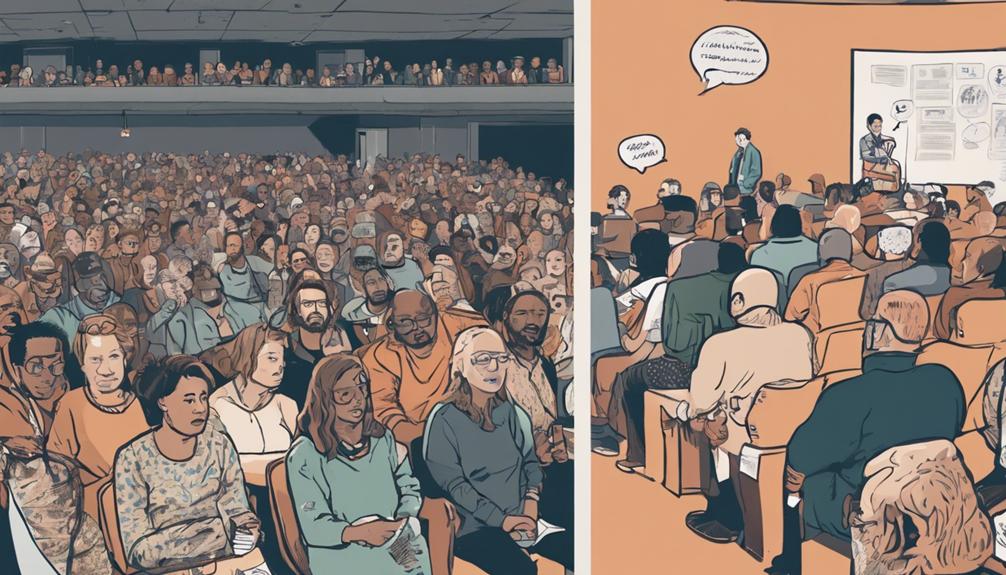
When you watch a political debate, you're witnessing an important moment in shaping public opinion. Candidates use storytelling techniques to sway your opinion, making emotional connections and appearing authentic to gain your trust. Likability and charisma play a significant role in winning you over, especially if you're an undecided voter. Debates also influence policy conversations and your perception of them. As you continue to observe these verbal battles, you'll discover how they impact election outcomes and the importance of fact-checking, moderator influence, and social media's role in shaping the narrative – and you're just getting started.
Setting the Campaign Narrative
As the campaign season unfolds, you're likely to notice a subtle yet powerful phenomenon: candidates carefully crafting their narrative to sway public opinion and set the tone for the entire campaign. You'll see them use storytelling techniques to create an emotional connection with voters, making their message more relatable and memorable. This narrative becomes the foundation of their campaign, influencing how you perceive their policies, character, and leadership style.
You might find yourself drawn to a candidate's message because it resonates with your values or life experiences. Perhaps you're inspired by their vision for the country or identify with their personal story. The narrative has the power to create a sense of belonging, making you feel like you're part of a larger movement. Candidates know this, and that's why they invest so much time and effort into crafting a compelling narrative.
As you engage with the campaign, you'll start to notice how the narrative is reinforced through various channels, from social media to speeches and advertisements. You might even find yourself repeating the candidate's catchphrases or slogans, further amplifying their message. The narrative has become a powerful tool in shaping public opinion, and it's essential to be aware of its influence on your perceptions and opinions.
Debates as Public Opinion Molders
As you examine the role of debates in shaping public opinion, you'll notice that candidates employ various tactics to persuade you. They'll often appeal to your emotions, using storytelling and personal anecdotes to create a connection with you. Now, let's explore how these strategies, along with the interplay between facts and rhetoric, influence your perceptions and opinions.
Political Persuasion Tactics
When you watch a political debate, you're not just witnessing a clash of ideologies – you're being subtly persuaded by the debaters' strategic use of linguistic and psychological tactics. As you engage with the debate, you're more susceptible to persuasion than you think. Politicians and their teams carefully craft their language, tone, and body language to sway your opinions. They use rhetorical devices like repetition, metaphors, and anecdotes to make their message more relatable and memorable. They also employ psychological tactics like emotional appeals, social proof, and scarcity to influence your perceptions. For instance, a debater might use a personal story to evoke empathy or cite expert opinions to establish credibility. By recognizing these tactics, you can become a more discerning consumer of political debates, making more informed decisions about the issues that matter to you. So, the next time you watch a debate, pay attention to the subtle cues that shape your opinions – and take control of your own persuasion.
Emotional Connection Matters
You're likely to remember a debater's emotional appeal long after the facts and figures have faded from your memory, and that's precisely why emotional connection matters in shaping public opinion. When a debater speaks from the heart, sharing personal anecdotes and expressing genuine passion, you're more likely to listen and engage. This emotional connection is what makes debates memorable and impactful.
Here are three reasons why emotional connection is essential in debates:
- Authenticity wins hearts: When debaters are genuine and vulnerable, you're more likely to trust them and align with their views.
- Emotions evoke empathy: When debaters share personal stories, you're more likely to put yourself in their shoes and understand their perspective.
- Emotional connections last: Long after the debate is over, the emotional appeal of a debater's words will stick with you, influencing your opinions and beliefs.
Facts Vs. Rhetoric
As you watch political debates, you're often faced with an important distinction: facts versus rhetoric. Debaters who masterfully wield facts and rhetoric can sway your opinions and shape public perception, often blurring the lines between objective truth and persuasive storytelling. You might find yourself questioning what's real and what's just a cleverly crafted narrative.
When debaters rely on facts, they build credibility and establish a foundation for their arguments. You're more likely to trust someone who cites credible sources and presents verifiable data. On the other hand, rhetoric can be persuasive, but it can also be misleading. A skilled orator might use emotional appeals to sway your emotions, making it essential to critically evaluate the information presented.
As you navigate the world of political debates, it's important to stay vigilant and discerning. Remember that facts provide a solid foundation, while rhetoric can be persuasive but potentially misleading. By being aware of this distinction, you'll be better equipped to make informed decisions and separate truth from spin.
Winning Over Undecided Voters
By crafting a persuasive message that resonates with their values and concerns, politicians can increase their chances of winning over undecided voters. You, as a voter, want to feel heard and understood, and when a politician speaks directly to your concerns, you're more likely to listen. Undecided voters often feel like they don't fit neatly into one political party or ideology, so a message that acknowledges their unique perspective can be incredibly powerful.
To win over undecided voters, politicians should:
- Focus on shared values: Instead of trying to convince you of a specific policy, politicians should appeal to the values that drive your decision-making. This helps create an emotional connection and makes their message more relatable.
- Use storytelling: Politicians who share personal anecdotes or stories about everyday people can make their message more accessible and memorable. This helps undecided voters see themselves in the story and imagine how the politician's policies will impact their own lives.
- Show empathy and understanding: When politicians acknowledge the complexity of an issue and show empathy towards different perspectives, undecided voters are more likely to trust their judgment. This helps build a sense of trust and credibility, making it more likely that undecided voters will support the politician.
Candidate Image and Likability
While evaluating political candidates, voters often prioritize likability, as they're more likely to trust and support a candidate who appears genuine, relatable, and shares their values. You might find yourself drawn to a candidate who exudes confidence, empathy, and a sense of authenticity. As you watch a debate, you're not just listening to their policies, but also sizing up their personality, tone, and body language. Do they seem approachable and down-to-earth, or distant and elitist?
As you assess a candidate's likability, you're also gauging their ability to connect with you on a personal level. You want to feel like they understand your concerns and values, and that they're committed to representing your interests. When a candidate comes across as sincere and empathetic, you're more likely to feel a sense of trust and rapport with them. This emotional connection can be a powerful motivator, influencing your decision at the ballot box. As you weigh the pros and cons of each candidate, remember that likability is an essential factor in shaping your opinion. By considering a candidate's image and likability, you're making an informed decision about who will best represent you in office.
Shaping Policy Conversation
You're likely to find that political debates greatly influence the policy conversation, reframing the discussion around key issues and forcing candidates to clarify their stances on contentious topics. As you watch a debate, you'll notice how the moderators' questions and the candidates' responses shape the narrative around key policy areas. This, in turn, affects how the public perceives and prioritizes these issues.
Debates also provide a unique opportunity for candidates to showcase their expertise and provide detailed explanations of their policy proposals. This can lead to a more informed electorate, as voters are able to make more nuanced decisions based on a deeper understanding of the candidates' positions.
Some key ways debates shape policy conversations include:
- *Forcing candidates to take a stance*: Debates often put candidates on the spot, requiring them to take a clear stance on complex issues. This helps voters understand where candidates stand and holds them accountable for their positions.
- *Highlighting areas of agreement and disagreement*: Debates reveal where candidates converge and diverge on policy issues, allowing voters to identify common ground and areas of concern.
- *Setting the agenda*: Debates can elevate certain issues to the forefront of the national conversation, influencing the policy priorities of both candidates and voters alike.
Candidate Authenticity and Trust
As you watch political debates, you're likely sizing up the candidates, searching for genuine leadership qualities that make you believe in them. You're not just listening to their policy stances, you're also trying to gauge their honesty and trustworthiness. Can you trust what they're saying, or do they seem like they're hiding something, making empty promises to win your vote?
Genuine Leadership Qualities
One pivotal aspect of genuine leadership qualities is a candidate's authenticity, which directly influences the level of trust voters have in them. When you see a candidate being true to themselves, you're more likely to believe they'll make decisions that align with their values, rather than just trying to win your approval. This authenticity breeds trust, which is essential for a leader to effectively represent their constituents.
Some key indicators of a candidate's authenticity include:
- Consistency in their message: Do they stick to their core values, or do they flip-flop based on the audience?
- Vulnerability and transparency: Are they willing to share their personal struggles and be open about their decision-making process?
- Accountability: Do they take responsibility for their mistakes, or do they shift the blame onto others?
When you see a candidate exhibiting these traits, you can't help but feel a sense of trust and respect for them. This, in turn, can greatly influence your perception of their leadership abilities and ultimately, your decision at the polls.
Voter Perception of Honesty
As you consider the candidates vying for your vote, you're not alone in prioritizing honesty above all else. Nearly nine out of ten voters consider honesty the most essential quality in a candidate, and this perception significantly impacts the level of trust they have in a leader. You want to believe that the person representing you will be truthful and transparent in their decision-making. When a candidate is perceived as honest, you're more likely to trust them with your vote. On the other hand, dishonesty can be a major turnoff, leading to a breakdown in trust and a loss of credibility. You crave authenticity in your leaders, and when you sense deceit or dishonesty, it's a major red flag. In political debates, candidates who come across as genuine and truthful have a significant advantage. As you watch these debates, pay attention to how the candidates present themselves. Do they seem sincere and trustworthy, or do you sense evasiveness or dishonesty? Your perception of their honesty will likely play a significant role in deciding who gets your vote.
Media Influence on Debate Perception
You're likely aware that the media's portrayal of a debate can greatly impact your perception of the candidates and their arguments. The way the media frames the debate can influence your opinions, making it essential to be aware of these influences. When watching a debate, you might not even realize how the media's spin can affect your thoughts and feelings. However, it's vital to recognize that the media's portrayal can be biased, and it's up to you to critically evaluate the information.
The media's influence can be subtle yet powerful. Here are a few ways the media can shape your perception of a debate:
- Selective editing: The media can choose which clips to air, highlighting certain moments while downplaying others. This selective editing can create a skewed view of the debate, emphasizing certain aspects over others.
- Commentary and analysis: The media's commentary and analysis can influence your interpretation of the debate. Biased commentary can sway your opinion, making it difficult to form an objective view.
- Post-debate spin: The media's post-debate coverage can further solidify your opinions, often focusing on specific moments or soundbites that might not be representative of the entire debate.
The Power of Zingers and One-Liners
As you reflect on political debates, you'll likely recall moments that stuck with you long after the event was over – a witty comeback, a clever quip, or a biting remark that left a lasting impression. These memorable debate moments, often crafted with care, can sway public opinion and influence the narrative around a candidate. You're about to discover how politicians use soundbite strategies to create these impactful one-liners that linger in the public consciousness.
Memorable Debate Moments
Four presidential debates have made history with their witty one-liners, forever etching themselves in the minds of audiences. You've probably found yourself repeating those clever phrases to friends and family, making them a staple of watercooler conversations. These memorable debate moments have the power to sway public opinion, making them an essential aspect of political debates.
Some of the most notable examples include:
- Lloyd Bentsen's 'Senator, you're no Jack Kennedy' retort during the 1988 vice presidential debate, which left Dan Quayle stumbling to respond.
- Ronald Reagan's 'There you go again' jab at Jimmy Carter in 1980, which showcased his quick wit and charm.
- Barack Obama's 'You can put lipstick on a pig, but it's still a pig' quip during the 2008 presidential debate, which cleverly deflected John McCain's criticism.
These one-liners have become ingrained in our collective consciousness, often overshadowing the debate’s more substantial policy discussions. As you watch future debates, pay attention to these memorable moments – they might just be the deciding factor in shaping public opinion. While flashy sound bites may grab headlines, they often distract from critical issues such as term limits in congressional elections, which can dramatically impact political dynamics. Voters may find themselves swayed by these one-liners, overlooking the larger implications of policies that would determine the effectiveness and accountability of their elected representatives. Therefore, engaging in these discussions is essential, as they help shape not only the candidates’ platforms but also the future of governance itself.
Soundbite Strategies
Here's the output:
Crafting soundbite strategies, including zingers and one-liners, has become an essential aspect of debate preparation, allowing candidates to distill complex policy ideas into memorable, bite-sized phrases that resonate with voters. As you watch a debate, you might notice how some candidates effortlessly deliver punchy one-liners that leave a lasting impression. These soundbites are carefully crafted to be tweeted, shared, and replayed, making them a vital tool for swaying public opinion. A well-timed zinger can humanize a candidate, convey their personality, and even shift the narrative of the debate. You might recall iconic soundbites like 'Read my lips: no new taxes' or 'There you go again,' which have become ingrained in our collective memory. By incorporating soundbites into their strategy, candidates can create a sense of connection with you, the voter, and make their message more relatable and memorable.
Fact-Checking and Accountability
You're likely to encounter claims that sound too good (or bad) to be true during political debates, making it essential to fact-check information before accepting it as true. It's important to develop a healthy dose of skepticism and verify the accuracy of statements made by politicians. This not only helps you form informed opinions but also promotes accountability among politicians.
When fact-checking, you can:
- Check reputable fact-checking websites, such as FactCheck.org or PolitiFact, which provide unbiased analysis of claims made during debates.
- Verify statistics and data cited by politicians against credible sources, such as government reports or academic studies.
- Be cautious of cherry-picked data or misleading information that may be presented in a way that supports a particular agenda.
Debate Moderators' Impact on Tone
How do debate moderators influence the tone of the debate, and what impact does their influence have on the audience's perception of the candidates? You might be surprised at how much power moderators wield in shaping the atmosphere of the debate. A skilled moderator can create a sense of respect and civility, encouraging candidates to engage in constructive dialogue. On the other hand, a moderator who is too passive or biased can let the debate devolve into chaos and personal attacks.
You've probably witnessed debates where the moderator seems to take center stage, asking confrontational questions or interrupting candidates mid-sentence. This kind of behavior can create a hostile atmosphere, making it difficult for candidates to articulate their views. Conversely, a moderator who is knowledgeable and impartial can help facilitate a thoughtful discussion, allowing candidates to explore the issues.
The tone set by the moderator can greatly influence your perception of the candidates. If the debate feels tense or confrontational, you might view the candidates as aggressive or uncooperative. On the other hand, a respectful and constructive debate can make you see the candidates as thoughtful and collaborative. As you watch a debate, pay attention to the moderator's role in shaping the tone – it can significantly impact your impression of the candidates and their policies.
Post-Debate Media Spin Cycle
As the debate comes to a close, the post-debate media spin cycle kicks into high gear, with pundits and journalists scrambling to dissect every statement, gesture, and facial expression to shape the narrative of the debate's winners and losers. You, as a viewer, are suddenly bombarded with analysis, commentary, and spin from all sides. It's a whirlwind of information, and it can be overwhelming.
In this frenzy, it's essential to remember that the media's narrative can greatly influence your perception of the debate. You might find yourself wondering, "Did the moderator really favor one candidate over the other?" or "Was that candidate's response to the question a clear win?" The media's spin can shape your answers to these questions, and ultimately, your opinion of the debate's outcome.
Here are a few things to keep in mind as you navigate the post-debate media spin cycle:
- Be aware of your sources: Consider the credibility and bias of the outlets and pundits you're consuming.
- Look for diverse perspectives: Don't rely on a single source or viewpoint; seek out multiple sources to get a well-rounded understanding.
- Take a step back: Remember that the media's narrative is just one interpretation – take time to form your own opinion, and don't be swayed by the loudest voices.
The Role of Social Media in Debate
When the debate wraps up, social media platforms ignite, with candidates, campaigns, and citizens alike clamoring to shape the narrative and sway public opinion. You'll see a flurry of tweets, Facebook posts, and Instagram stories as each side tries to claim victory and discredit their opponents. Hashtags start trending, and memes begin circulating, often poking fun at the opposing candidate's gaffes or perceived weaknesses.
As you scroll through your feeds, you'll notice that social media influencers and bloggers are weighing in, sharing their own analysis and opinions on the debate. You might even see celebrities and thought leaders chiming in, using their vast followings to amplify their views. It's not uncommon for debate highlights and lowlights to go viral, spreading rapidly across platforms and reaching millions of people in a matter of hours.
You might find yourself caught up in the excitement, sharing your own reactions and opinions with your online friends and followers. But it's essential to remember that social media is just one aspect of the post-debate landscape. As you engage with others online, keep in mind that the goal of political debates is not solely to win over social media, but to inform and engage citizens in the democratic process. By being an active participant in online discussions, you're helping to shape the narrative and contribute to the broader conversation.
Lasting Impact on Election Outcomes
By examining the correlation between debate performance and election outcomes, you'll discover that a candidate's success in the debates can greatly enhance their chances of winning the election. A strong debate performance can boost a candidate's popularity, increase their visibility, and ultimately sway undecided voters. In fact, research has shown that debates can be an essential factor in shaping public opinion, particularly among swing voters.
As you explore further into the world of political debates, you'll find that a candidate's debate performance can have a lasting impact on election outcomes. Here are just a few ways in which debates can influence the outcome of an election:
- Debate performances can humanize candidates: By showcasing a candidate's personality, debates can help voters connect with them on a more personal level, making them more relatable and likable.
- Debates can clarify policy positions: By forcing candidates to articulate their policies and respond to critiques, debates can provide voters with a clearer understanding of where each candidate stands on key issues.
- Debates can create memorable moments: A single memorable moment in a debate can dominate the news cycle, making it more likely to influence public opinion and shape the narrative of the election.
Frequently Asked Questions
Do Political Debates Solely Focus on Policy or Also on Candidate Character?
You're probably wondering, do political debates solely focus on policy or also on candidate character? Well, you're right to question this. In reality, debates often blend policy discussions with personal attacks and character assessments. You'll notice that candidates frequently highlight their opponents' personal flaws, while touting their own virtues. This mix of policy and character scrutiny helps voters form a more complete picture of each contender.
Can Debates Be Scripted, or Are They Truly Spontaneous Events?
You're wondering if political debates are genuinely spontaneous or carefully scripted. The truth is, it's a mix of both. While candidates often prepare thoughtful responses to anticipated questions, they also need to think on their feet. You might be surprised to know that some debates allow for a bit of improvisation, especially during rebuttals or follow-up questions. But, let's be real, there's usually some level of preparation involved to guarantee a polished performance.
How Do Debate Moderators Balance Fairness With Probing Tough Questions?
You're probably curious about how debate moderators walk the tightrope between fairness and toughness. Did you know that 75% of voters consider debate moderators influential in shaping their opinions? To strike a balance, moderators prepare meticulously, researching candidates' stances and crafting questions that drill down on inconsistencies. They also anticipate potential clashes, ensuring a respectful yet probing atmosphere. By doing so, they create a platform for constructive debate, allowing you to make informed decisions at the polls.
What Is the Ideal Debate Format: One-On-One or Multi-Candidate?
You're wondering what makes the ideal debate format – one-on-one or multi-candidate? It's a tough call. On one hand, one-on-one debates allow for in-depth discussions and more nuanced answers. On the other hand, multi-candidate debates offer a broader range of perspectives and can be more engaging. Ultimately, the best format depends on what you value most – substance or spectacle.
Do Political Debates Primarily Sway Undecided or Loyal Voters?
You're probably wondering, do political debates mostly influence undecided or loyal voters? Research suggests that debates primarily sway undecided voters. You see, undecided voters are more open to changing their minds, and debates provide them with valuable information to make informed decisions. Loyal voters, on the other hand, tend to be more entrenched in their beliefs, making them less susceptible to changes in opinion. So, debates can be a game-changer for undecided voters, but loyal voters are less likely to budge.
