

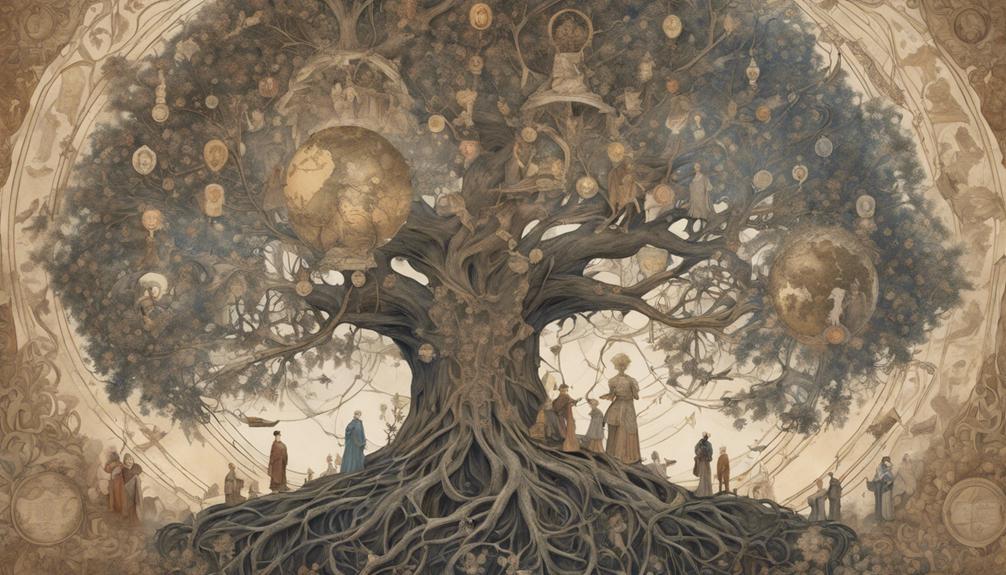
You've heard of the Kennedys, Bushes, or Clintons – iconic political families that have shaped modern politics. But what makes them so influential? Political dynasties like these wield significant power, shaping policy and legacy. Families like these concentrate power through strategic alliances, leveraging unique skills and strengths to reinforce their hold. But how do they maintain this grip on power? You'll discover that family ties are vital in building credibility, and that nepotism plays a significant role in party politics. As you explore further, you'll uncover the challenges these dynasties face and the future they're likely to shape.
Defining Political Dynasties
When you think of a political dynasty, you might envision a powerful family like the Kennedys or the Clintons, but what exactly defines a political dynasty, and how do they shape the course of modern politics? At its core, a political dynasty refers to a family that has produced multiple members who have held public office, often influencing policy and shaping the political landscape. These families often share a strong sense of public service, a deep understanding of politics, and a network of connections that can be leveraged to advance their interests.
You might wonder what sets these families apart from others. The answer lies in their ability to build and maintain power over time. Political dynasties often have a strong sense of legacy, with family members drawing on their collective experience and reputation to further their own careers. This can lead to a concentration of power, as family members use their influence to promote each other's interests and protect their own.
As you explore the world of political dynasties, you'll find that they can have a profound impact on modern politics. By understanding what defines a political dynasty, you'll gain insight into the complex web of relationships and interests that shape our political systems. You'll also begin to appreciate the ways in which these families can both promote positive change and perpetuate existing power structures.
Family Ties and Power
As you explore the domain of political dynasties, you'll notice that family ties play a significant role in shaping power structures. You'll see how dynastic ambitions are born, and how family members work together to maintain control and influence. Now, let's examine the intricate web of family power plays and the lasting legacy of control they leave behind.
Dynastic Ambitions Born
Born into a world of power and privilege, you're likely to inherit not only wealth and status but also a sense of dynastic ambition that can shape your destiny. You're part of a legacy that expects greatness, and you're driven to continue the family's influence and prestige. This inherited sense of responsibility fuels your passion to make a difference, to leave a lasting impact on the world.
As you grow, you're surrounded by influential figures, politicians, and thought leaders who mentor and guide you. You're groomed to take the reins, to carry on the family's legacy and expand its reach. Your family's history and reputation become your motivation, propelling you to work harder, to strive for excellence, and to make a name for yourself.
You're not alone in this journey. You're part of a network of like-minded individuals who share your vision and values. Together, you're driven to create a lasting legacy, one that honors your family's heritage and paves the way for future generations. Your dynastic ambitions are ignited, and you're ready to take on the world.
Family Power Play
Your family's power and influence are deeply intertwined, with each relative playing an essential role in the complex web of connections that propel your dynasty forward. As you navigate the intricate landscape of politics, you realize that your family's strength lies not only in individual achievements but also in the collective might of your kin.
You've learned to harness the unique skills and strengths of each family member to further your shared goals. Your uncle's charisma on the campaign trail is matched only by your aunt's behind-the-scenes strategic prowess. Meanwhile, your cousin's social media savvy helps to amplify your message to a wider audience.
Some key aspects of your family's power play include:
- Strategic alliances: You've mastered the art of forming powerful partnerships that expand your influence and open doors to new opportunities.
- Talent development: Each family member is encouraged to develop their unique skills, ensuring that your dynasty remains adaptable and resilient.
- Coordinated efforts: By working together, you're able to present a united front and respond effectively to challenges that arise.
- Legacy preservation: You're keenly aware of the importance of preserving your family's legacy, ensuring that your collective achievements endure for generations to come.
Legacy of Control
Through strategic marriages, calculated nepotism, and carefully orchestrated public appearances, you've woven a complex web of family ties that reinforce your grip on power. You've mastered the art of legacy building, where family members seamlessly move into positions of influence, perpetuating your dynasty's dominance. It's a delicate balance of power and loyalty, where family bonds are leveraged to secure political control.
You've cultivated a sense of belonging among your constituents, creating an illusion of shared values and interests. Your family's legacy is intertwined with the nation's history, making it difficult to distinguish between the two. You've cleverly used symbolism, exploiting emotional connections to strengthen your grip on power. The public's perception of your family's legacy is carefully curated, with each generation building upon the last, reinforcing the notion that your family is destined to lead.
As you continue to shape the narrative of your family's legacy, you're acutely aware that the line between power and responsibility is thin. You're constantly walking this tightrope, ensuring that your family's influence endures while maintaining the illusion of servant leadership. The legacy of control is a delicate dance, but you've mastered the steps.
Building a Political Legacy
As you explore the concept of building a political legacy, you'll find that it's not just about personal achievements, but also about creating a lasting impact that transcends your own political career. You'll discover that family ties play a significant role in shaping this legacy, and that establishing a lasting impact is vital to leaving a mark on the political landscape. By examining the strategies used by political dynasties, you'll gain insight into what it takes to shape future leaders and cement a lasting legacy.
Family Ties Matter
By examining the careers of influential politicians, it becomes clear that family ties have played a significant role in shaping their political legacies. You may wonder, what's the secret to their success? It's not just about individual talent or charisma; it's about the importance of family connections.
As you explore further, you'll notice that many politicians have leveraged their family's influence to propel their own careers. This phenomenon is not unique to any particular region or ideology; it's a universal trend that transcends borders and party lines. So, what makes family ties so vital in building a political legacy?
Here are a few key takeaways:
- Name recognition: A recognizable family name can instantly boost a politician's credibility and recognition.
- Network and connections: Family ties can provide access to valuable networks, donors, and influential figures.
- Shared values and ideology: Family members often share similar values and ideologies, making it easier to build a cohesive platform.
- Legacy and inheritance: Family members can inherit a political legacy, allowing them to build upon the achievements of their predecessors.
Establishing Lasting Impact
You're likely wondering how family ties can be leveraged to create a lasting political legacy that extends beyond an individual's term in office. The key lies in building a robust network of relationships, fostering a sense of community, and cultivating a shared vision that resonates with the people. By doing so, you'll create a lasting impact that transcends personal ambition and leaves a lasting imprint on the political landscape.
To achieve this, focus on building coalitions and forging alliances that bridge partisan divides. Engage in meaningful dialogue, listen to diverse perspectives, and find common ground. This will help you build trust and credibility, essential for creating a lasting legacy. Additionally, prioritize policy initiatives that benefit the greater good, rather than mere personal gain. By doing so, you'll demonstrate a commitment to the collective well-being, which will be remembered long after you've left office. Remember, a lasting legacy is built on the foundation of meaningful relationships, collaborative efforts, and a deep understanding of the people's needs.
Shaping Future Leaders
Through mentorship and guidance, you can empower the next generation of leaders to carry your legacy forward, ensuring that your impact endures long after you've left the political stage. By investing in the development of future leaders, you're not only securing your own legacy but also shaping the future of politics.
Here are a few ways to make a lasting impact:
- Identify and nurture talent: Spot potential leaders and provide them with the resources and support they need to grow.
- Mentor and coach: Share your expertise and experience with future leaders, guiding them through the complexities of politics.
- Create opportunities for growth: Provide platforms for emerging leaders to take on new challenges and develop their skills.
- Foster a sense of community: Encourage collaboration and camaraderie among future leaders, helping them build relationships that will last a lifetime.
The Role of Nepotism
Nepotism plays a significant role in shaping the trajectory of political dynasties, as family ties often trump meritocracy in determining access to power and influence. You might find yourself wondering how this phenomenon affects the political landscape. The answer lies in the way it perpetuates a sense of familiarity and continuity among voters. When you see a familiar name or face, you're more likely to trust them with your vote. This is particularly true in societies where family ties are deeply ingrained in the cultural fabric.
As you explore further, you'll notice that nepotism often leads to a concentration of power within a select few families. This can result in a lack of diversity in political representation, as well as a narrowing of perspectives. You might ask, 'Isn't this a recipe for stagnation?' And you'd be right. Nepotism can stifle innovation and progress, as the same families and interests continue to hold sway.
However, it's essential to recognize that nepotism can also provide a sense of stability and continuity in turbulent political times. You might find comfort in knowing that a familiar face is at the helm, even if it means sacrificing some degree of meritocracy. As you navigate the complex world of political dynasties, it's important to strike a balance between the comfort of familiarity and the need for fresh perspectives.
Dynasties and Party Politics
As you investigate the intersection of political dynasties and party politics, it becomes apparent that family ties can greatly influence party affiliations and even shape the trajectory of entire political parties. You begin to observe that many political dynasties have strong ties to specific parties, with family members often following in each other's footsteps. This can lead to a sense of familiarity and comfort within the party, as well as a sense of loyalty to the family name.
However, this can also lead to a lack of diversity in party leadership and a perpetuation of the status quo. As you explore further, you'll find that:
- Party loyalty is often tied to family loyalty, making it difficult for individuals to switch parties or challenge the family's stance.
- Family members may be given preferential treatment within the party, leading to accusations of nepotism.
- The party's platform and values may be shaped by the family's interests and beliefs, rather than the needs of the constituents.
- The party's leadership may become stagnant, with the same family members holding power for generations.
As you continue to examine the complex relationship between political dynasties and party politics, you'll begin to see the intricate web of relationships and influences that shape our political landscape.
Perpetuating Elite Rule
Here's the output:
By maintaining a stranglehold on power, political dynasties perpetuate elite rule, allowing a small group of influential families to dominate the political landscape and shape policy to their advantage. You, as a citizen, might wonder how they manage to hold onto power for so long. The answer lies in their ability to create a self-sustaining system that reinforces their grip on power. They use their influence to secure lucrative government contracts, appointments, and other perks that further entrench their position. This, in turn, gives them the resources and connections needed to stay in power.
You might think that democratic elections would provide a check on their power, but political dynasties have learned to adapt. They use their wealth and influence to shape public opinion, often by controlling the media narrative or bankrolling political campaigns. This allows them to present a unified front, crushing opposition and dissenting voices. As a result, you, the voter, are left with limited choices, often forced to choose between different members of the same elite group. This perpetuates the cycle of elite rule, where a select few dictate the course of politics and policy.
Challenges to Dynastic Rule
However, you're likely to encounter pockets of resistance that challenge the grip of political dynasties, threatening to upend the status quo. As you navigate the complex landscape of modern politics, you'll find that these challenges can take many forms. They might come from within the dynasty itself, as rival factions or disgruntled family members seek to overthrow the current leadership. Alternatively, they might arise from external forces, such as social movements, opposition parties, or even external events like economic crises or natural disasters.
These challenges can be significant, and they can have a profound impact on the longevity of a political dynasty. Consider the following examples:
- Grassroots movements: Popular uprisings can be powerful enough to topple even the most entrenched political dynasties. Think of the Arab Spring or the color revolutions in Eastern Europe.
- Internal power struggles: Family feuds or rival factions within the dynasty can weaken its grip on power, creating opportunities for outsiders to seize control.
- External pressures: Economic crises, corruption scandals, or foreign interventions can all erode the legitimacy of a political dynasty and create space for new actors to emerge.
- Changing demographics: Shifts in population demographics, such as changes in age, ethnicity, or education levels, can alter the political landscape and create new opportunities for challengers.
As you explore the world of political dynasties, keep in mind that these challenges are an inherent part of the landscape. They can be both threats and opportunities, depending on your perspective. Navigating these complexities requires a nuanced understanding of power dynamics and a commitment to ethical considerations in political leadership. Ultimately, the legacy of a political dynasty can be shaped by their ability to leverage their influence responsibly while addressing the concerns of their constituents. A successful political dynasty does not merely rely on its heritage but must also prioritize transparency and accountability to maintain public trust.
Breaking the Cycle of Power
You've reached a critical juncture where the cycle of power can be broken, and new possibilities emerge. It's time to acknowledge that the perpetuation of political dynasties is not inevitable. You have the power to challenge the status quo and create a more inclusive, diverse, and representative political landscape.
Breaking the cycle of power requires a concerted effort to level the playing field. This means dismantling the structural barriers that prevent outsiders from entering the political arena. It involves creating a more transparent and accountable system, where access to resources and information is democratized. By doing so, you'll create opportunities for fresh voices and perspectives to emerge, ultimately enriching the political discourse.
Moreover, it's essential to recognize that breaking the cycle of power is not a one-time event, but a continuous process. It demands ongoing vigilance and a commitment to safeguarding the integrity of democratic institutions. You must remain proactive in promoting reforms that prevent the concentration of power and make sure that political representation is truly reflective of the people.
As you take steps to break the cycle of power, you'll begin to notice a shift in the political landscape. New leaders will emerge, and innovative ideas will flourish. The result will be a more vibrant, responsive, and inclusive democracy that truly belongs to the people.
The Future of Political Dynasties
As you envision a more inclusive democracy, the question arises: what does the future hold for political dynasties, and can they adapt to a changing political landscape that values diversity and representation? The answer lies in their ability to evolve and incorporate fresh perspectives. You might wonder, will they become obsolete or find ways to thrive in an era that prioritizes merit over legacy?
The future of political dynasties depends on their capacity to:
- Adapt to shifting voter demographics: As the electorate becomes more diverse, dynasties must cater to a broader range of voices and concerns.
- Embrace transparency and accountability: In an era of increasing scrutiny, dynasties must prioritize openness and responsiveness to maintain public trust.
- Foster inclusive leadership development: By nurturing talent from diverse backgrounds, dynasties can secure their continued relevance and effectiveness.
- Reconcile legacy with merit-based systems: By striking a balance between honoring their heritage and acknowledging the value of merit-based selection, dynasties can reinvigorate their purpose.
As you consider the future of political dynasties, remember that their ability to adapt will determine their survival. Will they evolve to serve the needs of a changing society, or will they become relics of the past? The answer lies in their willingness to listen, learn, and grow.
Frequently Asked Questions
Can Political Dynasties Exist Outside of Democratic Countries?
You might think that political dynasties are exclusive to democratic countries, but that's not necessarily true. You'll find that monarchies, authoritarian regimes, and even communist states can have their own forms of dynastic rule. For instance, North Korea's Kim family has held power for generations, and Saudi Arabia's royal family has maintained control for centuries. So, yes, political dynasties can and do exist outside of democratic countries.
How Do Political Dynasties Impact Social and Economic Inequality?
You're probably wondering how powerful families shape social and economic inequality. Well, they can perpetuate inequality by holding onto power and wealth, creating a glass ceiling for others. You see, when the same families dominate politics, they often prioritize their own interests, widening the gap between the rich and the poor. This concentration of power and wealth can lead to social immobility, making it harder for marginalized groups to break the cycle of poverty.
Are Political Dynasties More Prevalent in Certain Regions or Cultures?
You're probably wondering if political dynasties are more common in certain regions or cultures. Imagine growing up in a small town where one family has held power for generations – it can feel suffocating. In reality, this phenomenon is more prevalent in countries with weaker institutions, like Pakistan, where the Bhutto family has dominated politics for decades. You'll find that cultural and historical contexts play a significant role in shaping the prevalence of political dynasties.
Can a Political Dynasty Be Comprised of Non-Relatives?
You might think a political dynasty is all about family ties, but that's not always the case. In reality, a dynasty can be made up of non-relatives who share a common ideology, goal, or mentorship. You'll find examples of these "ideological dynasties" in social movements, advocacy groups, or even in business and academia. So, yes, a political dynasty can definitely comprise non-relatives who are united by a shared vision or purpose.
Do Political Dynasties Hinder or Promote Political Stability?
You might wonder, do political dynasties help or hurt political stability? Well, it's a mixed bag. On one hand, they can bring continuity and consistency, as family members often share similar values and policies. On the other hand, they can lead to stagnation, cronyism, and a lack of fresh perspectives. So, it really depends on the dynasty and the context.
