

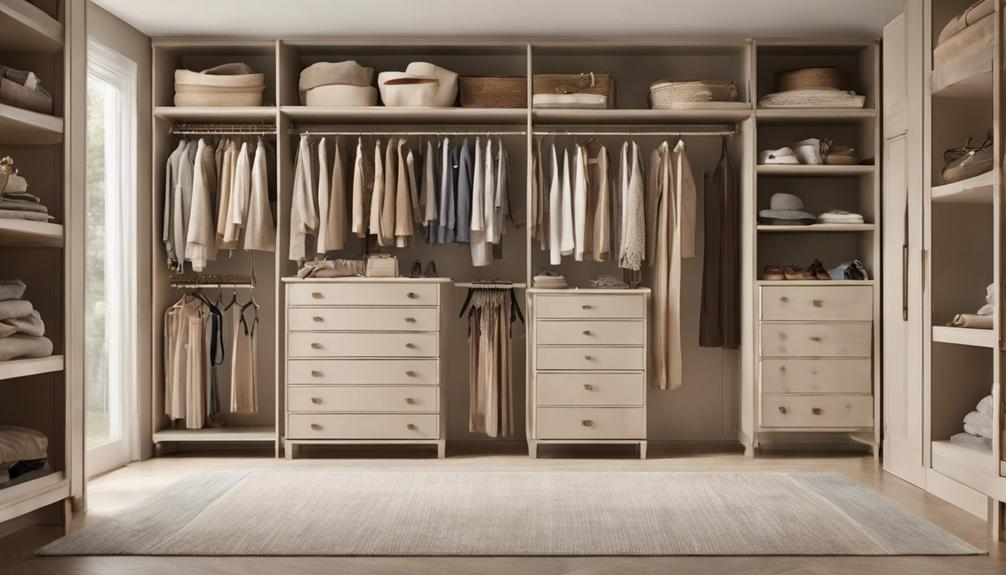
To organize your closet for maximum style, start by purging and decluttering your space, sorting items into keep, donate, and discard piles. Categorize items by type, fabric, and occasion, and assign a specific location for each category. Utilize vertical storage space with shelves and bins, and consider a color-coded system for a visually pleasing closet. Don't forget to create a shoe station and store out-of-season clothing to reduce clutter. By implementing these strategies, you'll be well on your way to a stylish and functional closet – and discovering the secrets to maintaining a space that truly reflects your personal style.
Purge and Declutter Your Closet
Every item in your closet has an important purpose, or at least it should, which is why the first step in organizing your closet is to purge and declutter, separating the essentials from the unnecessary. This vital step sets the foundation for a stylish and functional closet. Begin by removing everything from your closet, yes, everything! This will give you a clear view of what you're working with. Next, sort items into three piles: keep, donate/sell, and discard. Be ruthless – if you haven't worn something in a year, it's likely time to let it go.
As you sort, consider the 80/20 rule: 80% of the time, you likely wear 20% of your clothes. Identify the items that bring you joy, fit well, and are in good condition. These are the essentials that deserve a spot in your newly organized closet. Set aside items that are ill-fitting, outdated, or no longer spark joy. Consider donating gently used items or selling them through online marketplaces.
Categorize and Group Similar Items
Now that your closet is decluttered, it's essential to categorize and group similar items to create a visually pleasing and functional space. This process involves considering key factors such as the type and fabric of garments, as well as the occasion and season in which they are worn. By doing so, you can create a logical and accessible system that makes getting dressed a breeze.
Type and Fabric Matters
Harmony in the closet begins with categorizing and grouping similar items, as this thoughtful approach reveals the nuances of type and fabric, laying the foundation for a stylishly organized space. By categorizing clothes into distinct groups, you can appreciate the unique characteristics of each item, from the softness of cotton to the sleekness of silk. This attention to detail enables you to create a cohesive and stylish wardrobe.
| Type | Fabric | Characteristics |
|---|---|---|
| Tops | Cotton | Breathable, soft, and casual |
| Dresses | Silk | Smooth, lustrous, and elegant |
| Bottoms | Denim | Durable, rugged, and versatile |
| Outerwear | Wool | Warm, textured, and sophisticated |
Occasion-Based Segregation
Several occasions call for distinct wardrobe approaches, making it essential to categorize and group clothes based on their suitability for specific events or activities. This approach enables you to quickly identify what to wear for a particular occasion, saving time and reducing decision fatigue. By segregating your clothes into occasion-based categories, you can create a more streamlined and functional closet space.
Here are some examples of occasion-based categories to take into account:
- Work attire: Suits, blazers, dress pants, and button-down shirts for professional settings.
- Formal events: Gowns, tuxedos, cocktail dresses, and other elegant attire for special occasions.
- Casual outings: Jeans, t-shirts, sneakers, and other comfortable clothing for everyday activities.
- Activewear: Yoga pants, sports bras, and moisture-wicking tops for fitness and recreational activities.
Seasonal Storage Options
As you've organized your clothes by occasion, it's equally important to take into account the seasonal nature of your wardrobe, storing out-of-season items to free up valuable closet space and reduce visual clutter. This approach allows you to focus on the clothes that are relevant to the current season, making it easier to create stylish outfits. Consider investing in storage bins or vacuum-sealed bags to store out-of-season items, keeping them clean, dry, and protected from damage. Label each bin or bag with its contents and the season it belongs to, making it easy to retrieve items when the time comes. For garments that require more care, consider using acid-free tissue paper or cloth storage bags to prevent damage. By storing out-of-season items, you'll create a more streamlined closet space that's easy to navigate, allowing you to focus on the clothes that are currently relevant. This approach will not only save you time but also reduce decision fatigue, making it easier to create stylish outfits.
Assign a Home for Each Item
What is the most effective way to guarantee that every item in your closet has a designated place, making it easy to find what you need when you need it? The answer lies in assigning a home for each item. This means designating a specific spot for every article of clothing, accessory, and storage container. By doing so, you'll eliminate clutter, reduce stress, and save time searching for misplaced items.
To achieve this, follow these steps:
- Categorize and group similar items: Separate items into categories, such as tops, bottoms, dresses, outerwear, and accessories. Within each category, group similar items together (e.g., all long-sleeved shirts or all heels).
- Allocate a specific location: Designate a specific shelf, rod, or bin for each category or group. Make sure the location is accessible and easy to reach.
- Use labels and signs: Label each shelf, rod, or bin with its contents, making it easy to identify what's stored there.
- Maintain the system: Set aside time each week to uphold your organized closet. Hang up clothes that are wrinkled or out of place, and put away items that are not being used.
Utilize Vertical Storage Space
Maximizing vertical storage space is essential to maintaining a clutter-free closet, as it allows you to take advantage of often-wasted overhead space and keep your belongings organized and easily accessible. By utilizing the vertical space in your closet, you can create a more streamlined and efficient storage system that makes the most of your available space.
One effective way to utilize vertical storage space is by installing shelves or storage units that go up to the ceiling. This will allow you to store items such as out-of-season clothing, luggage, or other infrequently used items, keeping them out of the way but still easily accessible. You can also use stackable storage bins or baskets to store items like sweaters, jeans, or accessories, keeping them organized and visible.
Another strategy is to use wall-mounted storage solutions, such as hooks, racks, or pegboards, to hang items like jackets, hats, or bags. This will not only save floor space but also keep your belongings organized and within reach. By taking advantage of your closet's vertical space, you can create a more functional and stylish storage system that makes the most of your available space.
Implement a Color-Coded System
Implementing a color-coded system is a game-changer for a stylish and organized closet. By sorting garments by hue, you can create a visually pleasing and harmonious space that makes getting dressed a breeze. This approach also allows you to group similar shades together, making it easy to mix and match pieces to create a multitude of outfits.
Sorting by Hue
Sixty percent of women spend more than 10 minutes a day deciding what to wear, and a significant portion of that time is often spent searching for a matching top or bottom, which is where a color-coded system comes in. By sorting your clothes by hue, you can create a visually pleasing and harmonious closet that makes getting dressed a breeze. This approach also helps you identify gaps in your wardrobe and spot potential outfit combinations.
To implement a color-coded system, follow these steps:
- Categorize by color family: Divide your clothes into primary color groups such as red, orange, yellow, green, blue, purple, and neutral.
- Sub-categorize by shade: Within each color family, organize items by shade, from lightest to darkest.
- Group similar textures together: Store clothes with similar textures, such as cotton, silk, or wool, in the same area.
- Hang clothes in a rainbow sequence: Arrange your clothes in a rainbow sequence, with red items first, followed by orange, and so on, to create a visually appealing display.
Grouping Similar Shades
Harmony reigns when similar shades are grouped together, creating a cohesive visual landscape that simplifies the process of finding the perfect outfit. By grouping similar shades, you can create a visual flow that makes it easy to mix and match pieces to create outfits. This approach also helps to eliminate clutter and visual noise, making it easier to focus on the task at hand – getting dressed.
To implement a color-coded system, start by categorizing your clothing into broad color families, such as neutrals, pastels, brights, and darks. Within each family, group similar shades together, ranging from lightest to darkest. For instance, group all your whites, creams, and beiges together, followed by soft pinks, blush tones, and corals. This system allows you to see the entire spectrum of your wardrobe at a glance, making it easier to create outfits and identify gaps in your wardrobe. By grouping similar shades together, you'll be able to create a stylish and cohesive wardrobe that exudes confidence and sophistication.
Store Out-of-Season Clothing
By storing out-of-season clothing in a separate area, you can free up valuable space in your closet and reduce clutter. This simple trick can make a significant difference in the overall organization and functionality of your closet. By storing out-of-season clothing, you can focus on the current season's wardrobe, making it easier to find what you need and reducing decision fatigue.
Here are some tips to keep in mind when storing out-of-season clothing:
- Designate a separate area: Allocate a specific area, such as a storage bin, underbed storage, or a separate closet, to store out-of-season clothing. This will keep your main closet organized and clutter-free.
- Use storage containers: Use storage bins, vacuum-sealed bags, or cloth storage bags to store out-of-season clothing. This will protect your clothes from dust, moisture, and pests.
- Label and categorize: Label each storage container with its contents and the season. This will make it easy to find what you need when the season changes.
- Explore off-site storage: If you have limited storage space, explore off-site storage options, such as a storage unit or a friend's attic, to store out-of-season clothing.
Create a Shoe Station
With a clutter-free closet in place, attention can now shift to creating a dedicated space for shoes, an essential aspect of maintaining a stylish and organized wardrobe. A well-designed shoe station can elevate your closet's functionality, making it easier to find the perfect pair to complement your outfit. Begin by evaluating your shoe collection and categorizing them by type, frequency of use, and personal preference. This will help you determine the best storage configuration for your shoe station.
Consider a multi-tiered shelving unit or a rotating shoe rack to maximize vertical space and provide easy access to your shoes. If you have limited floor space, consider a hanging shoe organizer or over-the-door storage. Label each shelf or compartment to make sure that you can quickly locate a specific pair. To add an extra layer of sophistication, incorporate a shoe cleaning station with a soft-bristled brush, polishing cloth, and shoe care products.
A thoughtfully designed shoe station not only keeps your shoes organized but also helps maintain their condition. By dedicating a specific area to shoe storage, you can prevent clutter from building up in other areas of your closet. This thoughtful approach to shoe organization will streamline your daily routine, saving you time and reducing stress as you get ready for the day.
Maintain Your Closet's Organization
A well-maintained closet requires regular attention to prevent clutter from creeping back in, and a few simple habits can help preserve the organization and style you've worked hard to achieve. By incorporating these habits into your daily routine, you can guarantee your closet remains a tranquil oasis that sparks joy and inspires creativity.
Here are a few essential practices to maintain your closet's organization:
- Put back what you take out: Make it a habit to return items to their designated spot after use, preventing clutter from building up.
- Schedule regular tidying sessions: Set aside time each week to tidy up your closet, addressing any messes or disorganization that may have accumulated.
- Purge regularly: Regularly go through your closet and remove items that no longer fit, are worn out, or are no longer needed, keeping your closet fresh and curated.
- Keep shoes in check: Designate a specific area for shoes and maintain it regularly, ensuring they remain organized and easily accessible.
Frequently Asked Questions
How Do I Decide What Clothes to Keep and What to Donate?
When curating your wardrobe, it's essential to be intentional about the pieces that earn a spot in your closet. To decide what to keep and what to donate, ask yourself: "When was the last time I wore this item?" and "Does it evoke confidence and make me feel great?" Be honest – if the answer is "rarely" or "no," consider letting it go. This simple yet effective approach will help you distill your wardrobe down to only the most loved and worn pieces.
Can I Still Use My Old Closet Organizers With a New System?
"Sophisticated systems demand seamless integration. When introducing a new organizational approach, it's essential to assess whether existing closet components can cohesively collaborate. Before discarding old organizers, evaluate their functionality and adaptability. Repurpose or refashion them to harmonize with your novel system, ensuring a unified and efficient space. By doing so, you'll maximize your investment and minimize waste, ultimately yielding a bespoke closet that embodies both style and substance."
What if I Have a Lot of Clothes With Sentimental Value?
When dealing with clothes holding sentimental value, it’s essential to approach organization with sensitivity. Consider categorizing items into three piles: keep, donate/sell, and store. Be honest about when you last wore each item, and whether it still sparks joy. Store or repurpose items that hold memories but no longer fit or suit your style, allowing you to preserve the sentiment while maintaining a curated, stylish closet. Additionally, consider incorporating elements that allow you to embrace vintage fashion in modern style. This could mean transforming an old dress into a trendy tote bag or displaying vintage pieces as decorative accents in your home. By blending the old with the new, you not only honor the past but also create a unique personal aesthetic that reflects your evolving taste.
How Often Should I Review and Update My Closet Organization?
Regularly reviewing and updating your closet organization is essential to maintaining a stylish and functional space. Aim to reassess your closet every 3-6 months to make sure it continues to align with your evolving personal style and needs. This frequency allows you to purge items no longer serving you, incorporate new pieces, and adjust your organizational system as needed, ensuring your closet remains a reflection of your best self.
Can I Organize My Closet on a Limited Budget or for Free?
Organizing a closet on a limited budget or for free is like finding a needle in a haystack – it requires creativity and resourcefulness. Fortunately, it's entirely possible to achieve a stylish and functional closet without breaking the bank. Start by repurposing items you already own, such as using old boxes or bins to store accessories. Utilize vertical space by installing shelves or hooks, and get creative with DIY projects like upcycled storage solutions. With a little ingenuity, you can create a beautifully organized closet on a shoestring budget.
