

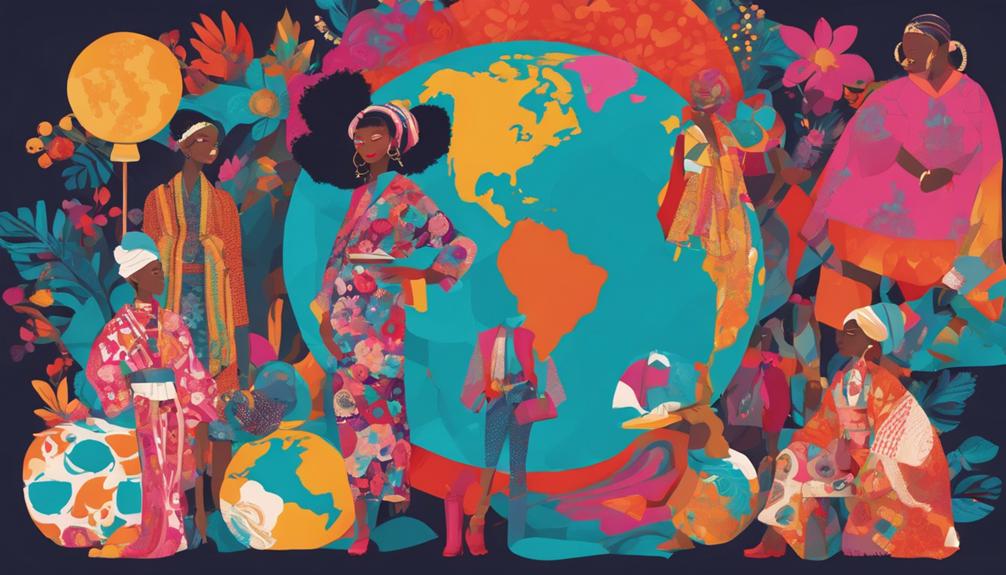
Fashion influences from around the world converge to create a rich tapestry of style, driven by diverse cultural heritages, intricate craftsmanship, and vibrant aesthetics. From the elegant kimono of Asia to the vibrant kente cloth of Africa, each region brings its unique flavor to the world of fashion. European haute couture heritage, Latin American flair, and Middle Eastern opulence also contribute to the global fashion landscape. As these influences intersect and blend, they give rise to a dynamic, ever-evolving industry. As we explore these converging threads, the beauty and complexity of global fashion come into sharper focus, revealing a world of style that is both diverse and divine.
Asian Elegance and Modern Twists
In the world of fashion, Asian cultures have long been revered for their exquisite sense of elegance, evident in the intricate designs and meticulous attention to detail that define traditional attire from countries such as Japan, China, and Korea. The kimono, cheongsam, and hanbok, for instance, are iconic garments that showcase the region's affinity for precision and craftsmanship. These traditional pieces have inspired modern designers, who have incorporated Asian motifs and techniques into their designs, resulting in a fusion of heritage and innovation.
The modern twists on traditional Asian attire have given birth to a new era of fashion that is both nostalgic and forward-thinking. Designers such as Rei Kawakubo of Comme des Garçons and Yohji Yamamoto have been instrumental in pushing the boundaries of fashion, incorporating Asian aesthetics into their designs. The result is a unique blend of East meets West, where ancient techniques meet modern materials and silhouettes.
Today, Asian elegance continues to influence fashion worldwide, with designers incorporating traditional Asian motifs, such as cherry blossoms and dragons, into their designs. The fusion of Asian elegance and modern twists has given rise to a new wave of fashion that is both culturally rich and innovative. As the fashion world continues to evolve, it is clear that Asian cultures will remain a significant source of inspiration, driving the industry forward with their unique blend of tradition and innovation.
African Vibrancy and Cultural Pride
From the vibrant colors and bold patterns of traditional kente cloth to the sophisticated silhouettes of modern Afro-chic, African fashion has long been a reflection of the continent's rich cultural heritage. This vibrant cultural tapestry is woven from the diverse traditions and influences of Africa's 55 countries, each with its unique aesthetic and style. From the intricate beadwork of the Maasai to the colorful dashikis of West Africa, African fashion is a kaleidoscope of colors, textures, and patterns that tell the story of a continent's history, mythology, and cultural identity.
In recent years, African fashion has experienced a resurgence in popularity, with designers such as Maki Oh and Loza Maléombholeading the charge. These innovators are redefining traditional African styles, blending them with modern sensibilities and cutting-edge techniques to create a fresh, avant-garde aesthetic. The result is a fashion scene that is both deeply rooted in tradition and boldly innovative, reflecting the continent's dynamic cultural landscape.
As African fashion continues to evolve, it is clear that its influence extends far beyond the continent's borders. From runway shows in Paris to street style in Tokyo, African fashion is making its mark on the global fashion landscape. With its vibrant colors, bold patterns, and rich cultural heritage, African fashion is poised to remain a driving force in the world of fashion for years to come.
European Haute Couture Heritage
As the global fashion landscape continues to evolve, the opulent elegance of European haute couture heritage serves as a validation of the continent's rich history of refined craftsmanship and sophistication. This esteemed tradition is rooted in the ateliers of Paris, where visionary designers like Charles Frederick Worth and Paul Poiret pioneered the art of haute couture in the 19th century. Their innovative approach to fashion, characterized by intricate details, luxurious fabrics, and meticulous attention to detail, set the standard for high-end fashion.
Today, European haute couture heritage continues to inspire generations of designers, from the likes of Christian Dior and Yves Saint Laurent to modern-day visionaries like Jean Paul Gaultier and John Galliano. These designers have not only preserved the tradition of haute couture but have also pushed the boundaries of fashion innovation, incorporating cutting-edge materials, technologies, and techniques into their designs.
From the intricate embroidery of French lace to the precision-cut silhouettes of Italian fashion, European haute couture heritage is a validation of the continent's enduring influence on the global fashion landscape. As the fashion industry continues to evolve, this rich cultural heritage serves as a source of inspiration, driving innovation and excellence in fashion design.
Latin American Flair and Passion
As we shift our focus to the vibrant fashion landscape of Latin America, we are immediately struck by the region's unmistakable flair and passion. From the bold, sun-kissed hues that dominate the color palette to the dynamic rhythms that underscore every aspect of life, Latin American style is a true reflection of the region's rich cultural heritage. Here, fashion becomes an extension of the region's infectious energy, where vibrant colors and rhythmic beats converge to create a unique and compelling aesthetic.
Vibrant Colors Abound
What role do the vibrant hues of Latin America play in shaping the region's distinctive fashion identity? The answer lies in the region's rich cultural heritage, where bold colors are woven into the fabric of daily life. From the turquoise and amber of Mexico's ancient Mesoamerican ruins to the emerald green of Brazil's lush rainforests, Latin America's kaleidoscope of colors is a reflection of its people's exuberance and passion.
Vibrant colors abound in Latin American fashion, where statement pieces and bold accessories are de rigueur. In Mexico, the iconic serape blankets inspire colorful textiles, while in Brazil, Carnival-inspired costumes burst with rainbow hues. In Peru, the Andean region's rich textile heritage is reflected in intricately woven garments featuring bold, geometric patterns. These colors not only reflect the region's cultural diversity but also evoke a sense of joy, energy, and celebration, making Latin American fashion a true celebration of life.
Rhythmic Fashion Beats
Pulsating rhythms and sultry melodies infuse Latin American fashion with an unmistakable flair, as the region's passionate spirit is seamlessly woven into the fabric of its style. The vibrant textiles, bold colors, and intricate patterns that characterize Latin American fashion are a reflection of the region's rich cultural heritage. From the seductive curves of Brazilian Carnival costumes to the ornate embroidery of Mexican folk dresses, every thread and stitch tells a story of passion, creativity, and joy.
In Latin America, fashion is not just about aesthetics; it's about expressing the soul. The rhythmic beats of salsa, rumba, and bossa nova inspire fashion designers to create clothes that make you want to move, to sway, to let loose. The result is a style that's both bold and beautiful, a fusion of indigenous, African, and European influences that's uniquely Latin American. Whether it's a flowy maxi dress, a fitted bodysuit, or a statement piece of jewelry, Latin American fashion is all about embracing life's beauty and living it to the fullest.
Middle Eastern Opulence and Glamour
As we shift our focus to the Middle East, we find a region renowned for its opulent fashion sense. Characterized by lavish fabrics, extravagant jewelry, and intricate designs, Middle Eastern fashion is a reflection of the region's rich cultural heritage. In this section, we will explore the key elements that define Middle Eastern fashion, including regal abaya designs, dazzling jewelry trends, and luxurious fabric choices.
Regal Abaya Designs
In the heart of the Middle East, regal abaya designs embody the essence of opulence and glamour, exuding an aura of majesty and sophistication. These majestic garments are intricately crafted with precision, blending traditional techniques with modern twists. The intricate embroidery, beading, and sequining create a kaleidoscope of colors, textures, and patterns, making each abaya a masterpiece of Middle Eastern artistry.
The regal abaya's silhouette is both elegant and imposing, with flowing fabrics that drape elegantly on the body. The designs often feature majestic motifs, such as golden crescent moons, delicate florals, and geometric patterns, which evoke a sense of ancient luxury. From subtle daytime ensembles to show-stopping evening wear, regal abaya designs transcend seasons and occasions, making them a staple in every Middle Eastern fashion enthusiast's wardrobe. As a symbol of cultural heritage and refinement, these exquisite garments continue to inspire fashion innovators and enthusiasts alike, solidifying their place in the annals of fashion history.
Dazzling Jewelry Trends
Middle Eastern jewelry trends burst forth with unbridled opulence, as 24-karat gold, precious gems, and intricate craftsmanship converge to create dazzling masterpieces that exude glamour and sophistication. Inspired by ancient traditions, modern Middle Eastern jewelry designers are pushing the boundaries of innovation, combining traditional techniques with cutting-edge technology to craft truly unique pieces. From intricately designed pendants to bold, statement-making earrings, each piece is a reflection of the region's rich cultural heritage. The use of vibrant gemstones, such as rubies, emeralds, and sapphires, adds a pop of color and energy to each design, making them truly eye-catching. With a focus on luxury and exclusivity, Middle Eastern jewelry trends cater to those who crave opulence and glamour. Whether it's a show-stopping necklace or a delicate anklet, each piece is a masterpiece that tells a story of elegance and refinement. As the world looks to the Middle East for inspiration, it's clear that the region's jewelry trends are set to dazzle and delight.
Luxurious Fabric Choices
Five opulent fabrics – velvet, silk, satin, brocade, and damask – are the cornerstone of Middle Eastern luxury fashion, evoking an atmosphere of regal splendor and sophistication. These sumptuous textiles have been prized for centuries, adorning the garments of royalty and nobility. In modern times, they continue to inspire designers, who incorporate them into their creations to evoke the mystique of the ancient Silk Road.
The opulence of these fabrics lies not only in their tactile softness and luster but also in their intricate patterns and weaves. Brocade, for instance, features raised patterns that shimmer in the light, while damask boasts a subtle sheen that hints at its rich history. Satin's smooth, glossy surface adds a touch of modernity to any design, while velvet's plush pile invites the touch. Silk, the ultimate luxury fabric, is often embroidered or beaded to enhance its natural beauty. By combining these fabrics, designers can create truly show-stopping pieces that embody the essence of Middle Eastern glamour.
Global Fusion and Street Style
Through the fusion of diverse cultural elements, global fashion has given rise to a dynamic street style that reflects the eclectic tastes and experiences of urban youth worldwide. This fusion is characterized by the blending of traditional and modern elements, resulting in a unique aesthetic that defies categorization. From Tokyo's Harajuku district to New York City's SoHo neighborhood, urban youth are embracing global fashion influences and reinterpreting them in innovative ways.
Some key aspects of global fusion and street style include:
- Mashup of cultural references: Street style enthusiasts often combine seemingly disparate cultural elements, such as Japanese kimonos with African dashikis or Indian saris with punk rock aesthetics.
- Experimentation with textiles: Global fusion fashion often incorporates unconventional materials and textures, like vinyl, denim, or repurposed fabric scraps, to create bold, eye-catching ensembles.
- Personalized expression: Street style is all about self-expression and individuality, with fashion enthusiasts using their clothing choices to convey their personality, values, and worldview.
As global fashion continues to evolve, it's clear that street style will remain a driving force behind innovation and creativity in the industry. By embracing diversity and celebrating the beauty of cultural fusion, urban youth are redefining the boundaries of fashion and pushing the industry towards a more inclusive and expressive future.
Frequently Asked Questions
What Is the Most Popular Fashion Trend in the World Right Now?
As the fashion landscape shifts like a kaleidoscope, one trend emerges as the reigning monarch: utility chic. This season, the world is enamored with functional fashion that exudes a sense of rugged sophistication. From cargo pants to combat boots, the utility trend is a masterclass in marrying form and function. With its pragmatic allure, it's no wonder this trend is dominating runways and streets alike, as fashion enthusiasts worldwide surrender to its utilitarian charm.
How Do Cultural Traditions Impact Fashion Design Globally?
Cultural traditions play a crucial role in influencing fashion design globally, as they often serve as the foundation for a region's aesthetic identity. Traditional textiles, motifs, and craftsmanship are frequently incorporated into modern designs, resulting in unique blends of heritage and innovation. Moreover, cultural traditions inspire fashion designers to create garments that not only reflect their cultural roots but also appeal to a global audience, fostering cross-cultural exchange and artistic expression.
Can Fashion Be a Tool for Social and Political Change?
Indeed, fashion can be a potent tool for social and political change. By leveraging its vast cultural influence, fashion can raise awareness about pressing issues, challenge societal norms, and inspire collective action. Through thought-provoking designs, fashion can spark meaningful conversations, mobilize communities, and drive positive change. By harnessing its creative potential, fashion can become a catalyst for social justice, promoting inclusivity, diversity, and equality.
What Role Does Technology Play in Modern Fashion Innovation?
In the world of modern fashion, technology plays a transformative role in driving innovation. Digital platforms and social media have democratized fashion, allowing for increased accessibility and global connectivity. 3D design, virtual try-ons, and AI-powered styling tools are revolutionizing the industry. Additionally, sustainable manufacturing and supply chain transparency are facilitated by technological advancements, enabling a more responsible and efficient fashion ecosystem. As technology continues to evolve, its impact on fashion will only continue to amplify.
How Does Fashion Education Vary Across Different Cultures?
In the domain of fashion education, cultural nuances play a significant role in shaping pedagogical approaches. Fashion education varies across cultures, reflecting local values and aesthetics. In Japan, for instance, fashion education emphasizes meticulous craftsmanship and attention to detail, while in India, it often incorporates traditional textile techniques and cultural heritage. Similarly, European fashion education tends to focus on haute couture and luxury brands. These cultural differences in fashion education ultimately influence the global fashion landscape, fostering diversity and innovation.
