

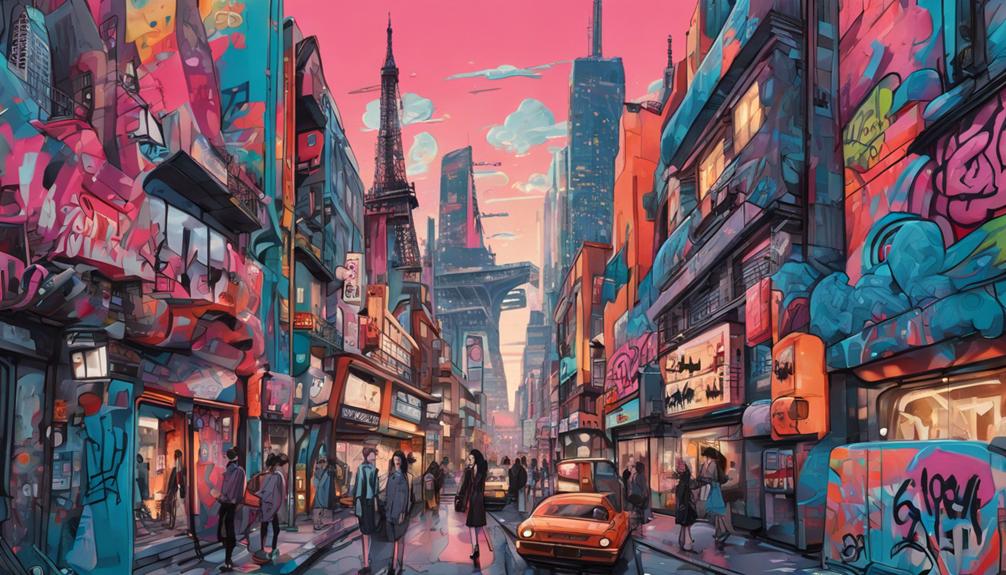
The evolution of streetwear in major cities around the world is a tale of diverse cultural and artistic identities. From Tokyo’s avant-garde designers to New York City’s hip-hop roots, London’s punk rock spirit, and beyond, each city has uniquely shaped the genre. Paris fused high-fashion techniques with streetwear, while Seoul’s K-Hip Hop scene injected social awareness. Berlin’s graffiti scene, Shanghai’s e-commerce boom, and Chicago’s hip-hop heritage all contributed to the genre’s global growth. As streetwear continues to transcend borders, its rich cultural tapestry is waiting to be uncovered, with every city leaving an indelible mark on its ever-evolving identity. The interplay of these various influences has led to the emergence of distinct street style trends in metropolises, showcasing the unique fashion narratives woven into urban life. As local artists, designers, and musicians collaborate, they not only redefine the aesthetic of streetwear but also challenge societal norms and expectations. This dynamic environment ensures that streetwear remains a vibrant and ever-changing reflection of contemporary culture, constantly evolving in response to global events and individual creativity.
Tokyo's Rise to Streetwear Fame
In the 1990s, Tokyo's Harajuku district emerged as a hotbed of streetwear innovation, as avant-garde designers and fashion enthusiasts converged to create a vibrant scene that would soon mesmerize the world. This convergence of creative minds led to the birth of Japan's streetwear revolution, which would later influence global fashion trends.
At the heart of this movement was a thriving community of fashion-forward individuals who sought to challenge conventional style norms. Inspired by Western streetwear and Japanese pop culture, they experimented with bold, eclectic designs that blended high-fashion sensibilities with urban grittiness.
One of the pioneers of Tokyo's streetwear scene was Nigo, founder of the influential brand A Bathing Ape (BAPE). BAPE's bold, camouflage-print designs and limited-edition releases helped establish Tokyo as a hub of streetwear innovation. The brand's influence soon transcended Japan, captivating international fashion enthusiasts and paving the way for future generations of streetwear designers.
Today, Tokyo remains a beacon of streetwear innovation, with Harajuku's pedestrian streets still pulsing with fashion-forward energy. The district's influence can be seen in the global proliferation of streetwear, from high-end collaborations to mainstream fashion trends. As a result, Tokyo's rise to streetwear fame serves as a confirmation to the power of creativity and innovation in shaping the course of fashion history.
New York City's Early Adopters
New York City's early adopters of streetwear emerged in the 1970s, with the city's hip-hop roots laying the groundwork for the genre's eventual fusion with fashion. SoHo, in particular, became a hub for fashion innovation, attracting artists, musicians, and designers who would later shape the city's streetwear identity. These pioneering individuals would go on to influence the city's streetwear landscape, setting the stage for the genre's global explosion.
1970s Hip-Hop Roots
During the 1970s and 1980s, hip-hop culture, characterized by its four pillars – DJing, MCing, breaking, and graffiti – began to take root in New York City, primarily in the Bronx and Harlem neighborhoods. This nascent movement was fueled by African American and Latino youth who sought to express themselves through music, dance, art, and fashion. The early adopters of hip-hop culture, including pioneers like DJ Kool Herc, Afrika Bambaataa, and Grandmaster Flash, played an essential role in shaping the genre's aesthetic. Oversized clothing, Adidas sneakers, and gold chains became synonymous with hip-hop fashion, reflecting the community's resourcefulness and creativity. The streets of New York City became a canvas for self-expression, with graffiti artists like Taki 183 and Cornbread leaving their mark on the urban landscape. As hip-hop culture continued to evolve, its influence on streetwear would become undeniable, paving the way for future generations of fashion enthusiasts and entrepreneurs.
SoHo's Fashion Hub
As hip-hop's influence permeated the streets of New York City, SoHo's artsy community began to take notice, embracing the genre's eclectic aesthetic and transforming the neighborhood into a fashion hub that would soon rival the city's established fashion districts. This unlikely fusion of art, music, and fashion gave birth to a unique streetwear culture that was both raw and refined. SoHo's boutiques, galleries, and clubs became hotspots for hip-hop enthusiasts and fashion enthusiasts alike, fostering a creative synergy that would propel streetwear into the mainstream.
The neighborhood's fashion-forward crowd, comprised of artists, musicians, and style enthusiasts, adopted hip-hop's bold, oversized silhouettes, and vibrant color palette, incorporating them into their own avant-garde style. This cultural exchange not only redefined SoHo's fashion landscape but also paved the way for future generations of streetwear enthusiasts. As a result, SoHo emerged as a fashion hub, where creativity, self-expression, and innovation converged, laying the groundwork for the global streetwear phenomenon that would soon follow.
London's Punk Rock Influence
London's punk rock scene of the late 1970s and early 1980s played a pivotal role in shaping the city's streetwear identity. As a reaction against mainstream culture, punk's DIY ethos and anti-establishment aesthetic influenced a new wave of fashion that celebrated individuality and nonconformity. This rebellious spirit manifested in the emergence of avant-garde styles that rejected traditional notions of beauty and taste.
Rebel Fashion Emerges
In the midst of socioeconomic turmoil, punk rock's defiant spirit infused London's fashion scene, giving rise to a rebellious style that rejected mainstream aesthetics. This countercultural movement emerged as a reaction against the established norms, embracing an anti-fashion ethos that celebrated individuality and nonconformity. Punk's DIY ethos and anti-authoritarian stance inspired a generation of young Londoners to express themselves through fashion, rejecting the commercialism and glamour of mainstream culture.
Ripped fishnets, safety pins, and torn denim became symbols of rebellion, as punk fashionistas challenged traditional notions of beauty and style. Vivienne Westwood and Malcolm McLaren's iconic boutique, Sex, served as a hub for punk fashion, showcasing provocative designs that blended historical references with modern irreverence. The punk aesthetic's raw energy and defiant attitude captivated the city, as London's streets became a catwalk for self-expression and creative dissent. As punk's influence spread, it paved the way for a new era of streetwear, where fashion became a powerful tool for social commentary and rebellion.
DIY Ethos Prevails
Punk's DIY ethos, which encouraged self-sufficiency and creative autonomy, became a defining characteristic of London's streetwear scene, empowering individuals to challenge mainstream fashion norms and reclaim their personal style. This ethos permeated every aspect of the scene, from the handmade zines and DIY fashion to the underground clubs and squat parties. It was an era of unbridled creativity, where individuals were free to express themselves without the constraints of commercial pressures.
Here are three key ways the DIY ethos influenced London's streetwear scene:
- Democratization of fashion: The DIY ethos allowed individuals to take control of their own fashion, creating unique and personalized styles that rejected mainstream trends.
- Rise of independent labels: The DIY ethos gave birth to a wave of independent fashion labels, which operated outside the traditional fashion system, offering an alternative to commercial fashion.
- Street-level entrepreneurship: The DIY ethos encouraged individuals to take entrepreneurial risks, setting up their own streetwear brands, zines, and clubs, which became incubators for creative innovation.
This era of creative ferment laid the groundwork for London's streetwear scene, which would go on to influence fashion globally.
Anti-Establishment Aesthetic
Three decades of punk rock's defiant spirit permeated the streets of London, birthing an anti-establishment aesthetic that rejected the glamour of high fashion in favor of ripped fishnets, safety pins, and ripped jeans. This raw, unapologetic attitude resonated with disenchanted youth, who sought to challenge the status quo and reject mainstream values. The punk movement's DIY ethos and anti-authoritarian stance inspired a generation to create their own fashion narratives, untethered from commercial constraints. In London's streets, punk's rebellious spirit merged with the city's historical avant-garde leanings, forging a unique visual language that defied conventions. The anti-establishment aesthetic not only redefined fashion but also served as a form of social commentary, critiquing the excesses of consumer culture. As a result, London's punk-infused streetwear scene became a hotbed for innovation, incubating a new wave of fashion rebels who continue to push the boundaries of style and expression. This radical, unbridled energy still echoes through London's streets, influencing the global streetwear landscape.
Paris's Luxury Streetwear Fusion
On the Seine's picturesque banks, Paris's fashion landscape has undergone a transformation, as high-end fashion houses and streetwear pioneers converged to forge a luxury streetwear fusion that redefines the City of Light's sartorial identity. This unlikely union has given birth to a new era of fashion, where haute couture meets streetwear's rebellious spirit. Luxury brands such as Louis Vuitton and Dior have collaborated with streetwear moguls like Supreme and Off-White, resulting in limited-edition collections that blend high-fashion craftsmanship with streetwear's bold attitude.
This fusion has not only revitalized Paris's fashion scene but also influenced the global streetwear movement. The City of Light has become a hub for innovators and creatives, where fashion, art, and music converge. The streets of Paris are now a canvas for self-expression, where fashion enthusiasts can showcase their personal style, blending high-end fashion with streetwear's edginess.
Here are three key elements driving Paris's luxury streetwear fusion:
- High-end collaborations: Luxury brands partnering with streetwear pioneers to create limited-edition collections that blend craftsmanship with bold attitude.
- Fashion innovation: The fusion of high-fashion techniques with streetwear's innovative spirit, resulting in unique and daring designs.
- Street style revolution: The streets of Paris becoming a platform for self-expression, where fashion enthusiasts can showcase their personal style, blending high-end fashion with streetwear's edginess.
Seoul's K-Hip Hop Revolution
In Seoul, the K-Hip Hop Revolution has been instrumental in shaping the city's streetwear landscape. Emerging from the country's vibrant hip-hop scene, this movement has not only put Korean fashion on the global map but also infused street fashion with a distinct cultural identity. As we explore the intersection of K-Hip Hop and streetwear, we will examine how this phenomenon has influenced the city's fashion landscape.
K-Hip Hop Roots
Riding the wave of globalization, Seoul's underground hip-hop scene, once a niche interest, began to gain mainstream momentum in the late 1990s, laying the groundwork for K-hip hop's eventual explosion onto the global stage. This shift was fueled by the proliferation of piracy and bootlegging, which allowed artists to access and distribute music that was previously inaccessible.
As K-hip hop gained traction, it became a powerful platform for self-expression and social commentary. The genre's early adopters, including pioneers like Drunken Tiger and Seo Taiji, used their music to address issues like social inequality, government corruption, and youth disillusionment.
Key milestones in K-hip hop's evolution include:
- 1998: The debut of Seo Taiji and Boys' album "Nan Arayo", which is often credited as the first K-hip hop album.
- 2001: The formation of the hip-hop group Drunken Tiger, which helped to popularize K-hip hop globally.
- 2004: The launch of the annual Korean hip-hop festival, "Hiphopplaya", which provided a platform for emerging artists to showcase their talents.
These developments laid the groundwork for K-hip hop's current global influence, cementing Seoul's status as a hub for innovative street culture.
Street Fashion Influence
As K-hip hop's popularity surged, its influence extended beyond music, permeating Seoul's fashion landscape and birthing a distinctive streetwear style that reflected the genre's rebellious spirit and DIY ethos. This fusion of music and fashion gave rise to a unique aesthetic, characterized by bold graphics, oversized silhouettes, and a mishmash of high-end and streetwear brands. Seoul's fashion enthusiasts, inspired by K-hip hop's anti-establishment attitude, began to experiment with their wardrobe, blending high-fashion pieces with thrift store finds and bespoke accessories.
The streets of Seoul became a runway for self-expression, as individuals showcased their personal style, often blending contrasting elements to create a look that was both eclectic and cohesive. This democratization of fashion, where anyone could create their own style, resonated deeply with the K-hip hop ethos of empowerment and nonconformity. As a result, Seoul's street fashion scene became a hotbed of innovation, where creatives pushed the boundaries of fashion, redefining what it means to be stylish and cool.
Los Angeles's Skate Culture Roots
Born from the city's sun-kissed streets and fueled by a DIY ethos, Los Angeles's skate culture roots have long been intertwined with the evolution of streetwear. The city's laid-back, sun-soaked vibe and abundance of empty pools and sidewalks created the perfect environment for skateboarding to flourish. As skaters began to adopt their own unique style, characterized by oversized clothing, bold graphics, and a rebellious attitude, the seeds of streetwear were sown.
The influence of skate culture on Los Angeles's fashion scene cannot be overstated. Skaters' DIY approach to fashion, where they would customize and alter their own clothing, paved the way for the likes of Supreme and Stussy to emerge. These pioneering streetwear brands, in turn, have inspired a new generation of fashion enthusiasts.
Here are three key ways in which Los Angeles's skate culture has shaped the city's streetwear scene:
- Embracing the unconventional: Skaters' willingness to push boundaries and defy convention has inspired a culture of innovation and experimentation in fashion.
- Celebrating individuality: Skate culture's emphasis on self-expression and nonconformity has fostered a fashion scene that values individuality and creativity.
- Fostering a sense of community: The tight-knit skate community has given rise to a collaborative and supportive fashion ecosystem, where brands and designers work together to drive the scene forward.
As the city continues to evolve, Los Angeles's skate culture roots remain an essential part of its streetwear identity, inspiring new generations of fashion enthusiasts and entrepreneurs.
Berlin's Graffiti Scene Emerges
In the 1980s, Berlin's turbulent post-reunification landscape became the unlikely canvas for a thriving graffiti scene, which would ultimately leave an indelible mark on the city's streetwear identity. As the Berlin Wall crumbled, so did the boundaries between art and vandalism, giving rise to a rebellious and expressive movement. Graffiti crews, such as the 1UP Crew, claimed the city's walls, bridges, and trains as their own, leaving a trail of vibrant, provocative, and often provocative murals in their wake.
This explosion of creativity was fueled by the city's punk and alternative scenes, which saw graffiti as a means of self-expression and social commentary. The likes of Blek le Rat and Mode2, pioneers of stencil art and abstract graffiti, respectively, pushed the medium's boundaries, inspiring a new generation of artists. As the scene grew, so did its influence on Berlin's streetwear culture. Graphic t-shirts, sneakers, and jeans were emblazoned with graffiti-inspired designs, reflecting the city's newfound passion for self-expression and nonconformity.
Berlin's graffiti scene not only transformed the urban landscape but also injected a rebellious spirit into the city's fashion, paving the way for a thriving streetwear scene that would eventually spread beyond the city's limits. This convergence of art, fashion, and activism forged a unique identity that continues to shape Berlin's streetwear culture to this day.
Shanghai's Streetwear Boom Begins
While Berlin's streetwear identity was forged in the fires of rebellion, Shanghai's emergence as a streetwear hub was fueled by a different set of circumstances, driven by the city's rapid economic growth and increasing cultural exchange with the West. As the city transformed into a cosmopolitan metropolis, its youth began to crave international fashion trends, leading to a surge in demand for streetwear.
In the early 2000s, Shanghai's streetwear scene was still in its infancy, with only a handful of boutiques and online forums catering to enthusiasts. However, as the city's economy continued to boom, so did the appetite for streetwear. By the mid-2000s, international brands like Nike and Adidas began to take notice, launching limited-edition collaborations with local designers and artists.
Key factors contributing to Shanghai's streetwear boom include:
- Government support for creative industries: Shanghai's municipal government actively encouraged the growth of creative industries, including fashion and design.
- Rise of e-commerce: The proliferation of online marketplaces and social media platforms enabled streetwear enthusiasts to connect, share, and purchase fashion items.
- Influx of international talent: Shanghai's attractiveness as a business and cultural hub drew in international designers, artists, and entrepreneurs, further fueling the streetwear movement.
As Shanghai's streetwear scene continued to evolve, it began to forge its own unique identity, blending traditional Chinese aesthetics with global streetwear trends. This fusion of styles would go on to influence the broader fashion landscape, cementing Shanghai's status as a major streetwear hub.
Chicago's Hip-Hop Heritage
Fueling the city's vibrant cultural landscape, Chicago's rich hip-hop heritage has played a pivotal role in shaping the city's streetwear identity. From the early days of house music to the modern-day dominance of drill rap, Chicago's hip-hop scene has been a driving force behind the city's fashion trends. The city's influential hip-hop artists, such as Kanye West and Chance the Rapper, have not only put Chicago on the map but have also inspired a generation of young creatives to express themselves through fashion.
Chicago's hip-hop heritage has also given birth to a thriving streetwear scene, with local brands like St. Alfred and Notre Shop gaining international recognition for their innovative designs and collaborations. The city's iconic sneaker culture, fueled by the likes of Jordan Brand and Adidas, has also contributed to the growth of streetwear in Chicago. Additionally, the city's vibrant graffiti and street art scene has added a unique layer of authenticity to the city's streetwear identity.
Today, Chicago's streetwear scene is a fusion of hip-hop's rebellious spirit, avant-garde fashion, and innovative design. The city's influential fashion events, such as the Chicago Fashion Festival, have created a platform for local designers to showcase their work, further solidifying Chicago's position as a hub for streetwear innovation. As the city continues to evolve, its hip-hop heritage remains at the forefront of its fashion identity, driving creativity and innovation in the world of streetwear.
The Globalization of Streetwear
As streetwear's influence extends beyond local scenes, the genre has evolved into a global phenomenon, with international brands and artists collaborating to create a unified, boundary-pushing aesthetic. This globalization of streetwear has led to a fascinating exchange of ideas, styles, and cultural influences.
The fusion of global perspectives has given rise to a diverse and eclectic streetwear landscape. Traditional fashion capitals like Paris and Milan now coexist with emerging hubs like Tokyo and Seoul, each contributing their unique flavor to the global streetwear melting pot.
Key indicators of this globalization include:
- Cross-cultural collaborations: Brands like Nike and Louis Vuitton partnering with artists from diverse backgrounds to create limited-edition collections that blend cultural references.
- Global runway influence: Streetwear's influence on high-fashion runways, with designers incorporating streetwear elements into their collections, further blurring the lines between high and low culture.
- Digital platforms as global connectors: Social media and online marketplaces facilitating the discovery and exchange of global streetwear trends, allowing artists and brands to reach a global audience.
As streetwear continues to evolve, it's clear that its globalized nature has become an integral part of its DNA. The genre's ability to absorb and reflect diverse cultural influences has cemented its status as a true reflection of contemporary urban culture.
Frequently Asked Questions
How Does Social Media Influence Streetwear Trends in Major Cities?
Like a spark igniting a wildfire, social media has catapulted streetwear trends into a global phenomenon. Platforms like Instagram and TikTok have created a virtual runway, where influencers and brands showcase their styles, garnering millions of followers. This digital landscape has given rise to a real-time feedback loop, where trends are born, evolve, and disseminate at lightning speed, allowing streetwear enthusiasts to stay abreast of the latest must-haves and must-dos.
Are Streetwear Brands Ignoring Sustainability and Environmental Concerns?
While streetwear brands capitalize on trendy aesthetics, many overlook the environmental toll of their fast-fashion business models. The prioritization of profit over sustainability raises concerns about the industry's ecological footprint. As consumers become increasingly eco-conscious, brands must adapt and incorporate eco-friendly practices to remain relevant. Ignoring environmental concerns may lead to brand demise, as socially responsible consumers seek out sustainable alternatives.
Can Streetwear Be Considered a Form of Cultural Appropriation?
The irony is palpable: streetwear, a genre born from underground subcultures, now finds itself accused of cultural appropriation. As we scrutinize the genre's appropriation of cultural symbols, we must acknowledge the power dynamics at play. Streetwear's tendency to cherry-pick and commodify cultural icons raises questions about authenticity and ownership. Can we truly call it "streetwear" if it's built on borrowed cultural capital, or is it merely a form of cultural gentrification?
How Do Major Fashion Brands Incorporate Streetwear Into Their Designs?
Major fashion brands incorporate streetwear into their designs by embracing its core elements: comfort, practicality, and self-expression. They tap into the genre's rebellious spirit by collaborating with streetwear pioneers, incorporating bold logos, and experimenting with innovative textiles. By doing so, they infuse their luxury aesthetic with a youthful, edgy vibe, appealing to a new generation of consumers who crave authenticity and individuality. This fusion of high-end fashion and streetwear sensibilities yields a fresh, modern aesthetic that resonates with the fashion-forward crowd.
Will Streetwear Eventually Become a Generic, Homogenous Style?
As streetwear continues to permeate the fashion landscape, the risk of homogenization looms. The proliferation of luxury brands assimilating streetwear elements may lead to a loss of authenticity, diluting the genre's rebellious essence. However, the inherently adaptive nature of streetwear, born from grassroots creativity and counterculture, suggests that it will continue to evolve, incorporating new influences and maintaining its distinctiveness, even as it converges with high fashion.
