

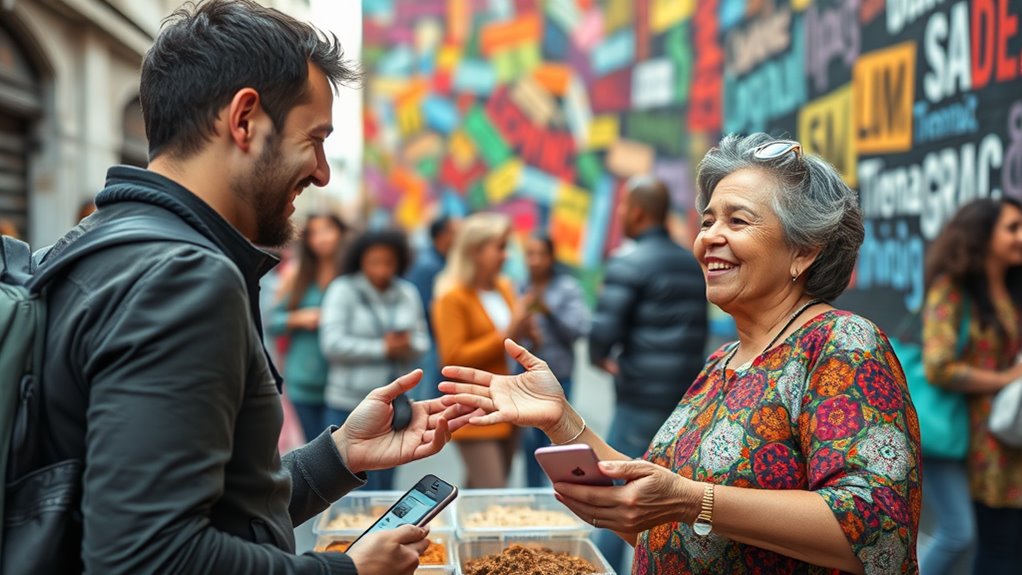
To navigate language barriers during traveling, embrace the local language and learn basic phrases. Using translation apps can be incredibly helpful, especially if you download language packs for offline use. Engage with locals through simple conversations and non-verbal cues to improve your connections. Don't hesitate to find accommodations with English-speaking staff for easier interactions. Finally, stay patient and open-minded—each challenge can turn into a great learning opportunity. There's even more to explore on how to connect authentically!
Understanding the Importance of Language Skills in Travel
When you travel to a new country, comprehending the local language can greatly improve your experience. It opens doors to cultural immersion that you simply can't achieve through translation apps alone. Envision chatting with locals, sharing stories, and discovering hidden gems off the tourist path. You'll feel more connected and less like an outsider.
Participating in a language exchange can additionally enrich your expedition. By practicing with native speakers, you not only learn fundamental phrases but also gain insights into their customs and way of life. These interactions nurture genuine connections, enhancing your travels and providing a deeper comprehension of the culture.
Embracing the challenge of language skills empowers you. Instead of relying solely on English, take a leap into the unknown. You'll find that the experience is liberating, and your adventures will be far more fulfilling. So, plunge into the experience and let the language guide you!
Learning Basic Phrases Before You Go
Before you head out on your adventure, it's vital to learn some basic phrases in the local language. Knowing fundamental travel vocabulary can make your trip smoother, and practicing pronunciation will help you communicate more effectively. Plus, there are great language apps that can assist you in perfecting these phrases quickly.
Essential Travel Vocabulary
As you're planning your trip, learning vital travel vocabulary can make a significant difference in your experience. Mastering fundamental vocabulary allows you to navigate new environments with confidence and ease. Start with key travel phrases like "hello," "thank you," and "where is…?" These basics will help you connect with locals and ask for directions, making your adventures more enjoyable. Don't forget to include phrases for ordering food, shopping, and emergencies. The more you practice these fundamental travel phrases before you go, the more freedom you'll feel as you explore. So grab a phrasebook or use an app, and embrace the excitement of communicating in another language—it's an influential tool that improves your excursion and opens doors to authentic experiences.
Pronunciation Tips
Perfecting pronunciation can transform your ability to communicate effectively during traveling, making it easier to connect with locals. Start by learning basic phrases and focus on pronunciation practice. Use phonetic spelling to help you articulate words correctly. For instance, if you're heading to France, practicing "Bonjour" (bohn-zhoor) can make a big difference. Recording yourself can likewise help you hear your progress and adjust your pronunciation. Don't hesitate to repeat phrases aloud, even though it feels awkward at first. Locals will appreciate your effort, and you'll feel more confident expressing yourself. Embrace the freedom that comes with speaking their language, although it's just a few words. You'll find that genuine connections await you!
Language Apps Recommendations
During traveling, having the right tools at your fingertips can make learning basic phrases much easier. Language learning apps like Duolingo, Babbel, and Memrise offer fantastic app features that can help you pick up fundamentals quickly. They provide interactive lessons, pronunciation guides, and cultural tips, making your experience more enjoyable and freeing.
Before you go, explore the app's phrasebooks to master greetings, ordering food, or asking for directions. These apps often use gamification, turning your learning into a fun challenge. Plus, you can practice on the go, fitting lessons into your adventures. So, download a few, investigate their features, and get ready to connect with locals like a pro!
Using Translation Apps Effectively
When you're traveling, choosing the right translation app can make a huge difference in your experience. Look for features like offline translation and voice recognition to guarantee you can communicate effectively, even in challenging situations. With the right tools, you'll navigate language barriers with confidence and ease.
Choosing the Right App
How can you choose the right translation app to enrich your travel experience? Start by exploring app features that suit your needs, like voice recognition or image translation. You'll want something that feels intuitive and boosts your freedom to communicate effortlessly. Check out user reviews to gauge real-world performance; they can reveal how well an app works in different situations. Look for apps that are praised for quick responses and accuracy, as you don't want to waste time fumbling with translations. Remember, the right app can turn potential misunderstandings into smooth conversations, making your adventures more enjoyable. With the right tools in hand, you'll feel empowered to connect with locals and delve deeper into each destination.
Offline Translation Features
Many travelers overlook the importance of offline translation features in apps, yet these tools can be lifesavers in areas with spotty internet connections. Picture wandering through a lively market or a remote village, and you can't access the internet. That's where offline translation apps shine. They offer offline translation advantages, allowing you to communicate freely without the stress of data limits or weak signals. Before your trip, download the necessary language packs to guarantee you're prepared. These apps store translations, meaning you can access crucial phrases on the go. So, don't forget to leverage these influential features; they'll help you connect with locals and fully embrace the freedom of exploration without language barriers holding you back.
Voice Recognition Capabilities
During exploring a new destination, you might find that voice recognition capabilities in translation apps can greatly improve your communication efforts. With voice recognition technology, you can easily speak your thoughts and let the app translate them in real-time. This hands-free approach not only makes conversations smoother but likewise boosts language translation accuracy, ensuring you convey your message effectively.
Whether you're haggling at a market or asking for directions, using your voice feels natural and empowering. Plus, it allows for more spontaneous interactions, giving you the freedom to connect with locals. Just remember to speak clearly and choose a quiet spot to improve accuracy. Embrace these tools, and watch your travel experience transform into something truly remarkable!
Carrying a Phrasebook or Pocket Dictionary
Though you might depend on your smartphone for most travel needs, carrying a phrasebook or pocket dictionary can be a significant advantage when overcoming language barriers. A phrasebook offers quick access to crucial phrases, helping you connect with locals as you ensure you don't miss out on the richness of their culture. The phrasebook benefits extend beyond mere communication; they nurture a sense of adventure and spontaneity, allowing you to engage more freely.
Although dictionary alternatives like translation apps are handy, they can falter in low-signal areas or when your battery dies. A physical book doesn't require electricity and won't distract you with notifications. Plus, flipping through pages can spark curiosity, leading to unexpected conversations. So, pack a phrasebook or pocket dictionary. It's a small investment in your expedition that can lead to unforgettable experiences and connections.
Engaging With Locals: Tips for Communication
When you meet locals, using simple phrases can make a big difference in communication. Don't underestimate the strength of non-verbal cues—gestures and expressions often bridge gaps that words can't. By combining these techniques, you'll create a more engaging experience during traveling.
Use Simple Phrases
During traveling, using simple phrases can bridge the gap between you and locals, making communication smoother and more enjoyable. Embrace the freedom of connecting with others by mastering a few crucial expressions. Start with simple greetings and polite phrases to break the ice. Here are three phrases to get you started:
- Hello (or "Bonjour" in French) – A warm greeting opens doors.
- Thank you (or "Gracias" in Spanish) – Gratitude goes a long way.
- Do you speak English? – This shows respect for their language and helps you find common ground.
Non-Verbal Communication Techniques
Honing simple phrases is just one way to connect with locals; non-verbal communication can be just as impactful. Your body language speaks volumes, so use it to convey openness and friendliness. A warm smile can break down barriers and create instant rapport. Pay attention to your facial expressions—showing genuine interest or curiosity invites engagement. Gestures can likewise improve comprehension; a thumbs-up or nod can signal approval or agreement. Remember to observe local customs—what's acceptable in one culture might not be in another. By combining these non-verbal techniques with your phrases, you can bridge communication gaps, making your interactions memorable and enriching. Embrace the freedom of expression through these universal forms of communication, and watch your connections flourish.
Non-Verbal Communication Techniques
Non-verbal communication techniques can be incredibly effective tools for bridging language gaps during traveling. When you find yourself in a foreign land, you'll quickly realize the influence of gestures and facial expressions. Embrace these strategies to improve your experience:
- Gestures: Simple hand signals can convey a lot. A thumbs-up can signify approval, whereas pointing can help you indicate what you want or need.
- Facial Expressions: Your face speaks volumes. A smile can break the ice, whereas a frown may express your confusion or displeasure. Be mindful of cultural differences, as some expressions may carry different meanings.
- Body Language: Open body language invites others to engage with you. Leaning slightly forward shows interest, whereas crossed arms might suggest defensiveness.
Joining Guided Tours With Local Guides
If you want to improve your travel experience while overcoming language barriers, joining guided tours with local guides can be a game-changer. Local guides bring invaluable local knowledge and cultural insights that enrich your adventures. They not only bridge the language gap but additionally help you understand the nuances of the region you're exploring.
Here's a quick overview of the benefits:
| Benefit | Description | Why It Matters |
|---|---|---|
| Local Knowledge | Guides share stories and history | You gain a deeper appreciation |
| Cultural Insights | Learn customs and traditions | You connect on a personal level |
| Language Assistance | Guides translate and interpret | You navigate easily |
| Unique Experiences | Access to off-the-beaten-path locations | You discover hidden gems |
Participating in Language Exchange Meetups
During the exploration of a new country, participating in language exchange meetups can significantly improve your experience. These gatherings not merely help you practice a new language but provide a fantastic opportunity for cultural immersion. Here's how you can make the most of these meetups:
- Connect with Locals: Engaging with native speakers gives you authentic insight into the culture and everyday life.
- Practice Speaking: Don't be shy! Use the chance to converse and refine your language skills in a relaxed environment.
- Make New Friends: Building relationships with people from different backgrounds can lead to unforgettable experiences and memories.
Utilizing Social Media for Language Help
After you've connected with locals through language exchange meetups, consider leveraging social media to improve your language skills even further. Social media platforms like Facebook, Instagram, and Twitter are treasure troves of resources. You can find language learning groups where enthusiasts like you share tips, lessons, and cultural insights.
Join conversations, ask questions, or even post in the language you're learning. It's a low-pressure way to practice and engage with native speakers. Don't hesitate to use hashtags related to your target language to discover new communities and content.
You can additionally follow influencers or educators who create content around language learning. Their posts can inspire you and provide practical advice. By tapping into these networks, you're not just learning a language; you're immersing yourself in the culture and connecting with a global community enthusiastic to help you on your expedition.
Finding Accommodations With English-Speaking Staff
How can you guarantee a smoother travel experience when language barriers loom? One of the best strategies is to find accommodations with English-speaking staff. This can ease your hotel booking process and make staff interactions much more enjoyable. Here's how to ascertain you're choosing the right place:
- Use Filters on Booking Sites: Many hotel booking platforms allow you to filter by language spoken. Look for this option to find English-speaking staff.
- Read Reviews: Check traveler reviews for mentions of staff language skills. This can give you insight into their level of English proficiency.
- Contact the Hotel Directly: Before booking, reach out to the hotel. Ask if they have English-speaking team members available to assist you during your stay.
Being Patient and Open-Minded
Overcoming language barriers can be frustrating, but maintaining a patient and open-minded attitude will make your travel experience far more enjoyable. When you encounter misunderstandings, take a deep breath and keep in mind that everyone's trying their best. Embrace cultural sensitivity by recognizing that language isn't just words; it's a reflection of a different way of life.
Practice active listening—focus on gestures, facial expressions, and tone. These cues can reveal much about what someone's trying to convey. Don't hesitate to clarify by asking questions or repeating back what you think you've heard. This shows respect and cultivates connection.
Being patient isn't just about waiting; it's about creating space for genuine interactions. Embrace the unexpected moments that arise from language barriers, as they often lead to the most memorable experiences. Your open-mindedness will not only improve your adventure but also bring you closer to the heart of the culture you're exploring.
Embracing Cultural Differences and Learning Opportunities
Overcoming language barriers opens up a world of cultural differences and learning opportunities that enrich your travels. When you embrace these experiences, you'll find your expedition becomes more colorful and rewarding. Here are three ways to immerse yourself in cultural experiences and make the most of your adventures:
- Join a Language Exchange: Connect with locals enthusiastic to practice your language as you learn theirs. This not just builds friendships but deepens your comprehension of their culture.
- Participate in Local Events: Attend festivals, workshops, or cooking classes. You'll gain firsthand experience and insights that guidebooks can't offer.
- Engage with Street Vendors: Interacting with vendors not only improves your language skills but likewise helps you appreciate local cuisine and traditions.
Frequently Asked Questions
What Should I Do if I Get Lost in a Foreign Country?
If you get lost in a foreign country, don't panic. First, assess your lost location and try to recognize nearby landmarks. If you need help, seek assistance from locals or find a nearby shop or café. Use a translation app on your phone to communicate if language becomes an issue. Remember, this adventure is part of your expedition, and you'll find your way back with a little patience and openness!
How Can I Remember Important Phrases While Traveling?
Like a bird in flight, you can soar through language barriers by committing important phrases to memory. Use flashcard techniques to jot down key expressions and practice them regularly. Pair these with mnemonic devices—fun associations or visual images—to make them stick. Try repeating the phrases aloud in context; it'll help reinforce their meaning. With these tools, you'll feel more confident and free to connect with others on your travels.
Are There Any Apps for Offline Translation?
Absolutely, there are several translation apps with offline features that can help you communicate effortlessly. Apps like Google Translate and Microsoft Translator let you download languages, so you won't miss a beat without internet access. Just install them before your trip, and you're set! These tools give you the freedom to explore new places without worrying about language barriers, allowing you to fully immerse yourself in the experience. Enjoy your adventure!
What if Locals Respond in Their Language Despite My Attempts?
When locals respond in their language, you might feel both excitement and frustration. Embrace that language immersion; it's a chance to connect deeply. Instead of retreating, show cultural sensitivity by smiling and using gestures. You'll find that many appreciate your effort, and some may switch to simpler phrases or even English. Remember, every interaction is a step toward comprehending their world, and it's those moments that truly enrich your travels.
Can Body Language Lead to Misunderstandings?
Yes, body language can definitely lead to misunderstandings. Gestures you think are friendly might be misinterpreted in a different cultural context. For instance, a thumbs-up could offend someone in certain countries. It's vital to be aware that not all gestures carry the same meaning everywhere. To avoid awkward situations, you should observe how locals communicate and adjust your body language accordingly. Embracing these differences can improve your freedom and enjoyment during interactions with others.
