

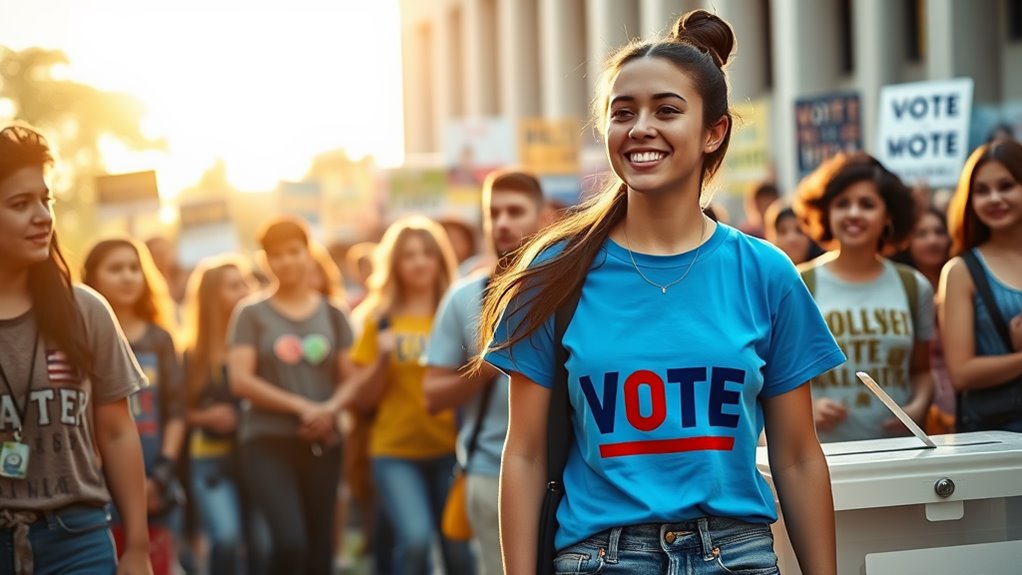
Young voters considerably shape the political environment by prioritizing issues like social justice, climate change, and education reform. Their engagement is bolstered by technology and social media, making information more accessible and mobilization easier. Historical movements and grassroots campaigns have increased their participation, whereas challenges such as registration intricacies remain. The shifting dynamics of young voters invite a transformation of political norms and advocate for future reforms, offering a glimpse into the evolving electoral environment.
Understanding the Young Voter Demographic
As young voters increasingly shape the political terrain, grasping their demographic characteristics becomes vital. Youth demographics encompass a wide range of factors, including age, ethnicity, education, and socioeconomic status. These elements considerably influence voting behavior, as they often determine the issues that resonate with younger individuals. For instance, younger voters tend to prioritize social justice, climate change, and education reform, reflecting their values and life experiences.
Moreover, the rise of digital communication has transformed how young voters engage with political information, often favoring social media as a primary source of news. This shift has contributed to a more informed and active electorate, ready to advocate for their interests. Comprehending these nuances enables political parties and candidates to tailor their messages effectively, ensuring they resonate with this dynamic group. In the end, recognizing the complexity of youth demographics is fundamental for grasping the motivations that drive young voters to the polls.
Key Issues That Matter to Young Voters
Comprehending the demographic characteristics of young voters highlights the key issues that drive their political engagement. Young voters are particularly passionate about several pressing matters that shape their priorities in the political arena.
- Climate Change: The urgency for sustainable policies reflects their commitment to environmental protection.
- Social Justice: Issues like racial equity and immigration policies resonate deeply, as many advocate for a more inclusive society.
- Education Reform: Concerns regarding the rising costs of education and access to quality learning opportunities are paramount.
Additionally, young voters prioritize healthcare access, economic inequality, mental health resources, voting rights, and gun control. These issues collectively underscore a generation that seeks systemic change and equitable solutions. Grasping these key concerns is essential for political leaders aiming to engage this significant voting bloc effectively.
The Impact of Technology and Social Media
Technology and social media play an essential role in mobilizing young voters, facilitating their engagement in the political process. These platforms not just influence political opinions but furthermore serve as effective channels for spreading awareness about important issues and campaigns. As a result, they greatly shape the political environment for younger generations.
Mobilizing Voter Engagement
How has the rise of social media transformed the terrain of voter engagement among young people? The integration of technology has considerably improved voter mobilization strategies, enabling more effective youth engagement initiatives. Social media platforms serve as influential tools for information dissemination and community building among younger demographics. Key aspects include:
- Increased Awareness: Young voters can access real-time information about elections and candidates.
- Peer Influence: Social networks facilitate discussions and encourage friends to participate in the electoral process.
- Targeted Campaigns: Political organizations can tailor messages particularly for young voters, improving relevance and impact.
These elements collectively contribute to a more engaged and informed youth electorate, showcasing the profound impact of technology on political participation.
Influencing Political Opinions
The impact of social media on young voters extends beyond engagement; it greatly shapes their political opinions as well. Platforms like Twitter, Instagram, and TikTok serve as influential arenas where youth perspectives are formed and exchanged. The instantaneous nature of these platforms allows for rapid dissemination of information, enabling young individuals to access diverse viewpoints. This environment encourages opinion formation, as users are frequently exposed to trending topics and discussions that resonate with their values and experiences. In addition, algorithms often curate content that aligns with users' interests, reinforcing specific beliefs. As a result, social media not only informs young voters but plays a significant role in shaping their political identities, ultimately influencing their choices at the ballot box.
Spreading Awareness Campaigns
As young voters increasingly turn to social media for information, awareness campaigns have emerged as influential tools for engaging this demographic. These campaigns play a crucial role in promoting voter registration and enhancing civic education. Their effectiveness can be attributed to several key factors:
- Targeted Messaging: Campaigns tailor content to resonate with young voters' interests and concerns.
- Interactive Engagement: Social media platforms facilitate two-way communication, allowing for real-time discussions and feedback.
- Widespread Reach: Digital platforms enable campaigns to reach diverse audiences quickly and efficiently.
Through these strategies, awareness campaigns not only inform young voters but also empower them to participate actively in the political process, cultivating a more informed electorate ready to shape the future.
Mobilization Strategies Employed by Young Voters
Young voters have increasingly utilized various mobilization strategies to engage in the political process. Focused efforts such as social media campaigns, grassroots organizing, and educational outreach programs have proven effective in rallying their peers. These approaches not only improve voter turnout but additionally promote a sense of community and activism among younger demographics.
Social Media Campaigns
Though traditional campaigning methods often overlook the preferences of younger demographics, social media has emerged as a formidable tool for mobilizing young voters. Political organizations utilize the strength of platforms like Instagram and TikTok to create engaging content that resonates with youth. They employ various strategies, including:
- Viral Campaigns: Utilizing catchy memes and relatable videos to amplify messages quickly.
- Influencer Outreach: Partnering with popular figures who can authentically connect with young audiences and encourage voter participation.
- Interactive Engagement: Encouraging polls, challenges, and discussions to promote community involvement and excitement around issues.
These strategies not merely improve visibility but additionally enable young voters to actively participate in shaping the political environment, eventually redefining engagement in the electoral process.
Grassroots Organizing Efforts
Despite traditional political mobilization often relying on established networks, grassroots organizing has gained traction among younger voters seeking to effect change. These efforts focus on community engagement and coalition building, nurturing a sense of shared purpose among diverse groups. Young activists utilize local events, social media, and peer networks to amplify their voices and encourage participation.
| Strategies | Impact |
|---|---|
| Community Meetings | Strengthen local ties |
| Social Media Campaigns | Reach broader audiences |
| Collaborative Events | Cultivate unity and support |
Educational Outreach Programs
Recognizing the importance of informed citizenship, various organizations have implemented educational outreach programs aimed at mobilizing young voters. These programs focus on enhancing civic engagement through multiple strategies, including:
- Educational Workshops: These sessions equip young individuals with crucial knowledge about the electoral process and their rights as voters.
- Peer-to-Peer Initiatives: Engaging youth leaders to share information and motivate their peers cultivates a sense of community involvement.
- Digital Campaigns: Utilizing social media platforms to disseminate information guarantees that significant messages reach the younger demographic effectively.
Historical Context of Young Voter Participation
Throughout the 20th and 21st centuries, young voter participation has undergone significant shifts influenced by social, political, and economic factors. Historical trends reveal that the engagement of young voters often correlates with essential periods of change, such as the civil rights movement and the Vietnam War protests. These youth movements galvanized young people to advocate for their rights, leading to increased voter turnout, particularly in the 1960s and 1970s. The introduction of the Voting Rights Act and the lowering of the voting age to 18 in 1971 further facilitated this engagement. Nevertheless, fluctuations in participation have been noted in subsequent decades, with periods of apathy often coinciding with economic downturns or political disillusionment. Comprehending these historical contexts is vital for recognizing the evolving role of young voters in shaping the political terrain, as their engagement continues to be influenced by contemporary social movements and issues.
Case Studies of Young Voter Influence in Elections
The historical context of young voter participation sets the stage for grasping their impact in contemporary elections. Recent case studies illustrate how youth turnout can markedly influence election outcomes. Three notable examples include:
- 2018 Midterm Elections: Young voters aged 18-29 increased their turnout by 50% compared to previous midterms, swaying critical Senate races.
- 2016 Presidential Election: Although overall turnout was low, young voters favored one candidate overwhelmingly, altering the dynamics of key battleground states.
- Local Elections: In various cities, grassroots campaigns mobilized young voters, leading to the election of progressive candidates who prioritized issues such as climate change and education reform.
These case studies highlight that when young people engage politically, their collective voice can reshape electoral results, demonstrating the significance of youth involvement in democratic processes. Grasping these dynamics is fundamental for predicting future political trends and strategies.
The Role of Youth Activism in Shaping Policies
Youth activism plays an essential role in shaping policies through grassroots movements that mobilize young voters around key issues. These movements often leverage digital advocacy strategies to amplify their messages and engage a broader audience. As a result, the influence of young activists can markedly impact decision-making processes and policy outcomes.
Grassroots Movement Impact
A significant number of young voters are increasingly engaging in grassroots movements to influence political policies. This activism is pivotal in promoting community organizing and enhancing political representation. The impact of these movements can be observed in several ways:
- Mobilization of Communities: Young voters bring diverse voices together, nurturing unity around common causes.
- Policy Advocacy: They effectively advocate for issues such as climate change, education reform, and social justice, pressuring policymakers to respond.
- Voter Engagement: These movements encourage higher voter turnout among their peers, amplifying the influence of youth in elections.
Through these efforts, young voters are reshaping the political environment, demonstrating that grassroots activism is an influential tool in creating meaningful change.
Digital Advocacy Strategies
Whereas traditional advocacy methods have been effective, the rise of digital platforms has transformed how young voters engage in political activism. Digital campaigns have become crucial tools for youth mobilization, enabling young activists to reach broader audiences quickly and efficiently. Social media platforms, online petitions, and viral content allow for rapid dissemination of information, energizing youth participation in political discourse. These digital strategies facilitate the organization of events and movements, nurturing a sense of community among young voters. Furthermore, they provide a space for marginalized voices, ensuring diverse perspectives are represented in policy discussions. As young voters increasingly turn to digital avenues, they reshape the political terrain, making their influence more pronounced in shaping policies that affect their futures.
Challenges Faced by Young Voters
Although young voters possess the potential to greatly influence political outcomes, they often encounter numerous challenges that hinder their participation. Voter apathy remains a significant barrier, as many young individuals feel disconnected from the political process. Furthermore, there are structural obstacles that complicate civic engagement for this demographic.
- Limited access to information: Many young voters struggle to find reliable and relevant political information, leading to disengagement.
- Barriers to registration: Complex registration processes and strict deadlines often discourage young voters from participating in elections.
- Social and economic pressures: Financial instability and demanding schedules can make it difficult for young people to prioritize voting.
These challenges contribute to a cycle of low participation rates, ultimately impacting the influence young voters could wield in shaping the political environment. Addressing these issues is vital for encouraging a more engaged electorate.
The Importance of Voter Education and Engagement
Recognizing the pivotal role of voter education and engagement is vital for empowering young voters to participate effectively in the political process. Voter literacy guarantees that young individuals understand their rights, the voting process, and the significance of their choices. Without this foundational knowledge, many may feel disconnected or disenfranchised, potentially leading to lower participation rates.
Engaging young voters promotes a sense of civic responsibility, encouraging them to take an active role in shaping their communities and influencing policy. Educational initiatives, whether through schools, community programs, or social media campaigns, can improve awareness of political issues and motivate informed decision-making.
Moreover, by promoting discussions around the importance of voting, organizations can create an environment where young voters feel valued and empowered. In the end, improving voter education and engagement is fundamental for cultivating a generation that is both informed and dedicated to democratic participation.
Future Trends in Young Voter Participation
The scenery of young voter participation is poised for significant changes in the coming years, influenced by evolving social dynamics and technological advancements. Future voting trends suggest that youth electoral engagement will increasingly be shaped by:
- Digital Mobilization: Social media platforms will continue to play an essential role in informing and mobilizing young voters, making political discourse more accessible.
- Civic Education Initiatives: Schools and organizations are likely to improve civic education, nurturing a deeper comprehension of the voting process and encouraging participation among younger demographics.
- Policy Changes: Potential reforms such as lowering the voting age or implementing automatic voter registration may facilitate easier access to the electoral process for young individuals.
These factors will collectively redefine how young voters engage with the political environment, ensuring their voices are heard in shaping future policies and governance.
How Young Voters Are Redefining Political Norms
As young voters increasingly engage in the political arena, they are challenging and reshaping traditional political norms. This demographic's active participation is greatly influencing political identity among parties and candidates. Young voters prioritize issues such as climate change, social justice, and economic equity, often pushing these topics to the forefront of political discourse. Their engagement highlights a shift away from established platforms, encouraging a more inclusive and responsive political environment.
Moreover, social media serves as an essential tool for youth engagement, allowing young voters to mobilize and voice their opinions on a larger scale. This digital presence cultivates a sense of community and collective action, further solidifying their impact on political processes. As they redefine political norms, young voters are not merely asserting their values but are also challenging older generations to adapt to a swiftly changing political terrain. Their influence is likely to shape future elections and policy decisions greatly.
Frequently Asked Questions
How Do Young Voters Impact Local Elections Compared to National Ones?
Young voters considerably sway the scales of local elections through heightened local engagement and increased election awareness. Their passionate participation often leads to pivotal changes in community issues, contrasting with their sometimes limited influence on broader national contests. As national elections attract widespread attention, young voters' grassroots efforts can transform local dynamics, cultivating a sense of responsibility and connection to their communities. This dual impact illustrates the distinct roles young voters play at different electoral levels.
What Role Do Peer Influences Play in Young Voter Turnout?
Peer influences greatly affect young voter turnout, primarily through social media and community engagement. Friends and social networks can motivate individuals to participate in elections, sharing information and encouraging discussions about civic responsibilities. Social media platforms serve as vital spaces for mobilizing peers, where trending topics can lead to increased awareness and participation. Overall, the collective enthusiasm and pressure from peers can create a strong impetus for young individuals to cast their votes.
Are There Specific Demographics Within Young Voters That Vote Differently?
When it pertains to young voters, it's clear that not all fish swim in the same school. Research indicates that racial diversity greatly influences voting patterns, with various ethnic groups often prioritizing different issues. Moreover, gender differences can shape preferences, as young women may lean in the direction of candidates championing social justice, whereas young men might focus on economic policies. These demographic distinctions highlight the complex fabric of motivations driving young voter turnout.
How Does Socioeconomic Status Affect Young Voter Participation?
Socioeconomic status markedly influences young voter participation. Individuals from lower socioeconomic backgrounds often face socioeconomic barriers, such as limited access to transportation and the inability to take time off work, which hinder their ability to vote. Furthermore, educational access plays a critical role; those with higher education levels typically exhibit greater political engagement. As a result, disparities in socioeconomic status lead to varied participation rates among young voters, affecting their representation in the electoral process.
What Strategies Do Political Parties Use to Attract Young Voters?
In the political arena, attracting young voters is akin to catching lightning in a bottle. Political parties employ various strategies, prominently featuring digital outreach to connect with the tech-savvy generation. By leveraging social media platforms, they craft engaging campaign messaging that resonates with the values and interests of youth. These strategies not only enable direct communication but additionally nurture a sense of community, making young voters feel heard and valued in the electoral process.
